2012 Top Ten Worst Zoos for Elephants
An Animal Rights Article from All-Creatures.org
FROM
In Defense of Animals
(IDA)
January 2013
In Defense of Animals (IDA), an international animal protection organization with more than 100,000 members, released today its list of the Ten Worst Zoos for Elephants for 2012. IDA's list, now in its ninth year, once again exposes the suffering endured by elephants in zoos.
"Scientific research shows what elephants need in order to thrive: space to walk miles every day, family social structures, and a rich natural environment," said Nicole Meyer, Director of IDA's Elephant Protection Campaign. "Elephant welfare continues to take a back seat in zoos, where hundreds of elephants are deprived of their most basic needs and condemned to a lifetime of deprivation, disease, and early death."
IDA's list comes on the heels of a recent Seattle Times' investigation, which revealed the ugly truth the zoo industry is desperate to hide: zoos routinely compromise the welfare of elephants under the guise of "education" and "conservation." IDA's list illustrates how zoos recklessly breed elephants, and house them in unnatural social groupings in inadequate exhibits and cold climates.
Nearly 300 elephants are confined in 78 U.S. zoos accredited by the Association of Zoos and Aquariums (AZA). The Seattle Times' research shows that captivity is actually killing elephants, not helping them. According to The Times, most of the elephants who died in U.S. zoos in the last 50 years suffered from diseases related to captivity, such as chronic foot problems caused by standing on hard surfaces and musculoskeletal disorders related to inactivity.
"The AZA is no better than the fox guarding the hen house and should be ashamed of itself for its deadly record of elephant care. As long as zoos continue to profit off the backs of elephants, elephants will continue to suffer," said Meyer. "If zoo leaders and the AZA truly cared about the welfare of these intelligent and sensitive animals, they would take immediate measures to improve the lives of the elephants currently languishing in substandard and antiquated conditions."
1. Edmonton Valley Zoo, Alberta, Canada - As Bad as It Gets
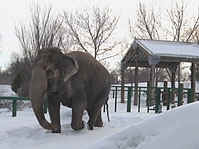
The Edmonton Valley Zoo remains intransigent in its selfish will to condemn an elephant named Lucy to a life of solitary confinement. The zoo sent another elephant away in 2007, forcing Lucy to endure a life of utter loneliness in a tiny exhibit. This is cruel punishment for profoundly social female elephants. Despite worldwide outrage over Lucy’s plight, the zoo continues to allow Lucy to languish in immense psychological and physical pain. Lucy displays abnormal behavior, such as rocking and swaying, and suffers from chronic arthritis and foot problems. Lucy also reportedly struggles with a respiratory problem, almost certainly caused by Alberta’s bitterly cold climate. It's time for the zoo to put Lucy's needs first and send her to a natural-habitat sanctuary in a warmer climate to enjoy the company of other elephants. This is Edmonton Valley Zoo's third appearance on IDA's list.
2. Bowmanville Zoo, Bowmanville, Canada - A Miserable, Lonely Life

Things couldn't get much worse for Limba, who lives all alone without the companionship of other elephants. This is a cruel sentence for female elephants who thrive in the companionship of other elephants. During the cold winter months, Limba is locked in a tiny cement cell. If that wasn’t bad enough, the zoo forces Limba to perform tricks in the circus and rents her out for fairs, parades, movies, commercials, and parties. Keepers manage Limba with a bullhook—a sharp metal tool used to control elephants by jabbing, hooking, striking, and instilling fear in them. The undignified acts Limba is forced to perform do nothing to educate or promote the understanding of elephants, yet the Canadian AZA allows the zoo to exploit Limba for its own profit. This is Bowmanville Zoo's first appearance on IDA's list.
3. Woodland Park Zoo, Seattle, Washington - If at First You Don't Succeed, Try 112 Times!

The Woodland Park Zoo returns to IDA's list for the fourth time as a prime example of the zoo industry's relentless attempts to breed elephants at any cost. The zoo forced an elephant named Chai to undergo 112 stressful and invasive artificial insemination procedures, yet not one of these attempts resulted in a calf. The zoo willfully ignored the grave risk that any elephant born at the zoo could die from the same herpes virus that killed Chai's only offspring in 2007. Bamboo, Chai, and Watoto (the sole African) all suffer from problems related to captivity including foot disease, arthritis, and exhibit abnormal behavior, such as rocking and swaying. Yet the zoo remains steadfast in its stubborn denial that keeping elephants in the zoo’s antiquated exhibit in a cold climate will only worsen the elephants' illnesses. Like people, not all elephants get along. Due to lack of space, one elephant is kept in solitary confinement, or away from the others at all times. This is cruel punishment for female elephants who thrive in the company of other elephants. The Woodland Park Zoo has also appeared on IDA's list as a Dishonorable Mention.
4. Bronx Zoo, Bronx, New York - An Un-Happy Existence

Once the most celebrated elephant at the Bronx Zoo, an elephant named Happy is also the most miserable. In 2006, Happy demonstrated self-recognition in a mirror revealing to the world that elephants are highly intelligent beings. Yet a recent report in the NY Post revealed that Happy leads a painfully isolated existence, spending the majority of her time indoors with no regular access to a larger outdoor exhibit. Life in solitary confinement is torture for female elephants, whose social bonds are critical to their welfare. Meanwhile Patty and Maxine-the zoo's two other elephants-are closely bonded and at risk of great emotional trauma if one dies. The Bronx Zoo announced years ago it would close its elephant exhibit after one or two of the elephants die. While IDA supports the zoo's decision to end its elephant program, this deathwatch prolongs the elephants' suffering. The zoo should do the right thing now and send the elephants to a large natural-habitat sanctuary in a warmer climate. This is the Bronx Zoo's second appearance on IDA's list.
5. Buttonwood Park Zoo, New Bedford, Massachusetts - Living in Limbo

With winter well under way, Emily and Ruth-the zoo's aging elephants-are stuck indoors in New Bedford's freezing temperatures. Cramped confinement and lack of movement will only exacerbate the elephants’ existing health problems which include painful pressure sores, foot disease, and arthritis. Like other elephants forced to share small spaces, Emily and Ruth don’t always get along, resulting in aggression. A former zoo director acknowledged that the elephant exhibit was too small and outdated to properly meet the elephants’ needs. A plan to expand the exhibit failed two years ago, and the zoo has yet to seize the one opportunity that would give Emily and Ruth a chance at a healthier future: retirement to a large natural-habitat sanctuary in a warmer climate. This is Buttonwood Zoo's third appearance on IDA's list.
6. Niabi Zoo, Coal Valley, Illinois - Too Little, Too Late
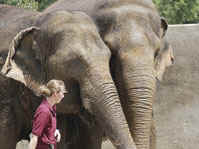
The Niabi Zoo claims that its two female elephants are the "biggest stars of the Zoo," but they're treated like anything but. Babe and Sophie, two aging former Ringling Bros. and Barnum & Bailey Circus elephants, live in a grossly inadequate exhibit. Both elephants have a history of illnesses related to captivity, including painful chronic foot infections. Even the zoo director admitted the exhibit is "not a great presentation of how the animals really live." After a decade of watching the elephants suffer, the AZA finally pulled the zoo's accreditation in 2012. Despite plans to raise money to expand the elephant exhibit, reports indicate there’s been no significant progress or any meaningful improvements. But, one thing will never change: the climate. Too cold for visitors, the zoo shuts down in winter forcing Babe and Sophie indoors in a tiny, cramped barn. This is Niabi Zoo's third appearance on IDA’s list.
7. Oregon Zoo, Portland, Oregon - A Deal with the Devil
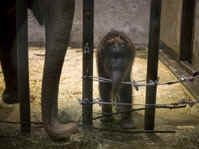
The Oregon Zoo ended 2012 with a lot of explaining to do. The zoo struggled under the harsh glare of the national spotlight after admitting that a baby elephant born at the zoo in December is "owned" by a notorious elephant-rental company called Have Trunk Will Travel which, like circuses, trains elephants to perform tricks. The zoo's reckless breeding program packs even more elephants into a cramped exhibit. Seven other elephants-who suffer from a range of captivity induced problems, including foot and joint disease-share a meager 1.5 acres. Instead of using a proposed offsite preserve to give the existing elephants more space, the zoo quietly shifted strategy and now plans to use the space as a second breeding facility. This is the Oregon Zoo’s fourth appearance on IDA's list.
8. Saint Louis Zoo, St. Louis, Missouri - Nothing to Celebrate
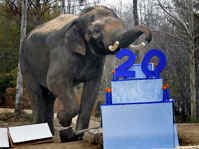
The Saint Louis Zoo takes a well-earned spot on IDA's list for maintaining a pathetic status quo. The zoo's elephant program is riddled with problems, including deadly contagious diseases, such as tuberculosis and the elephant herpes virus, and chronic illnesses such as foot disease and arthritis. The zoo recently celebrated the birthday of Raja, a bull born 20 years ago at the zoo. Yet, Raja has nothing to celebrate. He leads a miserable, lonely life observed isolated from other elephants. Already used for breeding at least six times, Raja has one thing to look forward to: an uncertain future. As is the fate with other bull elephants in zoos, once Raja's genes are deemed overrepresented he’ll likely be sent elsewhere for breeding or reduced to a life as a sperm donor for other zoos. This is the Saint Louis Zoo's fifth appearance on IDA's list.
9. Rosamond Gifford Zoo, Syracuse, New York - In the Ring with Ringling

Bull elephants can't get a break at the Rosamond Gifford Zoo. This zoo earns a spot on the list for dumping a male elephant at Dickerson Park Zoo in November. Indy lived at Rosamond for 27 years, but lost his appeal after the zoo determined his genes were no longer useful for breeding. If sending Indy away wasn't bad enough, the zoo is now partnering with Ringling Bros. and Barnum & Bailey Circus for the use of another male named Doc. The zoo’s director pretends that the partnership with the circus demonstrates "the long-term survival of the species," but breeding elephants in captivity does nothing to ensure the survival of the species, since none of the elephants born at the zoo will ever be released into the wild. As long as zoos continue their desperate bid to breed, bull elephants will continue to find themselves uprooted and banished. This is Rosamond Gifford Zoo's third appearance on IDA's list.
10. Africam Safari, Puebla, Mexico - This "Rescue" is a Ruse

Africam Safari earns a spot on IDA's list for the first time, for snatching young elephants from Namibia, Africa under false pretenses. The elephants, ages four through ten, arrived at the zoo in June. The zoo touted this as a rescue claiming that the elephants were orphaned due to poaching—until the Namibian government produced documentation showing that the elephants were obtained from a private game farm that provides exotic prey for wealthy hunters. This is not the first time an AZA-accredited institution has framed a purchase as a rescue to avoid restrictions on importing elephants. In 2003, the San Diego Zoo and Lowry Park Zoo imported 11 African elephants from Swaziland under false claims the elephants would otherwise be killed. Now managed under the AZA, Africam’s young elephants can be shuffled around North America on indefinite loans to other zoos. Wherever they end up, these elephants are doomed to lives of misery in captivity. Africam is the first zoo in Mexico to make IDA's list.
Dishonorable Mention: Lowry Park Zoo (Florida)

Lowry Park Zoo continues to make false claims that four elephants at the zoo were rescued. Back in 2003, the San Diego Zoo and Lowry Park Zoo imported 11 elephants from Swaziland, claiming they were saving the pachyderms from culling due to "overpopulation." However, this is untrue: reserves in Africa were available where the elephants could have remained free. The shady move condemned the elephants to lives of misery in zoos in North America and now, their offspring share the same fate. Mbali-one of the elephants at Lowry Park Zoo-gave birth to a calf in November. Africam Zoo in Mexico made IDA's Ten Worst Zoos for Elephants list for importing nine young elephants from Namibia in 2012. By paying cash-poor nations hundreds of thousands of dollars for elephants, these zoos are setting a terrible precedent for international conservation by promoting the commercial trade in this threatened species. Lowry Park Zoo first appeared on IDA's Ten Worst Zoos for Elephants list in 2008.
Worst Zoos for Elephants – Hall of Shame
IDA's announces a new inductee to the Worst Zoos for Elephants Hall of Shame – a special category for repeat offenders that have made little or no progress improving conditions for elephants. Past Hall of Shame inductees include Dickerson Park Zoo (Missouri), El Paso Zoo (Texas), Six Flags Discovery Kingdom (California), and San Antonio Zoo (Texas).
Topeka Zoo (Kansas)

Topeka Zoo joins the notorious Hall of Fame for its refusal to address the plights of Tembo and Sunda. The elephants endure shamefully inadequate conditions, which includes a lack of space. Years of cramped confinement and long winter months indoors have led to health problems in both elephants, especially Sunda, who suffers from chronic foot disease, which can quickly turn deadly. Last July, IDA urged the USDA to remove Sunda from the zoo after observing gaping holes in the nails on two of her feet. In addition to health problems, both elephants neurotically sway and rock, a sign of psychological distress. The stress of living in a small space has also led to aggression between the elephants, who are different species. In September, a television report documented Sunda (Asian) ramming Tembo (African). Instead of prolonging the elephants' misery, the zoo should send them to a spacious, natural-habitat sanctuary with the company of elephants of their own species. The Topeka Zoo has made four appearances on IDA's list of the Ten Worst Zoos for Elephants.
Return to Animal Rights Articles
Follow us on:


- Home Page
- What's New
- Contact Us
- Action Alerts
- Animal Exploitation
- Animal Issues
- Animal Rights Activism
- Archives
- Art & Photography
- Articles Directory
- Bible
- Bible Commentary Blog
- Books
- Campaigns
- Church & Religion
- Discussions
- Events / Podcasts / Media
- Health
- Hosted Web Sites
- Humor
- Kids' Korner
- Letters
- Links
- Nature Studies
- Newsletter
- Poetry & Stories
- Prayers
- Quotations
- Recipes with Photos
- Recipes Without Photos
- Sermons
- Stop Cruelty in Churches
- Video Library
- The Mary T. and Frank L. Hoffman Family Foundation
- Email: [email protected]
A web site sponsored by The Mary T. and Frank L. Hoffman Family Foundation and all-creatures.org
Copyright © 1998-2026 The Mary T. and Frank L. Hoffman Family Foundation. All rights reserved. May be copied only for personal use or by not-for-profit organizations to promote compassionate and responsible living. All copied and reprinted material must contain proper credits and web site link www.all-creatures.org.
Fair Use Notice: This document, and others on our web site, may contain copyrighted material whose use has not been specifically authorized by the copyright owners. We believe that this not-for-profit, educational use on the Web constitutes a fair use of the copyrighted material (as provided for in section 107 of the US Copyright Law). If you wish to use this copyrighted material for purposes of your own that go beyond fair use, you must obtain permission from the copyright owner.
Thank you for visiting all-creatures.org.
