Companion Animal Care Articles used with permission from All-Creatures.org
The National Link Coalition discusses animal hoarding and reminds us that it is both a human and non-human animal welfare issue.
Animal Hoarding and The Link
From The National Link Coalition
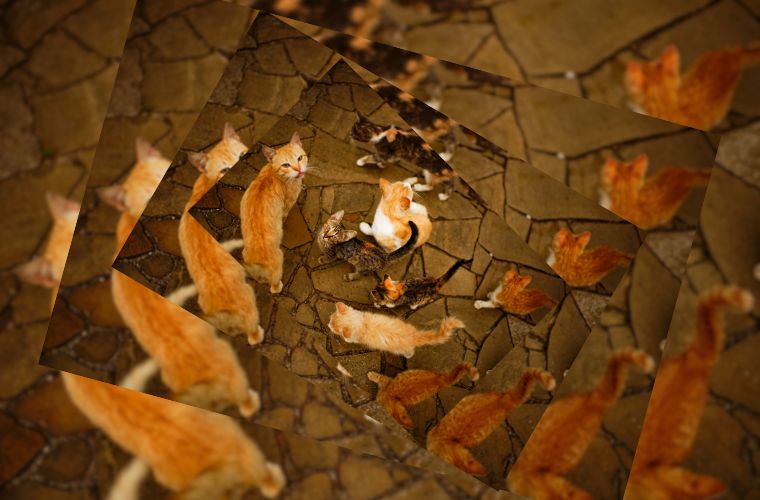
Image from Canva
Quick Facts: Why is The Link important for… Animal Hoarding Interventions and Prosecutions?
Animal hoarding is a complex, multifaceted problem requiring a multidisciplinary response among agencies serving people and animals.
Much of the research describing people who hoard animals emerged from the Hoarding of Animals Research Consortium (HARC). Although the issue was first described in the scientific/medical literature by Worth and Beck (1981) as “multiple animal ownership,” and later characterized as “animal collectors” (Lockwood & Cassidy, 1988; Lockwood, 1994), Patronek (1999) and Patronek, Loar & Nathanson (2006) introduced the term “animal hoarding” as being more consistent with existing medical, psychological and psychiatric nomenclature since “collecting” usually described accumulations associated with benign hobbies.
HARC was established in 1997 in Massachusetts to: better characterize the psychological and sociological underpinnings of animal hoarding; quantify the frequency and outcomes for animals, people, and communities; increase awareness; and develop improved strategies for intervention. The interdisciplinary research team of 14 authorities published peer-reviewed papers on animal hoarding, wrote several sets of guidelines for intervention and case management, developed a now-defunct web site, and gave hundreds of talks and media interviews to increase awareness of the problem.
HARC’s seminal 2006 manual, Animal Hoarding: Structuring Interdisciplinary Responses to Help People, Animals and Communities at Risk, defined animal hoarders by the following criteria:
- Having more than the typical number of companion animals.
- Failing to provide even minimal standards of nutrition, sanitation, shelter and veterinary care, with this neglect often resulting in illness and death from starvation, spread of infectious disease, and untreated injury or medical condition.
- Denial of the inability to provide this minimum care and the impact of that failure on the animals, the household and human occupants of the dwelling.
- Persistence, despite this failure, in accumulating and controlling animals.
The manual was a comprehensive guide to aid communities or investigative agencies in developing an integrated approach that encompasses all stakeholders, including those who may not recognize their stakeholder status. It outlined a five-step process to create an integrated approach to animal hoarding:
- Identifying and understanding the great variety of agency stakeholders that may be involved in an animal hoarding case to create an interdisciplinary approach.
- Gaining interagency cooperation to create interdisciplinary responses.
- Understanding the various types of animal hoarders.
- Matching intervention strategies to each type of animal hoarder.
- Focusing on reducing the likelihood of recidivism.
Animal hoarding affects tremendous numbers of animals.
It is estimated that hoarding disorder may affect 2–5% of the adult population, or a minimum of 5 million individuals in the U.S. Since about 68% of U.S. households have pets, this suggests a potential population of 3.4 million individuals with hoarding disorder who have close access to animals; how many of these live with multiple pets is unknown (Arluke, Patronek et al., 2017).
Animal hoarding is increasingly viewed as a serious and confounding problem by law enforcement and animal protection professionals due to the large number of animals involved. Cases involving hundreds of companion animals are common. Another concern is the duration of suffering to which animals in hoarding situations may be exposed. Many live a life where their basic needs for food, water, shelter, a sanitary environment, safety, social interaction, and veterinary care are rarely or inconsistently met, causing extended suffering before they eventually die a slow and lingering death from starvation or disease (Arluke, Patronek et al., 2017).
Cats and dogs are the most commonly hoarded species, but wildlife, exotic animals and farm animals can also be involved. One study of animal hoarders found that 82% of cases involved cats, 55% dogs, 17% birds, 6% reptiles, 11% small mammals, 6% horses, and 6% cattle, sheep or goats (HARC, 2002).
But animal hoarding also affects more than just the animals.
Animal hoarding is an important, misunderstood and under-recognized community problem that affects both human and animal welfare. It is responsible for substantial animal suffering and property damage. Often associated with adult self-neglect, animal hoarding can also place minor children, elders and dependent adults at serious risk and can be an economic burden to taxpayers. A typical animal hoarding case may involve an elderly person suffering from psychological and/or physical problems, unable to provide care for him/herself or the animals, living in unsanitary, substandard conditions, with animals carrying infectious diseases that put the household and neighbors at risk for illness (Patronek, Loar & Nathanson, 2006).
Most animal hoarding cases involve squalid living conditions adversely impacting the health and welfare of children and adults living in the residence and the community (Rasmussen et al., 2014). These conditions include dangerous levels of ammonia, fecal matter, urine, accumulated trash, and vermin. Objectionable odors from the residence are a frequent reason for neighbors to contact authorities.
Animal hoarding is too complex for any single discipline to resolve.
The complex, perplexing and problematic nature of hoarding cases makes them difficult to investigate and resolve and often requires intervention from many agencies and departments, including mental health, police, humane law enforcement, child welfare, adult protective services, animal control, social services, zoning, sanitation, fish and wildlife, public health, veterinarians, building safety, and code enforcement (Arluke, Patronek et al., 2017).
Although animal hoarding behavior cuts across all demographic and socioeconomic boundaries, animal hoarders are typically older, unmarried women living alone, somewhat consistent with the stereotype of the neighborhood “cat lady” (Worth & Beck, 1981; Patronek, 1999; Joffe et al., 2014; Steketee & Frost, 2014). However, hoarding among men and younger women, as well as couples, is also often encountered.
Because of this typical demographic, animal hoarding has particular significance for the field of adult protection. Adult Protective Services workers often encounter this behavior associated with extremely deleterious conditions of comorbid animal and self-neglect, resulting in theoretical and methodological dilemmas with these complex cases (Nathanson 2009).
Animal hoarding stems from a complex combination of psychological, biological, genetic, and behavioral causes. There is no single psychological condition responsible for animal hoarding, making it difficult, if not impossible, to apply a successful behavioral intervention. Animal hoarding has been associated with addiction behaviors, obsessive compulsion disorder, attention deficit-hyperactivity disorder, organic brain disease, depression, anxiety and personality disorders, and attachment disorders stemming from childhood traumas and inconsistent parenting. Animal hoarders rely heavily on their connection to animals for their definition of self and self-worth (Arluke, Patronek et al., 2017). Animal hoarders frequently exhibit significant mental health concerns, problems with early attachment, chaotic childhood environments, attribution of human characteristics to animals, and the presence of more dysfunctional current relationships (Steketee, Gibson et al., 2011).
Animal hoarders have high rates of cognitive deficits related to visual memory and verbal reasoning and may have their cognitive abilities of memory, executive functions, information processing and categorization, and decision-making skills compromised (Paloski, Ferreira et al., 2020).
Animal hoarding is more complex than object hoarding in the forms it can take and the range of underlying motivations. Three distinct types of animal hoarders have been identified (Arluke, Patronek et al., 2017):
- The overwhelmed caregiver minimizes rather than denies animal care problems that result from economic, social, medical, or domestic changes, such as loss of job or health, but cannot remedy these problems.
- The rescue hoarder often presents the largest and most costly problem to law enforcement and animal control agencies due to the large numbers of animals usually involved. Rescue hoarders have a missionary zeal to save all animals. They also actively seek to acquire animals because they feel that only they can provide adequate care and because they oppose euthanasia. They view legitimate animal care and control agencies as the enemy.
- The exploiter hoarder is the most challenging type to manage. Considered to be sociopaths and/or to have severe personality disorders, their lack of empathy for people or animals means they are indifferent to harm they cause to them. They may be motivated by financial gain from soliciting funds that are not used for animal care.
Consequently, no behavioral health nor counseling strategies appear to be successful in reducing extremely high rates of recidivism, which approach 100% (Patronek, Loar & Nathanson, 2006).
Furthermore, animal hoarding cases are notoriously difficult to prosecute. Housing, treating and caring for excessive numbers of animals rescued from hoarding situations can be prohibitively expensive, particularly if they must be held as evidence for a prolonged period (Arluke, Patronek et al., 2017). Ongoing monitoring and case management can run into the tens or hundreds of thousands of dollars (Patronek, Loar & Nathanson, 2006). This issue is additionally complicated by the reality that hoarders merely need to relocate to another jurisdiction to avoid prosecution. Meanwhile, it is unclear whether prosecution is the best response to what may be a mental health issue.
What Can You Do?
- Treat animal hoarding cases as not just a harmless eccentricity nor just an animal welfare issue but rather as a potentially serious concern affecting individual and public health.
- Recognize that effective animal hoarding solutions must be interdisciplinary, utilizing a range of private, municipal and state agencies dedicated to animal, human, legal, health, and environmental concerns coordinating closely throughout the full scope of the case, from investigation to resolution to long-term monitoring. This collaborative approach, rather than fragmentation, offers the best prospect of decreasing recidivism.
- Because most complaints about animal hoarding situations are framed as complaints about the animals, these concerns may appear to be outside the scope of agencies which deal with human health, safety and welfare. Hoarded animals are often viewed as the problem rather than a symptom of a problem. Take a proactive stance and identify and engage the human and animal services, law enforcement, health, mental health, legal aid, and code enforcement agencies in the community that can provide help. Know how to navigate the often complex response systems, organizational cultures, mission differences, and professional reluctance to becoming involved often found within these agencies.
- Recognize that animal hoarding cases typically generate significant media interest.
- Conduct psychological evaluations and longitudinal studies of animal hoarders to improve understanding of the underlying characteristics and scope of comorbid disorders, to guide better informed psychological treatment strategies, and to elucidate developmental aspects of animal hoarding, including identifying psychological, social, and environmental triggers for the behavior.
Bibliography
References cited above may all be found in the National Link Coalition’s Bibliography.
Posted on All-Creatures.org: May 30, 2025
Return to Companion Animal Care
Follow us on:


- Home Page
- What's New
- Contact Us
- Action Alerts
- Animal Exploitation
- Animal Issues
- Animal Rights Activism
- Archives
- Art & Photography
- Articles Directory
- Bible
- Bible Commentary Blog
- Books
- Campaigns
- Church & Religion
- Discussions
- Events / Podcasts / Media
- Health
- Hosted Web Sites
- Humor
- Kids' Korner
- Letters
- Links
- Nature Studies
- Newsletter
- Poetry & Stories
- Prayers
- Quotations
- Recipes with Photos
- Recipes Without Photos
- Sermons
- Stop Cruelty in Churches
- Video Library
- The Mary T. and Frank L. Hoffman Family Foundation
- Email: [email protected]
A web site sponsored by The Mary T. and Frank L. Hoffman Family Foundation and all-creatures.org
Copyright © 1998-2026 The Mary T. and Frank L. Hoffman Family Foundation. All rights reserved. May be copied only for personal use or by not-for-profit organizations to promote compassionate and responsible living. All copied and reprinted material must contain proper credits and web site link www.all-creatures.org.
Fair Use Notice: This document, and others on our web site, may contain copyrighted material whose use has not been specifically authorized by the copyright owners. We believe that this not-for-profit, educational use on the Web constitutes a fair use of the copyrighted material (as provided for in section 107 of the US Copyright Law). If you wish to use this copyrighted material for purposes of your own that go beyond fair use, you must obtain permission from the copyright owner.

Thank you for visiting all-creatures.org.