Companion Animal Care Articles used with permission from All-Creatures.org
In honor of International Women’s Month, Michael Angelo Torres reflects on the systematic exploitation and commodification of the bodies of female dogs in puppy mills.
Ending Exploitation in Puppy Mills: Expanding Compassion this International Women’s Month
From Michael Angelo Torres, IDA In Defense of Animals, idausa.org
March 2026
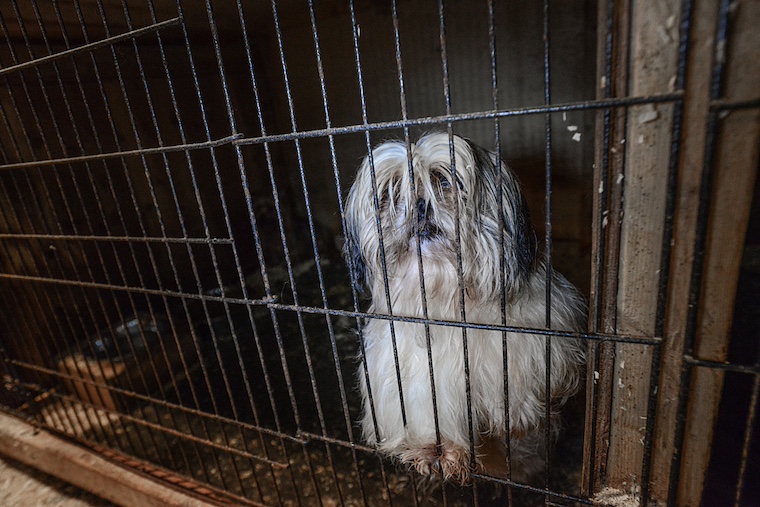
Photo Credit: Jo-Anne McArthur / Montreal SPCA / We Animals
International Women’s Month is both a recognition of progress and a reminder of persistent inequities. While we celebrate remarkable achievements, we must also confront the enduring systems that seek to control women’s bodies. Despite progress, exploitation in varied forms persists and is too often normalized.
This argument extends beyond human concerns: Female animals are also subjected to systems that value productivity over inherent worth. Across industries, these systems parallel the exploitation faced by women, as female animals are controlled, used, and disposed of when unprofitable.
In dog breeding, commercial facilities, backyards, or so-called “ethical” programs, female dogs are repeatedly impregnated, denied proper veterinary care, and often isolated from social interaction and comfort. When they can no longer produce, they are abandoned, surrendered to shelters, or killed.
Exploitation extends far beyond dogs. In the dairy industry, cows are repeatedly impregnated to sustain milk production until their bodies give out. In laboratories, female animals endure invasive reproductive studies and confinement. Across other breeding industries, from rabbits and guinea pigs to birds and reptiles sold as pets, females are treated primarily as reproductive machines.
Different industries may use different terms to justify these practices, but the reality is the same: reproductive bodies are controlled, exploited, and discarded when no longer profitable.
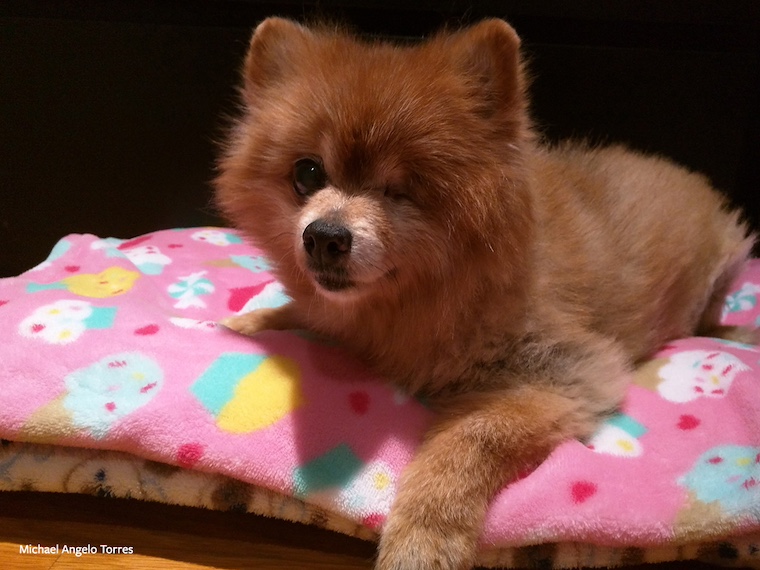
Photo Credit: Michael Angelo Torres
An example is Delilah, a tiny senior Pomeranian who endured years of forced breeding in a puppy mill. Her later life included chronic illness, fragile bones, reproductive-related conditions, and lingering emotional scars, living reminders of the cost of exploitation. Yet despite everything, Delilah radiated joy, tenderness, and trust, bringing comfort and happiness to her adopted family and everyone she met. This is why rescue work matters and why supporting spay-and-neuter programs, along with ending commercial animal sales, is essential. Every dog like Delilah who survives these systems reminds us that compassion must lead to action.
The people who rescue and care for animals embody the strength and perseverance that Women’s History Month celebrates. Roughly 70–80% of volunteers and staff in shelters and rescues are women, whose tireless work restores dignity to animals discarded by profit-driven systems. Men working in animal advocacy are also generally welcomed, a courtesy many women in male-dominated spaces rarely experience, a reminder that the compassion and leadership of women sustain social movements and model the change we hope to see in society.
Delilah’s life is a reminder that survival is different from justice. Just as women deserve dignity, respect, and autonomy, female animals also deserve protection and care. Let’s honor women’s strength and extend that same respect to female animals — and not just for International Women’s Month, but all year long.
To learn more and take action, visit our Puppy Mills campaign.
Posted on All-Creatures.org: March 24, 2026
Return to Companion Animal Care
Follow us on:


- Home Page
- What's New
- Contact Us
- Action Alerts
- Animal Exploitation
- Animal Issues
- Animal Rights Activism
- Archives
- Art & Photography
- Articles Directory
- Bible
- Bible Commentary Blog
- Books
- Campaigns
- Church & Religion
- Discussions
- Events / Podcasts / Media
- Health
- Hosted Web Sites
- Humor
- Kids' Korner
- Letters
- Links
- Nature Studies
- Newsletter
- Poetry & Stories
- Prayers
- Quotations
- Recipes with Photos
- Recipes Without Photos
- Sermons
- Stop Cruelty in Churches
- Video Library
- The Mary T. and Frank L. Hoffman Family Foundation
- Email: [email protected]
A web site sponsored by The Mary T. and Frank L. Hoffman Family Foundation and all-creatures.org
Copyright © 1998-2026 The Mary T. and Frank L. Hoffman Family Foundation. All rights reserved. May be copied only for personal use or by not-for-profit organizations to promote compassionate and responsible living. All copied and reprinted material must contain proper credits and web site link www.all-creatures.org.
Fair Use Notice: This document, and others on our web site, may contain copyrighted material whose use has not been specifically authorized by the copyright owners. We believe that this not-for-profit, educational use on the Web constitutes a fair use of the copyrighted material (as provided for in section 107 of the US Copyright Law). If you wish to use this copyrighted material for purposes of your own that go beyond fair use, you must obtain permission from the copyright owner.

Thank you for visiting all-creatures.org.