Companion Animal Care Articles used with permission from All-Creatures.org
The National Link Coalition discusses the legal trend wherein companion animals are increasingly being viewed as more than just property as well as a decades-old precedent in Switzerland, where animals have their own status between humans and mere objects.
Defining Animals as “More Than Property” Based on Inherent “Dignity”
From September 2025 LINK-Letter, The National Link Coalition
September 2025
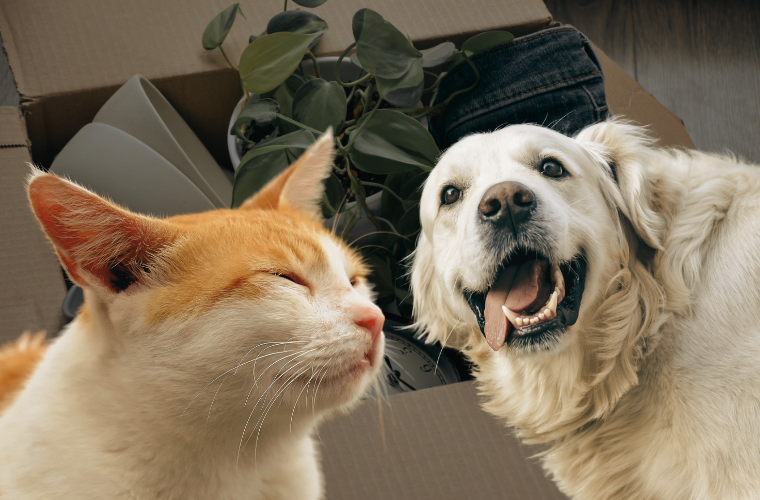
Images from Canva
In the December 2024 LINK-Letter, we reviewed a recent journal article by Canadian researcher Amy Fitzgerald who argued that the growing number of Link-related laws, such as states and provinces that allow courts to include pets in domestic violence protection orders or that include acts of animal abuse within statutory definitions of domestic violence, are helping to redefine animals as something more than their historical categorization as “property.” She proposed that the Link concept of framing animal maltreatment in terms of how animal abuse also harms people warrants positioning animals in a new legal category she called “more-than-property.”
It recently came to our attention that there is a potential precedent for animals being considered other than “property,” albeit not one based on The Link, in Switzerland. Since 1992, Swiss animal welfare has been strongly augmented by a constitutional provision warranting the protection of the “dignity of creature”, explicitly conceding esteem to all nonhuman living beings, namely animals, at the highest legal level. Since 2004, Swiss animals have not been considered “objects” but rather are seen as having their own status between objects and humans – somewhat “more than property”.
In Switzerland, the constitutional status of animal welfare as an essential principle of society resulted in an animal welfare act in 2005 based upon the dignity and well-being of animals and that prohibits both cruelty to animals and disrespect of their dignity. Animal welfare and “dignity of the creature” were defined within Articles 80 and 120, respectively, of the Swiss Constitution as basic principles.
Animal cruelty can theoretically be punished with fines of up to one million Swiss francs, depending on the offender’s income, and imprisonment for up to three years. Swiss anti-cruelty laws, however, appear to make no reference to animal abuse’s potential impacts on human well-being, but rather are based upon the need to protect an animal’s inherent dignity and its well-being.
As an example, bestiality was prohibited in the Animal Welfare Act of 2008 based upon how humans’ having sex with animals demeans animals’ dignity. (By contrast, anti-bestiality laws in the U.S. in recent years have been framed as animal sexual abuse and enacted based upon documented Links with child sexual abuse and pornography.)
The appreciation of an animal’s dignity is described as “an acknowledgement of its intrinsic nature and a respect of animals in their being and otherness,” animal law attorney Vanessa Gerritsen wrote back in 2013.
-- Gerritsen, V. (2013). Animal welfare in Switzerland – Constitutional aim, social commitment, and a major challenge. Global Journal of Animal Law, 1, 1-15. https://journal.fi/gjal/issue/view/11207
Posted on All-Creatures.org: September 11, 2025
Return to Companion Animal Care
Follow us on:


- Home Page
- What's New
- Contact Us
- Action Alerts
- Animal Exploitation
- Animal Issues
- Animal Rights Activism
- Archives
- Art & Photography
- Articles Directory
- Bible
- Bible Commentary Blog
- Books
- Campaigns
- Church & Religion
- Discussions
- Events / Podcasts / Media
- Health
- Hosted Web Sites
- Humor
- Kids' Korner
- Letters
- Links
- Nature Studies
- Newsletter
- Poetry & Stories
- Prayers
- Quotations
- Recipes with Photos
- Recipes Without Photos
- Sermons
- Stop Cruelty in Churches
- Video Library
- The Mary T. and Frank L. Hoffman Family Foundation
- Email: [email protected]
A web site sponsored by The Mary T. and Frank L. Hoffman Family Foundation and all-creatures.org
Copyright © 1998-2026 The Mary T. and Frank L. Hoffman Family Foundation. All rights reserved. May be copied only for personal use or by not-for-profit organizations to promote compassionate and responsible living. All copied and reprinted material must contain proper credits and web site link www.all-creatures.org.
Fair Use Notice: This document, and others on our web site, may contain copyrighted material whose use has not been specifically authorized by the copyright owners. We believe that this not-for-profit, educational use on the Web constitutes a fair use of the copyrighted material (as provided for in section 107 of the US Copyright Law). If you wish to use this copyrighted material for purposes of your own that go beyond fair use, you must obtain permission from the copyright owner.

Thank you for visiting all-creatures.org.