
|
|
Arctic and Antarctic under Global Warming |
Articles and Reports: Arctic and Greenland
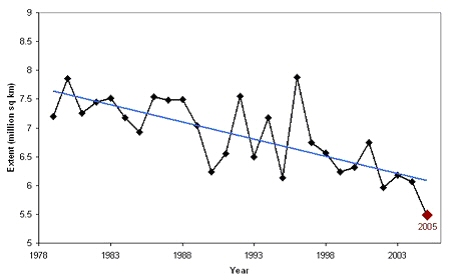
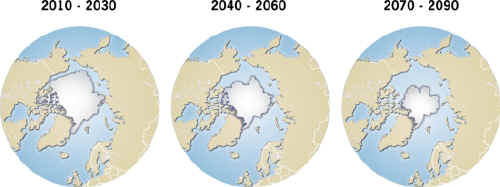
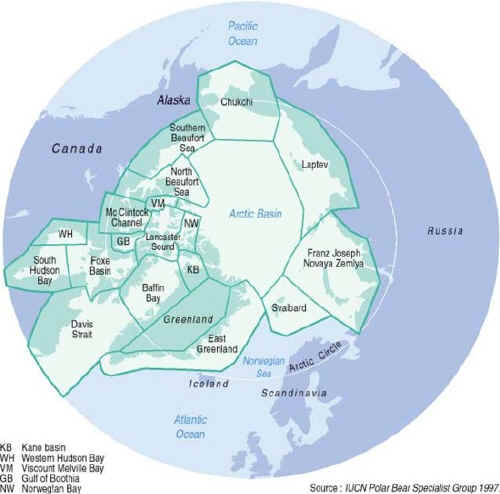
Melting Arctic Sea Ice Threatens Polar BearsBy Crystal Davis on Monday, January 8, 2007. Extent of September Sea Ice Threats to Polar Bears Projected Changes in Arctic Ice Pack Government Action Distribution of Polar Bear Populations in the Arctic Polar bears are not the only species threatened by global warming. A major international study published in the peer-reviewed journal Nature found that 15 to 35 percent of species worldwide may be at risk of extinction by 2050. The survival of these species will depend in part on the climate change policies adopted by the world's largest greenhouse gas emitters. |
Return to:
Articles and Reports
Return to: Arctic and Antarctic under Global
Warming
Return to:
Home Page
Your Comments and Inquiries are Welcome

Fair Use Notice: This document may contain copyrighted material whose use has not been specifically authorized by the copyright owners. We believe that this not-for-profit, educational use on the Web constitutes a fair use of the copyrighted material (as provided for in section 107 of the US Copyright Law). If you wish to use this copyrighted material for purposes of your own that go beyond fair use, you must obtain permission from the copyright owner.
|

 Since
Since
