An Animal Rights/Vegan Activists' Strategies Article used with permission from All-Creatures.org
Jon Hochschartner revisits the 2002 horror classic 28 Days Later and examines the film's treatment of the Animal Liberation Front. In the movie, an ALF-like group liberates chimpanzees from a lab, unintentionally releasing a virus that leads to the collapse of society.
28 Days Later and the Animal Liberation Front
From Jon Hochschartner, Slaughter-Free America, slaughterfreeamerica.substack.com
October 2025
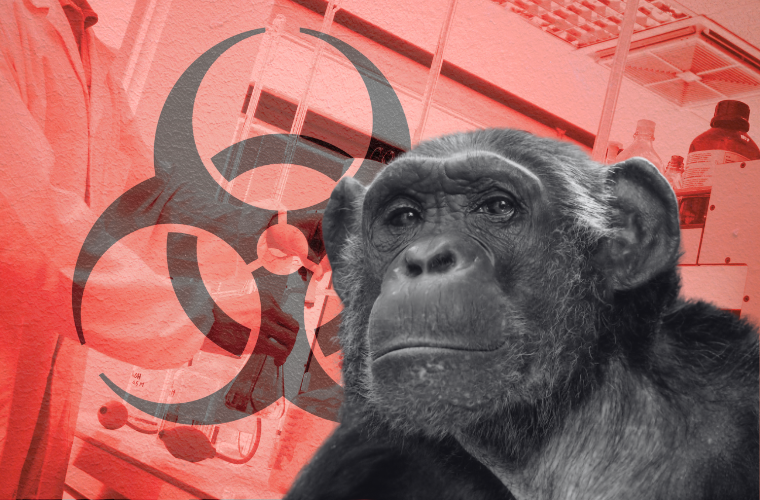
Images from Canva
I’m fairly sure I saw 28 Days Later, Danny Boyle’s 2002 horror classic, around the time of its release on DVD. I vaguely remember renting the title with friends from the Video Plus, one of two similar establishments in my Adirondack hometown. To be honest though, prior to revisiting it now, I didn’t have the clearest recollection of the movie, aside from the fact it starred Cillian Murphy and was shot with digital cameras.
In the years since it came out, the film has been widely credited with reviving the undead genre by introducing running antagonists, as opposed to the slow-moving, shuffling zombies audiences were used to. Still, Zack Snyder’s 2004 remake of Dawn of the Dead made a more lasting, positive impression on me, which is somewhat surprising, since, among other things, I’m generally not a fan of the director.
One plot element of 28 Days Later I did remember is the zombie outbreak traces back to chimpanzees in a laboratory who are infected with a rage virus. The primates are released by unnamed animal activists, who presumably are meant to be affiliated with a leaderless group like the Animal Liberation Front. It was this element, along with the arrival of a third entry in the series, which prompted my rewatch.
As an animal activist myself, I was open to the possibility this plot choice represented a deep-seated scorn for the nonhuman struggle. One could imagine a version of this movie that aggressively blamed naive ALF members for the end of the world. By and large, though, I don’t think the film does that. The laboratory action is portrayed in a brief, relatively matter-of-fact way and the movie doesn’t return to it.
My guess is Boyle and screenwriter Alex Garland weren’t particularly interested in animal rights, but viewed ALF members as a convenient plot mechanism for getting the infected chimpanzees out of the laboratory. Groups like the ALF were quite active in the early 2000s and frequently appeared in the news. So their involvement in the events depicted in the film would have seemed plausible to audiences.
A brief search on my part didn’t reveal whether the chimpanzees used in the scene were real animal actors, but I assume they were, which is unfortunate. Thankfully, if the movie were made today, I’d wager the chimpanzee characters would be created through computer-generated imagery, as a result of technological advances over the intervening years and pressure applied by actual nonhuman activists.
Legendary critic Roger Ebert wrote that 28 Days Later: “begins as a great science fiction film and continues as an intriguing study of human nature. The ending is disappointing – an action shoot-out, with characters chasing one another through the headquarters of a rogue Army unit – but for most of the way, it’s a great ride. I suppose movies like this have to end with the good and evil characters in a final struggle.”
Overall, I thought the film was very good. Many of the story beats felt familiar if you’ve sampled zombie media over the past two decades. I don’t know enough about the genre prior to say whether these tropes originated here. One of my biggest complaints, however, was the low quality of the digital footage. Next, I plan to watch the second entry in the series, which I may have seen, before catching up with the third.
Posted on All-Creatures.org: October 31, 2025
Return to Animal Rights/Vegan Activist Strategies
Follow us on:


- Home Page
- What's New
- Contact Us
- Action Alerts
- Animal Exploitation
- Animal Issues
- Animal Rights Activism
- Archives
- Art & Photography
- Articles Directory
- Bible
- Bible Commentary Blog
- Books
- Campaigns
- Church & Religion
- Discussions
- Events / Podcasts / Media
- Health
- Hosted Web Sites
- Humor
- Kids' Korner
- Letters
- Links
- Nature Studies
- Newsletter
- Poetry & Stories
- Prayers
- Quotations
- Recipes with Photos
- Recipes Without Photos
- Sermons
- Stop Cruelty in Churches
- Video Library
- The Mary T. and Frank L. Hoffman Family Foundation
- Email: [email protected]
A web site sponsored by The Mary T. and Frank L. Hoffman Family Foundation and all-creatures.org
Copyright © 1998-2026 The Mary T. and Frank L. Hoffman Family Foundation. All rights reserved. May be copied only for personal use or by not-for-profit organizations to promote compassionate and responsible living. All copied and reprinted material must contain proper credits and web site link www.all-creatures.org.
Fair Use Notice: This document, and others on our web site, may contain copyrighted material whose use has not been specifically authorized by the copyright owners. We believe that this not-for-profit, educational use on the Web constitutes a fair use of the copyrighted material (as provided for in section 107 of the US Copyright Law). If you wish to use this copyrighted material for purposes of your own that go beyond fair use, you must obtain permission from the copyright owner.
Thank you for visiting all-creatures.org.
