An Article Series from All-Creatures.org
Animal Rights/Vegan Activists' Strategies
This chicken factory farm has been transformed into a hub for sustainable, animal-free agriculture
From Amy Jones,
SpeciesUnite.com
September 2024
A former poultry barn has been
transformed into a state-of-the-art 15,000-square-foot greenhouse, now
serving as a vegetable farm and research center focused on developing and
showcasing sustainable alternatives for former chicken farmers.... To make a
living growing vegetables on my land is my dream. This is the healthy way of
making food. In the chicken house, you deal with ammonia, the smell,
insects, all that. Versus the greenhouse, you go in there it just feels
fresh and healthy.

Photo:
Transfarmation Project
A 15,000-square-foot greenhouse in Wadesboro, North Carolina, once
home to a poultry farm that bred 540,000 chickens every year, will
reopen as a research center focused on developing and promoting
organic farming alternatives for former poultry farmers.
The facility, set to open on September 6, 2024, is owned by Tom Lin
and his wife Sokchea who have transitioned from poultry farming to
cultivating a variety of vegetables, including tomatoes, lettuce,
berries, and mushrooms. They've also repurposed an old refrigerated
truck bed into a specialty mushroom-growing chamber as part of their
new approach to farming.
For 20 years, Lin raised chickens for Pilgrim’s Pride, one of the
largest meat producers in the US, supplying chicken to retailers
like Walmart, Costco, and KFC. However, in 2018, their farming
contract was unexpectedly terminated, plunging him into debt.
The abrupt change forced Lin to take a job unrelated to farming, but
it also prompted him to rethink the future of his farm. This led to
a partnership with The Transfarmation Project, an initiative by
Mercy For Animals that helps farmers transition from factory farming
to sustainable agricultural practices. With their support, Lin
expanded crop production and began cultivating specialty mushrooms
as part of the farm's transformation.
“This transformation is more than a new beginning for our farm; it
is also a source of hope for a better, more sustainable future,”
said Lin. “With the support of Transfarmation, we are moving toward
a more environmentally friendly and economically viable way of
farming.”
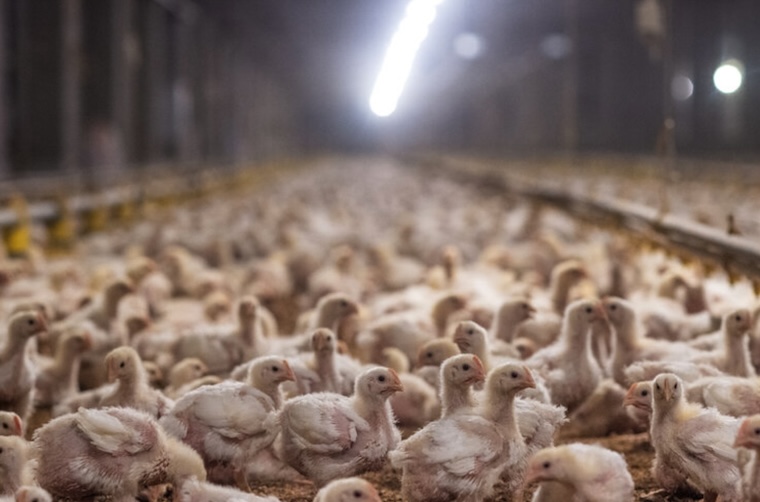
Photo:
Jo-Anne McArthur/We Animals Media
The newly converted greenhouse-to-demonstration hub marks a
significant milestone for The Transfarmation Project, following over
three years of dedicated work to support transitions from factory
animal farming to specialty-crop production.
The hub will serve as a research center focused on sustainable
agricultural practices, while also welcoming visitors interested in
exploring alternatives to factory farming. It will provide a
platform for farmers to develop and showcase viable, sustainable
agricultural opportunities and serve as a venue for public events,
offering a firsthand look at the transformative potential of farm
transitions.
“Tom and Sokchea’s transition from raising more than 540,000
chickens annually to operating a vibrant vegetable farm full of
tomatoes, lettuce, berries, and mushrooms is a powerful testament to
what can be achieved,” said Tyler Whitley, director of The
Transfarmation Project.
“Through their collaboration with Transfarmation, the Lims prove
that farmers can break free from the exploitative factory-farming
system, as well as thrive and enjoy a better quality of life,” he
continued. “We hope their farm becomes a beacon of inspiration,
motivating farmers, policymakers, and the public to visit, witness
the transformation firsthand, and advocate a sustainable overhaul of
our food system.”
Environmental change
Transitioning from factory farming to specialty crop production
offers significant environmental benefits, according to The
Transfarmation Project. Specialty crops produce far fewer greenhouse
gas emissions compared to factory farming, whilst the shift allows
for soil remediation, as these crops help restore degraded land and
promote healthier soils. This has far-reaching benefits, by
supporting local ecosystems and biodiversity.
Water conservation is another key advantage, as specialty crop
farming is far more efficient in water usage, reducing both
consumption and pollution commonly associated with animal
agriculture.
“To make a living growing vegetables on my land is my dream,” he
told The Guardian. “This is the healthy way of making food. In the
chicken house, you deal with ammonia, the smell, insects, all that.
Versus the greenhouse, you go in there it just feels fresh and
healthy.”
Posted on All-Creatures.org: September 10, 2024
Return to Animal Rights/Vegan Activist Strategies
Follow us on:


- Home Page
- What's New
- Contact Us
- Action Alerts
- Animal Exploitation
- Animal Issues
- Animal Rights Activism
- Archives
- Art & Photography
- Articles Directory
- Bible
- Bible Commentary Blog
- Books
- Campaigns
- Church & Religion
- Discussions
- Events / Podcasts / Media
- Health
- Hosted Web Sites
- Humor
- Kids' Korner
- Letters
- Links
- Nature Studies
- Newsletter
- Poetry & Stories
- Prayers
- Quotations
- Recipes with Photos
- Recipes Without Photos
- Sermons
- Stop Cruelty in Churches
- Video Library
- The Mary T. and Frank L. Hoffman Family Foundation
- Email: [email protected]
A web site sponsored by The Mary T. and Frank L. Hoffman Family Foundation and all-creatures.org
Copyright © 1998-2026 The Mary T. and Frank L. Hoffman Family Foundation. All rights reserved. May be copied only for personal use or by not-for-profit organizations to promote compassionate and responsible living. All copied and reprinted material must contain proper credits and web site link www.all-creatures.org.
Fair Use Notice: This document, and others on our web site, may contain copyrighted material whose use has not been specifically authorized by the copyright owners. We believe that this not-for-profit, educational use on the Web constitutes a fair use of the copyrighted material (as provided for in section 107 of the US Copyright Law). If you wish to use this copyrighted material for purposes of your own that go beyond fair use, you must obtain permission from the copyright owner.
Thank you for visiting all-creatures.org.
