An Animal Rights/Vegan Activists' Strategies Article used with permission from All-Creatures.org
Dr. Thomas Johnson reviews some of the highlights of Ed Winters' books on debating veganism with nonvegans. He then presents an alternative approach to addressing conflict based in part on the work of Virginia Satir and Carl Rogers which is meant to promote healthy communication as well as cognitive health and overall well-being.
Promoting Healthy Communication Between Vegans and Nonvegans and Other Conflicted Groups Using Person-Centered/Conjoint Therapy Approaches to Conflicts
From Dr. Thomas Johnson, NASP, CPQ
October 2025
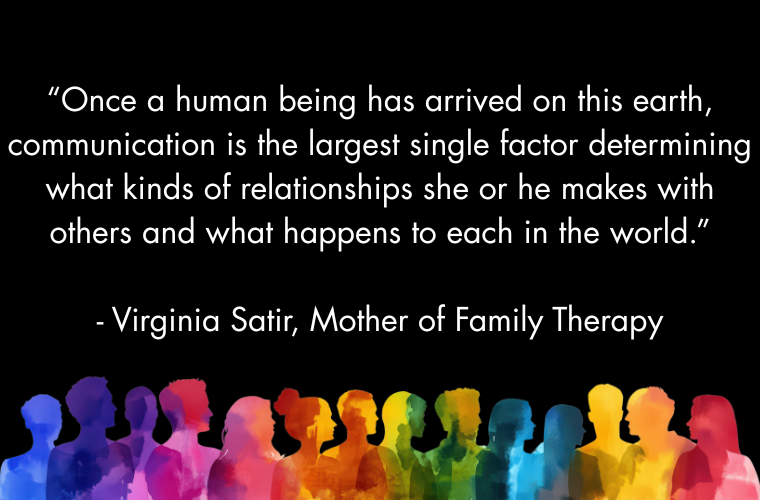
Image from Canva
Vegan author and activist Ed Winters is the author of This is Vegan Propaganda (And other Lies The Meat Industry Tells You) (2022) and How to Argue With a Meat Eater (And Win Every Time) (2024).
[In 2016 Winters] co-founded the animal rights organisation Surge, as well as The Official Animal Rights March, a global event which grew from 2,500 participants in London in 2016 to 41,000 participants across the world in 2019. [He] continues to be the co-director of Surge, with the organisation focusing on producing films that tell the untold stories of animals, as well as educational programmes for universities... [He] has spoken at over one-third of UK universities and at every Ivy League college, including as a guest lecturer at Harvard University.
—About the Author, How to Argue With a Meat Eater
He begins Chapter 1 of Vegan Propaganda in the following way:
Like nearly every vegan I have ever met, I never expected when I was younger that I would one day stop consuming all animal products. In fact, growing up, even the concept of vegetarianism was routinely a joke around the family dinner table (it’s always easier to laugh at something you don’t understand) with veganism only being spared because we had never heard of it. We would make truly terrible jokes, such as, ‘What’s the best thing about having a vegetarian around for dinner?’ There would then be a pause before one of us said, ‘More meat for us!’ Although, truth be told, since going vegan I have encountered worse, such as the much used ‘How do you know when someone is vegan? Don’t worry, they’ll tell you!’ I know people say that vegans don’t have a sense of humour but let’s be honest – we’re not often presented with the best material.
—Page 5, This is Vegan Propaganda
Winters goes on to say:
One of the core values of most relevance to any argument related to the consumption of animal products is that of cruelty – is it right or wrong to needlessly inflict pain and suffering on others? Only a deranged sociopath would disagree that being wilfully cruel is morally wrong[...] [V]eganism is an ethical stance against needless animal exploitation – it’s not specifically about diet, although food is the primary reason why we use animals. Veganism is instead a social justice issue that recognises that non-human animals deserve autonomy, moral consideration and the recognition that their lives are far more valuable than the reasons we use to justify exploiting them.
—Page 12, This is Vegan Propaganda
In addition to the moral argument Ed Winters also provides up-to-date evidence supporting the superiority of a vegan diet in promoting public health and planetary health. He also provides ample evidence regarding the personal health benefits of a vegan diet. One of the arguments that apparently comes up frequently takes the form of - “there isn't enough evidence to support the claim that veganism is healthy in the long term”. In response to this he refers to the Blue Zones which include Okinawa, Japan; Sardinia, Italy; Costa Rica; Icaria, Greece; Loma Linda, California. The evidence from studies of these places “suggests that a plant-based diet can absolutely ensure a long and healthy life and might even be ideal for doing so, especially if combined with other important lifestyle factors such as movement, socialising and living with purpose” (page 283). This quote is from his second book - How to Argue with a Meat Eater (And Win Every Time).
Both of Winters’ books provide ample evidence to help vegans to better debate the superiority of their positions based on ethics and scientific research.
This article that you are reading now is not intended to help others debate their positions as most vegans that I have met don’t seem to feel the need to become better debaters or deal with conflict in ways that are likely to alienate family or friends.
This paper is built on the writings of psychologists and other health care providers trained in what Abraham Maslow refers to as the “third force in psychology.”
The first force is based largely on the contributions of psychoanalytic writers such as psychiatrist Sigmund Freud and some of his students like Alfred Adler and Carl Jung.
The second force is based on behaviorism and follows the writings of psychologists like B. F. Skinner and psychiatrist Joseph Wolpe.
The third force represents humanistic and person-centered approaches to helping relationships. Carl Rogers is considered one of the first pioneers in this tradition and he has consistently emphasized the importance of empathy, positive regard and genuineness on the part of the therapist. Clients and students learn how to develop these skills and attitudes by experiencing them from the helping professionals who are counseling them and educating them.
Virginia Satir also comes out of this tradition, and her work emphasizes the importance of healthy communication. She is often referred to as the “mother of family therapy.” She is well known within the field for her statement “Once a human being has arrived on this earth, communication is the largest single factor determining what kinds of relationships she or he makes with others and what happens to each in the world.”
She identified four unhealthy and dysfunctional modes of communication:
- Placating
- Blaming
- Distracting
- Intellectualizing
Congruence/leveling was identified as a healthy mode and involves authenticity and is key to increasing self-worth and connection in families and society—which are the goals of this type of therapy along with increased empathy and positive regard.
Satir provides additional clarification of congruence/leveling in this passage from The New Peoplemaking:
The leveling response makes it possible for you to live as a whole person: real, in touch with your head, your heart, your feelings, and your body. Being a leveler enables you to have integrity, commitment, honesty, intimacy, competence, creativity, and the ability to work with real problems in a real way. The four other communication patterns result in doubtful integrity, commitment by bargain, dishonesty, loneliness, shoddy performance, strangulation by tradition, and dealing in a destructive way with fantasy problems. [...] People are hungry for straightness, honesty, and trust. When they become aware of it and are courageous enough to try it, they diminish their distance from other people.
—Page 58, The New Peoplemaking
The titles of her classic works include Conjoint Family Therapy and The New Peoplemaking. Not only does she emphasize the importance of empathy, positive regard, and genuineness, but she also offers a framework (as discussed above) for others to utilize in identifying what constitutes healthy communication and unhealthy communication.
As a long-time practitioner in this tradition, I agree with her findings that (in my experience) most family members coming in for counseling are in distress and conflict and have not learned how to communicate in healthy ways. One of the primary tasks of the family therapist is to identify the primary communication modes of each family member when under stress and give feedback and illustrate how to move to healthy communication. Modeling healthy communication is part of the family counselor’s responsibility.
Speaking on a personal level, I was fortunate to be able to participate in training sessions with both Satir and Rogers.
In the mid 1980’s as University of Southern Maine faculty, we arranged to have Satir come to the university to present her views and illustrate how she works in role playing sessions with volunteer family members for our graduate students.
In the case of Carl Rogers, I was invited to attend training sessions with Carl, his daughter Natalie and granddaughter Francis in Santa Rosa, California. I also had one-on-one time with Carl. These training sessions were two of the most meaningful educational post-doctoral learning experiences in my life. These experiences were in the mid 1980’s shortly before both of them passed away.
The interested reader might appreciate the fact that Dr. Rogers was very involved in his 80’s in applying his approach on an international level in Belfast, Ireland with the conflicts between Catholics and Protestants. He was also involved with Blacks and Whites in South Africa regarding their racial and cultural conflicts and later in the Soviet Union regarding cultural and governmental differences and conflicts. There is extensive coverage of these events in several different encyclopedias including Britanica and Wikipedia. As a sample Wikipedia states,
Based on a 1982 survey of 422 respondents of U.S. and Canadian psychologists, he was considered the most influential psychotherapist in history (Freud ranked third). [...] The application to cross-cultural relations has involved workshops in highly stressful situations and global locations, including conflicts and challenges in South Africa, Central America, and Ireland. [...] Rogers's international work for peace culminated in the Rust Peace Workshop, which took place in November 1985 in Rust, Austria. Leaders from 17 nations convened to discuss the topic "The Central America Challenge". The meeting was notable for several reasons: it brought national figures together as people (not as their positions), it was a private event, and was an overwhelming positive experience where members heard one another and established real personal ties, as opposed to stiffly formal and regulated diplomatic meetings.
—from Wikipedia, accessed 10/8/25
Of relevance here is the Harvard Medical School’s 2025 A Guide to Cognitive Fitness which states that cognitive fitness should be our number one health goal. All-Creatures.org has posted four of my recent articles based largely on this Harvard publication.
In addition to eating a plant-based diet the Harvard publication identifies six practices that promote healthy brain function. The practice that is especially relevant here is cultivating positivity and identifying your purpose. As people become better active empathic listeners and learn how to show more positive regard in their communication, they achieve better brain health and overall health.
The neurologists and neuroscientists contributing to this publication cite several studies. One such study is the Barcelona Brain Health Initiative,
[...] an ongoing study following more than 6,000 adults over time to identify factors that promote brain health and minimize the risk of neurological and psychiatric diseases. Data from this study revealed that a clear purpose in life not only has a direct impact on brain health, but also helps the brain cope with neural damage, boosting resilience.
And that's not all. People with a clear sense of their purpose in life also have lower rates of depression and anxiety disorders, and they sustain better cognitive functioning into old age, particularly in memory and executive functions[.]
—Page 48, A Guide to Cognitive Fitness
Conversely,
A study published in Alzheimer's & Dementia followed nearly 300 people over age 55 for four years and found that those with more frequent negative, pessimistic thoughts showed greater decline in cognitive function than individuals who tended to think more positively, ruminate less over the past, and worry less about the future. Interestingly, if the negative thinkers developed Alzheimer's disease, they also had more amyloid deposits and tau tangles in their brains.
—Page 48, A Guide to Cognitive Fitness
In conclusion and in summary, this paper reviews some of the highlights of Ed Winters’ books on how to become better debaters in demonstrating the superiority of veganism over nonvegans. The research he cites is impressive and being able to document the research is a major contribution to vegan literature.
A contrasting perspective offered here is designed to promote brain health, overall health and better relationships with others who have different perspectives than those of us who are working for a cruelty free “peaceful world, for humans, animals and the environment” following the guidance of third force humanistic psychology contributors Virginia Satir and Carl Rogers who emphasize empathy, positive regard and genuineness as part of the healthy communication process.
Biographical Notes
Dr. Thomas Johnson completed his graduate studies as a US Public Fellow at Brown University in social psychiatry and medical sociology. He earned his master’s degree from Harvard University in counseling psychology and doctor’s degree in counseling psychology from the University of California at Berkeley. He completed his internship at Duke University. In addition to his work as a practitioner he has had faculty positions at Rutgers University, the University of Southern Maine and Bates College. He is the founder and first president of the Maine Division of the American Association of Marriage and Family Therapy. Dr. Johnson is currently limiting his practice to research and consulting psychology.
Learn more about Dr. Thomas Johnson and see his other contributions to All-Creatures here!
Posted on All-Creatures.org: October 8, 2025
Return to Animal Rights/Vegan Activist Strategies
Follow us on:


- Home Page
- What's New
- Contact Us
- Action Alerts
- Animal Exploitation
- Animal Issues
- Animal Rights Activism
- Archives
- Art & Photography
- Articles Directory
- Bible
- Bible Commentary Blog
- Books
- Campaigns
- Church & Religion
- Discussions
- Events / Podcasts / Media
- Health
- Hosted Web Sites
- Humor
- Kids' Korner
- Letters
- Links
- Nature Studies
- Newsletter
- Poetry & Stories
- Prayers
- Quotations
- Recipes with Photos
- Recipes Without Photos
- Sermons
- Stop Cruelty in Churches
- Video Library
- The Mary T. and Frank L. Hoffman Family Foundation
- Email: [email protected]
A web site sponsored by The Mary T. and Frank L. Hoffman Family Foundation and all-creatures.org
Copyright © 1998-2026 The Mary T. and Frank L. Hoffman Family Foundation. All rights reserved. May be copied only for personal use or by not-for-profit organizations to promote compassionate and responsible living. All copied and reprinted material must contain proper credits and web site link www.all-creatures.org.
Fair Use Notice: This document, and others on our web site, may contain copyrighted material whose use has not been specifically authorized by the copyright owners. We believe that this not-for-profit, educational use on the Web constitutes a fair use of the copyrighted material (as provided for in section 107 of the US Copyright Law). If you wish to use this copyrighted material for purposes of your own that go beyond fair use, you must obtain permission from the copyright owner.
Thank you for visiting all-creatures.org.
