Alternatives to Animal Testing, Experimentation and Dissection Articles from All-Creatures.org
21st Century Neuroscience
From CAARE Citizens for Alternatives to Animal Research
March 2024
Discussion of high-quality, human-relevant alternatives to animals to study the brain and neurological disorders. With numerous examples of cutting-edge research, they show how human-relevant methods can and must replace this category of animal experiments. Dr. Miller is the author of the 2023 book “The Rise and Fall of Animal Experimentation” and has recently joined CAARE as scientific advisor.
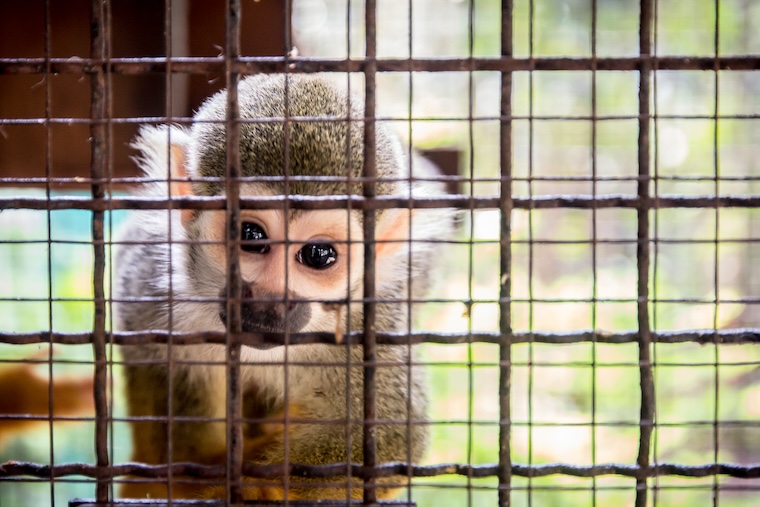
One of the largest categories of animal research involves painful and invasive brain experiments done purportedly to understand the human brain and neurological diseases. While animal experiments routinely fail to model human disease, this area of research has been especially unsuccessful. Most of our neurological and psychiatric diseases are without effective treatments and even fewer have cures.
CAARE’s president, Barbara Stagno, and Richard Miller PhD, Professor
Emeritus of Pharmacology at Northwestern University Feinberg School
of Medicine have published an article discussing high-quality,
human-relevant alternatives to animals to study the brain and
neurological disorders. With numerous examples of cutting-edge
research, they show how human-relevant methods can and must replace
this category of animal experiments. Dr. Miller is the author of the
2023 book The Rise and Fall of Animal Experimentation: Empathy, Science, and the Future of Research and
has recently joined CAARE as scientific advisor.
Advances in animal-free research to study neurological disease are
growing and improving. Researchers at University of
Wisconsin-Madison have refined 3D bioprinted brain tissue that
replicates key brain functions and believe it will help us to study
diseases like Alzheimer's and Parkinson’s. At University of Essex in
the UK, scientists are using AI and brain scans of children who
experienced trauma, rather than inflicting stress on baby animals to
reveal new information on how trauma impacts developing brain
function and provide new directions for treatment.
....
Please read the ENTIRE ARTICLE HERE, including:
- Moving past animal experiments to understand human neurological disease
- NIH statement on catalyzing the development of non-animal methods
- Researchers 3D-print functional human brain tissue
- World's largest childhood trauma study uncovers brain rewiring
Return to Alternatives to Animal Testing, Experimentation and Dissection Articles
Read more at Animals in Labs
Follow us on:


- Home Page
- What's New
- Contact Us
- Action Alerts
- Animal Exploitation
- Animal Issues
- Animal Rights Activism
- Archives
- Art & Photography
- Articles Directory
- Bible
- Bible Commentary Blog
- Books
- Campaigns
- Church & Religion
- Discussions
- Events / Podcasts / Media
- Health
- Hosted Web Sites
- Humor
- Kids' Korner
- Letters
- Links
- Nature Studies
- Newsletter
- Poetry & Stories
- Prayers
- Quotations
- Recipes with Photos
- Recipes Without Photos
- Sermons
- Stop Cruelty in Churches
- Video Library
- The Mary T. and Frank L. Hoffman Family Foundation
- Email: [email protected]
A web site sponsored by The Mary T. and Frank L. Hoffman Family Foundation and all-creatures.org
Copyright © 1998-2026 The Mary T. and Frank L. Hoffman Family Foundation. All rights reserved. May be copied only for personal use or by not-for-profit organizations to promote compassionate and responsible living. All copied and reprinted material must contain proper credits and web site link www.all-creatures.org.
Fair Use Notice: This document, and others on our web site, may contain copyrighted material whose use has not been specifically authorized by the copyright owners. We believe that this not-for-profit, educational use on the Web constitutes a fair use of the copyrighted material (as provided for in section 107 of the US Copyright Law). If you wish to use this copyrighted material for purposes of your own that go beyond fair use, you must obtain permission from the copyright owner.
Thank you for visiting all-creatures.org.
