Immunology Expert Calls for More Human, Less Animal Research
Alternatives to Animal Testing, Experimentation and Dissection - An Animal Rights Article from All-Creatures.org
FROM
CAARE Citizens for
Alternatives to Animal Research
October 2018
An esteemed Professor of Microbiology and Immunology at Stanford University School of Medicine is issuing a bold call for human immunology research that focuses on studying human patients, as opposed to artificially induced diseases in animals.
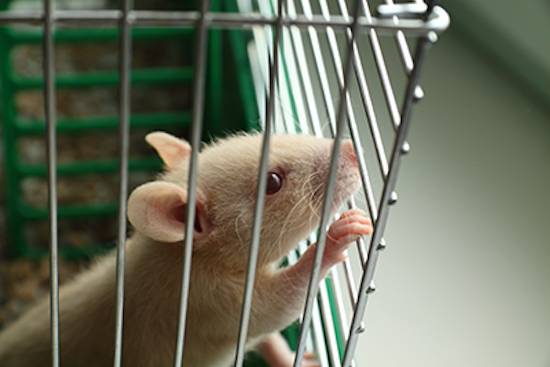
Caged Mouse
He bases his conclusion on years of seeing diseases cured in mice, while
corresponding progress in human disease has been lacking.
Dr. Davis, who directs the Stanford Institute for Immunology,
Transplantation and Infection, studies how the immune system’s T-cells (a
type of white blood cell) recognize and attack antigens, which are the
specific proteins found on the surfaces of invading viruses, bacteria, and
cancer cells.
Using blood and tissue samples from patients, he employs a process known as
mass cytometry, which can flag antibodies within the cell, combined with
computational methods to examine the larger workings of the immune system.

Credit: Davis Lab/Stanford Medicine
A maladaptive immune system can trigger autoimmune diseases by wrongly
attacking different parts of the body. This has critical applications for a
wide range of autoimmune diseases like multiple sclerosis and type 1
diabetes, for which, as Dr. Davis points out, we’ve had copious cures in
mice but none in humans.
The Davis lab focuses on exploring immunology as a whole organ system that
includes genetic and environmental effects, which are studied by gene
analysis of twins or regional human populations.

Credit: Davis Lab/Stanford Medicine
Such crucial work is impossible using mice. “The mouse is a different
species that has developed an immune system meant to deal with completely
different types of infections,” he points out.
Dr. Davis observes that immunology research on mice would be considered
illegal and immoral in humans. For example, to study multiple sclerosis,
which does not occur in mice, scientists must induce a nervous system
disorder.
They do this by injecting mice with diseased spinal cord extracts or
neurotoxins to cause brain inflammation. The result is prolonged and extreme
suffering, marked by progressive whole-body deterioration, spasms,
difficulty breathing, paralysis and ultimately death.
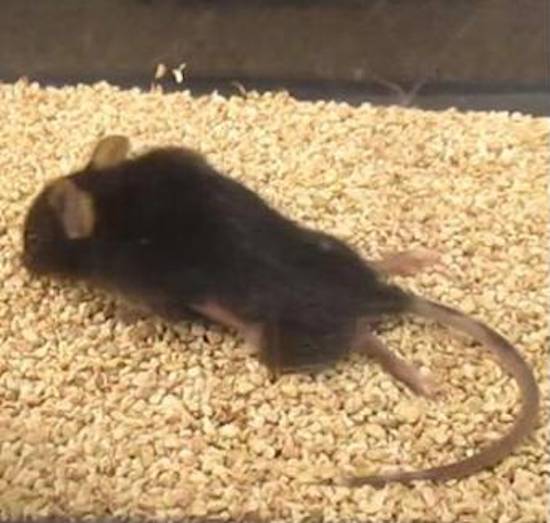
Caged Brown Mouse
Return to Alternatives to Animal Testing, Experimentation and Dissection
Follow us on:


- Home Page
- What's New
- Contact Us
- Action Alerts
- Animal Exploitation
- Animal Issues
- Animal Rights Activism
- Archives
- Art & Photography
- Articles Directory
- Bible
- Bible Commentary Blog
- Books
- Campaigns
- Church & Religion
- Discussions
- Events / Podcasts / Media
- Health
- Hosted Web Sites
- Humor
- Kids' Korner
- Letters
- Links
- Nature Studies
- Newsletter
- Poetry & Stories
- Prayers
- Quotations
- Recipes with Photos
- Recipes Without Photos
- Sermons
- Stop Cruelty in Churches
- Video Library
- The Mary T. and Frank L. Hoffman Family Foundation
- Email: [email protected]
A web site sponsored by The Mary T. and Frank L. Hoffman Family Foundation and all-creatures.org
Copyright © 1998-2026 The Mary T. and Frank L. Hoffman Family Foundation. All rights reserved. May be copied only for personal use or by not-for-profit organizations to promote compassionate and responsible living. All copied and reprinted material must contain proper credits and web site link www.all-creatures.org.
Fair Use Notice: This document, and others on our web site, may contain copyrighted material whose use has not been specifically authorized by the copyright owners. We believe that this not-for-profit, educational use on the Web constitutes a fair use of the copyrighted material (as provided for in section 107 of the US Copyright Law). If you wish to use this copyrighted material for purposes of your own that go beyond fair use, you must obtain permission from the copyright owner.

Thank you for visiting all-creatures.org.