Human studies unlock the mysteries of aging
Alternatives to Animal Testing, Experimentation and Dissection - An Animal Rights Article from All-Creatures.org

FROM CAARE Citizens for
Alternatives to Animal Research
December 2020
One common method for studying aging involves the monstrous practice of cutting and sewing two mice together, one older and one young, to see if the blood from the young mouse can reverse aging in the older mouse.

Telomeres, the protective caps of DNA at the ends of chromosomes...
Several new studies are successfully utilizing non-animal methods to advance our understanding of aging. Aging has been linked to the shortening of telomeres, the protective caps of DNA at the ends of chromosomes that are considered the ”Holy Grail of Aging.” Scientists believe that telomere malfunction is related to cancer and aging. Another manifestation of aging appears to be the buildup of malfunctioning cells, known as “senescent” cells.
A new study out of Israel attempted to reverse these characteristics of
aging cells through administering hyperbaric oxygen treatments (HBOT) to
human volunteers. The research team had already determined through prior
work that HBOT led to improvement of brain function damaged by age, stroke
or brain injury. Now they wanted to examine its effects at the cellular
level.
Scientists from Tel Aviv University (TAU) and the Shamir Medical Center
exposed human volunteers aged 64 and older to high-pressure oxygen sessions
over a period of 90 days and analyzed immune cells taken from their blood
samples before, during and after the sessions.
The results were astounding – telomere length actually increased at a rate
of 20%-38%, while the percentage of senescent cells was decreased by 11% -
37% – demonstrating that the HBOT treatments do indeed reverse the cellular
determinants of aging.
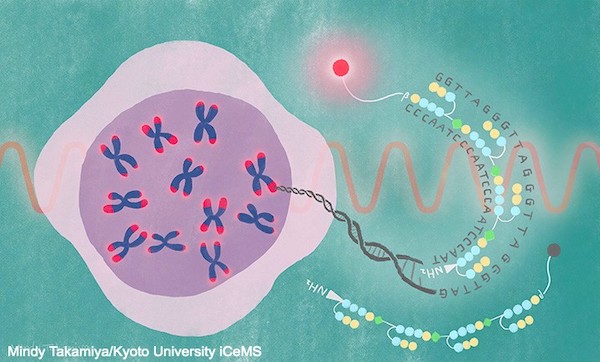
To better understand telomeres, they must be visualized, but previous
techniques were inadequate, damaging the cells, or usable only in non-living
cells. Now researchers in Japan have constructed a synthetic probe that
inserts a fluorescent compound into telomeres of live human cell lines,
lighting up the walls and allowing scientists to visualize telomere
shortening. This ability to see telomeres up close and in action can be
developed to help identify genetic diseases and to further understanding of
human aging.
But studies like these are the exception, and millions of dollars for aging
research go towards cruel and sometimes barbaric experiments on animals. One
common method for studying aging involves the monstrous practice of cutting
and sewing two mice together, one older and one young, to see if the blood
from the young mouse can reverse aging in the older mouse.
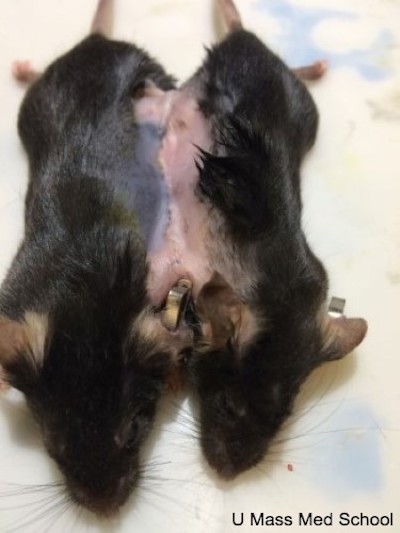
The mutilated mice will spend a miserable few months co-joined as
scientists study them, often breaking their bones or damaging their hearts
to see what effect this has on healing. This procedure, called parabiosis,
is carried out with millions of dollars in funding from the National
Institute of Aging.
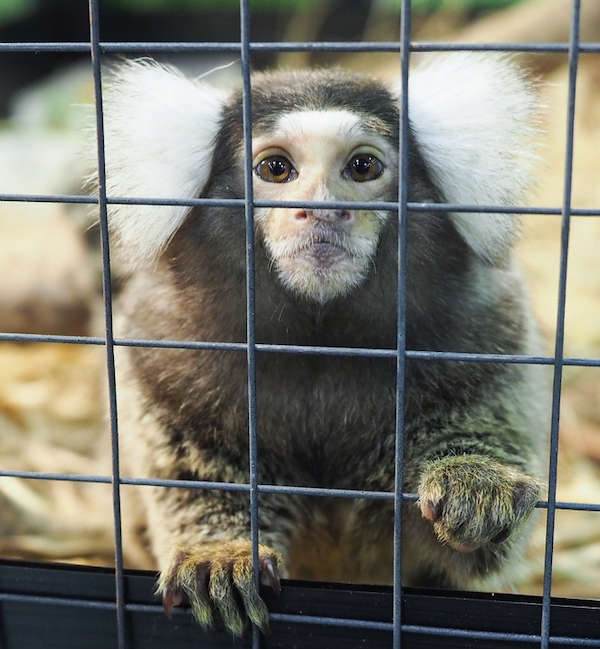
At Texas Biomedical Research Institute, aging research is carried out on
primates, where they maintain populations of marmosets and baboons for that
purpose. One experiment to study the effects of aging killed 6 marmosets,
between 4 and 20 years old to dissect their brains.
These despicable experiments are why CAARE fights every day to expose
inhumane animal research for what it is: heartless, antiquated and
irrelevant to our understanding of human biology.
If we are to make progress in science and medicine, we must see an end to
such animal abuse posing as science. Powerful and effective methods exist to
study intricate human processes, and CAARE will work to see that they are
used instead of torturing animals.
Return to Alternatives to Animal Testing, Experimentation and Dissection
Follow us on:


- Home Page
- What's New
- Contact Us
- Action Alerts
- Animal Exploitation
- Animal Issues
- Animal Rights Activism
- Archives
- Art & Photography
- Articles Directory
- Bible
- Bible Commentary Blog
- Books
- Campaigns
- Church & Religion
- Discussions
- Events / Podcasts / Media
- Health
- Hosted Web Sites
- Humor
- Kids' Korner
- Letters
- Links
- Nature Studies
- Newsletter
- Poetry & Stories
- Prayers
- Quotations
- Recipes with Photos
- Recipes Without Photos
- Sermons
- Stop Cruelty in Churches
- Video Library
- The Mary T. and Frank L. Hoffman Family Foundation
- Email: [email protected]
A web site sponsored by The Mary T. and Frank L. Hoffman Family Foundation and all-creatures.org
Copyright © 1998-2026 The Mary T. and Frank L. Hoffman Family Foundation. All rights reserved. May be copied only for personal use or by not-for-profit organizations to promote compassionate and responsible living. All copied and reprinted material must contain proper credits and web site link www.all-creatures.org.
Fair Use Notice: This document, and others on our web site, may contain copyrighted material whose use has not been specifically authorized by the copyright owners. We believe that this not-for-profit, educational use on the Web constitutes a fair use of the copyrighted material (as provided for in section 107 of the US Copyright Law). If you wish to use this copyrighted material for purposes of your own that go beyond fair use, you must obtain permission from the copyright owner.

Thank you for visiting all-creatures.org.