The Humane Research and Testing Act of 2020 (H.R. 8633) has Been Introduced in Congress
Alternatives to Animal Testing, Experimentation and Dissection - An Animal Rights Article from All-Creatures.org

FROM Citizens for
Alternatives to Animal Research and Experimentation (CAARE)
October 2020
The establishment of a National Center for Alternatives to Animals in Research will be a game changer that will transform the status quo of untold millions of animals heartbreakingly killed in experiments at a time when biotechnology and medicine are exploding with new innovations to replace them.
After more than a year of dedicated congressional outreach, CAARE is
proud to announce that The Humane Research and Testing Act of 2020 (H.R.
8633) has been introduced by Representatives Alcee Hastings (D-FL) and Vern
Buchanan (R- FL).
If passed into law, H.R. 8633 will establish the National Center for
Alternatives to Animals in Research under the National Institutes of Health
(NIH).
Since our launch in 2014, CAARE has consistently demonstrated that the
fundamental limitations of animal research coupled with advances in
technology, make animal research outdated, unnecessary, unethical and a
hindrance to medical progress.
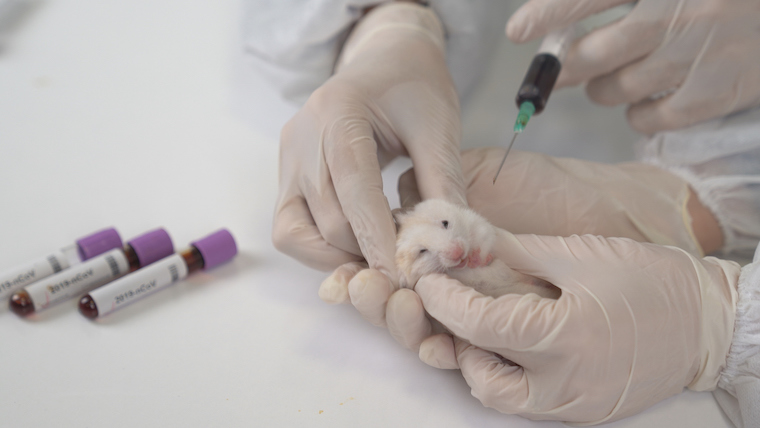
Hamster neck injection
Increasingly, many of our elected representatives understand this too. The bill’s leading sponsor Congressman Alcee Hastings points out:
As science and medicine advance, we have a better understanding of the relevancy and benefits of animal-based medical research and testing on human health outcomes. We are finding methods that can better predict human results without the needless suffering of animals.”
The Humane Research and Testing Act will establish an unprecedented
National Center for Alternatives to Animals in Research in the U.S. to
enable NIH to effectively replace animal experimentation by developing,
funding and incentivizing non-animal methods of research.
CAARE is excited that H.R. 8633 has received many influential endorsements
including the Jane Goodall Institute, Cruelty Free International, Vanda
Pharmaceuticals and Dr. Donald Ingber MD, PhD, one of the pioneers in
developing organs-on-chips.
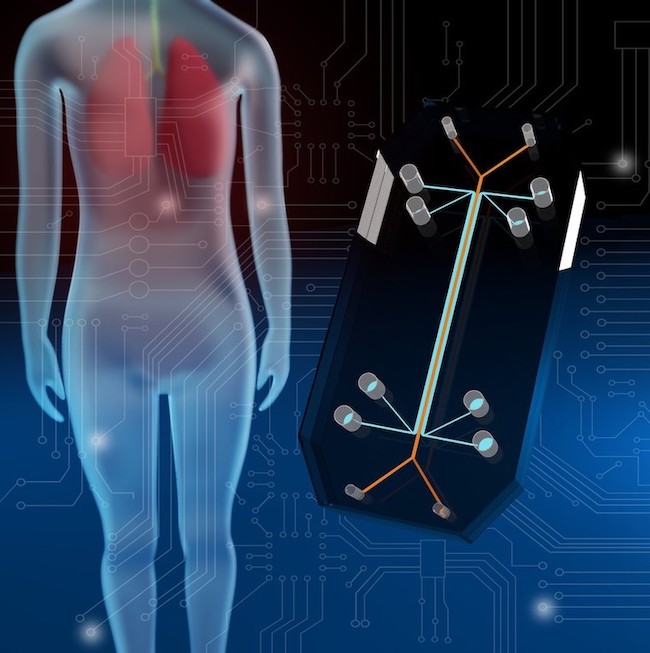
Lung chip diagram
Explains Dr. Ingber, chaired professor at Harvard's Medical and Engineering Schools and Founding Director of its Wyss Institute for Biologically Inspired Engineering:
We are reaching a tipping point in the field of in vitro human emulation
technologies where they are able to recapitulate human physiology and
disease states, as well as response to drugs, radiation, and toxins.
The ability of these approaches to predict human clinical results compared
with animal experiments needs to be evaluated in an objective manner to
determine best practices. A new NIH Center focused on meeting this goal
would benefit this field, save animal lives, and expedite the development of
more effective and safer therapies.
Crucially, H.R. 8633 will go beyond just creating a center dedicated to
non-animal research by including steps to make sure that NIH is reducing
total numbers of animal used.
The Humane Research and Testing Act of 2020 will require NIH to track and
disclose all animals used including rats, mice and birds key information
that is currently withheld and demonstrate its progress through mandatory
bi-annual reports.
Dr. Jane Goodall, DBE, Founder, the Jane Goodall Institute and UN Messenger of
Peace, commends the bill noting:
Much animal research takes place because scientists don't have the knowledge or support to pursue other methods. The proposed NIH center would overhaul the current paradigm of widespread, repetitive, and unnecessary animal experiments in a way that nothing has before.
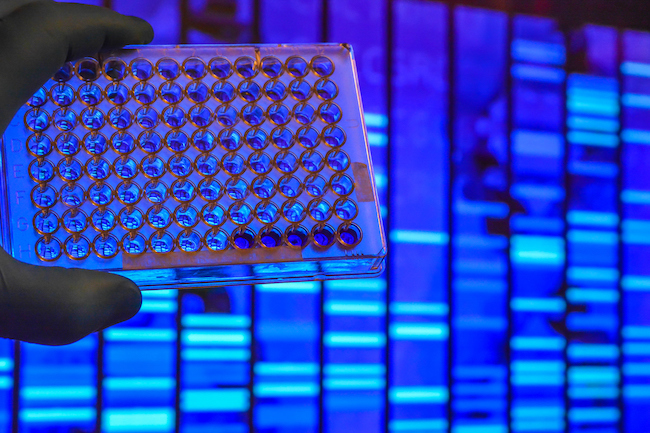
Multi well plate
CAARE is extremely grateful to Representatives Hastings and Buchanan for
introducing the Humane Research Act and Testing Act of 2020.
The establishment of a National Center for Alternatives to Animals in
Research will be a game changer that will transform the status quo of untold
millions of animals heartbreakingly killed in experiments at a time when
biotechnology and medicine are exploding with new innovations to replace
them.
Return to Alternatives to Animal Testing, Experimentation and Dissection
Follow us on:


- Home Page
- What's New
- Contact Us
- Action Alerts
- Animal Exploitation
- Animal Issues
- Animal Rights Activism
- Archives
- Art & Photography
- Articles Directory
- Bible
- Bible Commentary Blog
- Books
- Campaigns
- Church & Religion
- Discussions
- Events / Podcasts / Media
- Health
- Hosted Web Sites
- Humor
- Kids' Korner
- Letters
- Links
- Nature Studies
- Newsletter
- Poetry & Stories
- Prayers
- Quotations
- Recipes with Photos
- Recipes Without Photos
- Sermons
- Stop Cruelty in Churches
- Video Library
- The Mary T. and Frank L. Hoffman Family Foundation
- Email: [email protected]
A web site sponsored by The Mary T. and Frank L. Hoffman Family Foundation and all-creatures.org
Copyright © 1998-2026 The Mary T. and Frank L. Hoffman Family Foundation. All rights reserved. May be copied only for personal use or by not-for-profit organizations to promote compassionate and responsible living. All copied and reprinted material must contain proper credits and web site link www.all-creatures.org.
Fair Use Notice: This document, and others on our web site, may contain copyrighted material whose use has not been specifically authorized by the copyright owners. We believe that this not-for-profit, educational use on the Web constitutes a fair use of the copyrighted material (as provided for in section 107 of the US Copyright Law). If you wish to use this copyrighted material for purposes of your own that go beyond fair use, you must obtain permission from the copyright owner.

Thank you for visiting all-creatures.org.