Clothing/Cosmetics and Animal Abuse Article from All-Creatures.org
Wolf, bobcat, and lynx fur farms uncovered in Canada
From The Fur-Bearers
November 2023
While numerous countries have banned fur farming, this discovery places Canada on the global map for all the wrong reasons. There is absolutely no justification to breed, confine, and kill Canadian wildlife for their fur. All wildlife species deserve to live free in their own habitats, not confined on fur farms so that the fur industry can profit from their pelts in the fashion fur trade.
For graphs and more details, visit Fur-Bearers website here.
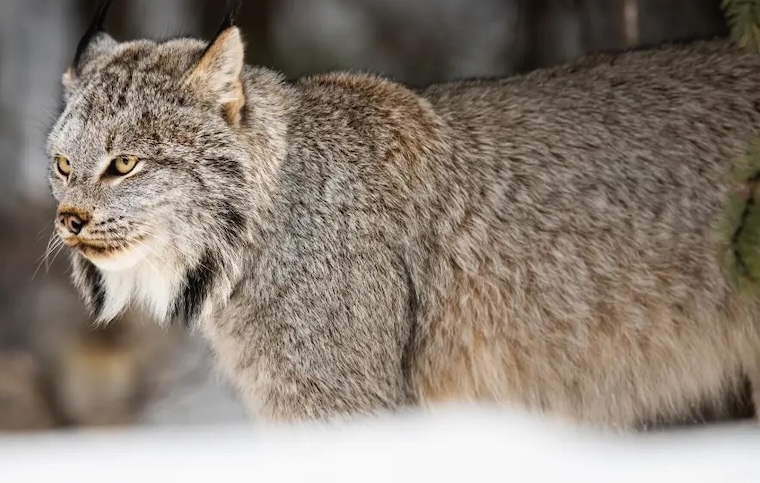
A Canada lynx (Lynx canadensis) in the wild. Photo credit:
Jillian Cooper / Getty Images
Canada’s fur farm industry is worse than we thought. Through multiple freedom of information requests, The Fur-Bearers has learned that wolves, bobcats, and lynx are being farmed for their fur in Canada. This shocking information reveals a disturbing new dimension to the fashion fur trade, where iconic Canadian wildlife species are kept captive and killed for their fur pelts.
The Fur-Bearers has compiled data gathered from provincial and federal sources to track the species of animals farmed for their fur and the number of active fur farms in Canada.
Minks and foxes are known to be farmed for their fur in Canada, and
it was only through The Fur-Bearers’ research that the public
learned chinchillas are farmed for their fur as well. But this new
information doubles the number of confirmed animal species to be
farmed in their fur in Canada to six: minks, foxes, chinchillas,
wolves, bobcats, and lynx. While Ontario and Nova Scotia are the
largest fur producing provinces in Canada, the fur farms with
wolves, bobcats, and lynx are in provinces not typically known for
fur farming: Alberta and Saskatchewan.
OOur freedom of information requests uncovered one active lynx fur
farm in Alberta and five active fur farms in Saskatchewan that farm
wolves, bobcats, lynx, and foxes. According to the records obtained
from Saskatchewan’s Ministry of Agriculture, the largest fur farm in
the province has been operating since 1996 and was recorded to have
23 lynx, 25 wolves, and 11 foxes at the most recent inventory.
These additional species are not well-known to be farmed elsewhere
the world. A recent review article examined the global fur farm
sector and found that 15 animal species are farmed for their fur in
at least 19 countries; wolves, bobcats, and lynx were not identified
on this list.
While numerous countries have banned fur farming, this discovery
places Canada on the global map for all the wrong reasons. There is
absolutely no justification to breed, confine, and kill Canadian
wildlife for their fur. All wildlife species deserve to live free in
their own habitats, not confined on fur farms so that the fur
industry can profit from their pelts in the fashion fur trade.
Return to Clothing/Cosmetics Abuses Articles
Follow us on:


- Home Page
- What's New
- Contact Us
- Action Alerts
- Animal Exploitation
- Animal Issues
- Animal Rights Activism
- Archives
- Art & Photography
- Articles Directory
- Bible
- Bible Commentary Blog
- Books
- Campaigns
- Church & Religion
- Discussions
- Events / Podcasts / Media
- Health
- Hosted Web Sites
- Humor
- Kids' Korner
- Letters
- Links
- Nature Studies
- Newsletter
- Poetry & Stories
- Prayers
- Quotations
- Recipes with Photos
- Recipes Without Photos
- Sermons
- Stop Cruelty in Churches
- Video Library
- The Mary T. and Frank L. Hoffman Family Foundation
- Email: [email protected]
A web site sponsored by The Mary T. and Frank L. Hoffman Family Foundation and all-creatures.org
Copyright © 1998-2026 The Mary T. and Frank L. Hoffman Family Foundation. All rights reserved. May be copied only for personal use or by not-for-profit organizations to promote compassionate and responsible living. All copied and reprinted material must contain proper credits and web site link www.all-creatures.org.
Fair Use Notice: This document, and others on our web site, may contain copyrighted material whose use has not been specifically authorized by the copyright owners. We believe that this not-for-profit, educational use on the Web constitutes a fair use of the copyrighted material (as provided for in section 107 of the US Copyright Law). If you wish to use this copyrighted material for purposes of your own that go beyond fair use, you must obtain permission from the copyright owner.
Thank you for visiting all-creatures.org.
