
|
|
Tropical Forests and Regions |
Articles and Reports: Tropical Forests and Regions
Study Shows Biofuel Farms Aid Global WarmingBy Julia Bonelli
"This research examines the conversion of land for biofuels and asks the question 'Is it worth it"'," said lead author Joe Fargione, a scientist for The Nature Conservancy. "And surprisingly, the answer is no." The study, which was posted online and will be also published in Science later this month, showed that the carbon that is lost by converting rainforests, peatlands, savannas, or grasslands outweighs the carbon savings from biofuels. The researchers said that this type of conversions are releasing between 17 and 420 times more carbon than the amount that is saved by replacing fossil fuels. The process of releasing carbon dioxide from soil and plants is a very long one and the study says that this "carbon debt" has to be first paid before attempting the process through which the biofuels produced on the land lower greenhouse gas levels and slow down the global warming. Thus, only the conversion of peatlands for palm oil plants in Indonesia created a carbon debt that would need around 423 years to pay off. Another tremendous case is the production of soybeans in the Amazon, which would require 319 years to recover. "We don't have proper incentives in place because landowners are rewarded for producing palm oil and other products but not rewarded for carbon management," said University of Minnesota Applied Economics professor Stephen Polasky, an author of the study. "This creates incentives for excessive land clearing and can result in large increases in carbon emissions. The findings of the study are similar to observations that the growing demand for ethanol corn crops in the United States might be one of the causes of the conversion of the Brazilian Amazon and Cerrado. Due to the fact that the American farmers reduced the production of soy in order to keep up with the demand for corn ethanol, farmers in Brazil are now increasing their culture of soybeans, which requires deforesting the Amazon. "If you're trying to mitigate global warming, it simply does not make sense to convert land for biofuels production," said Fargione. "All the biofuels we use now cause habitat destruction, either directly or indirectly. Global agriculture is already producing food for six billion people. Producing food-based biofuel, too, will require that still more land be converted to agriculture." However, researchers emphasized that not all biofuels are contributing to the global warming, but only those that cause the conversion of native habitat. The waste from agriculture and forest lands and native grasses and woody biomass grown on marginal lands unsuitable for crop production are not harmful. "Biofuels made on perennial crops grown on degraded land that is no longer useful for growing food crops may actually help us fight global warming," said Hill. "One example is ethanol made from diverse mixtures of native prairie plants. Minnesota is well poised in this respect." "We will need to implement many approaches simultaneously to solve climate change. There is no silver bullet, but there are many silver BBs," said Fargione. "Some biofuels may be one silver BB, but only if produced without requiring additional land to be converted from native habitats to agriculture," Polaski said. (c) 2007 - 2008 - eNews 2.0 All Rights Reserved |
Return to:Articles and Reports
Return to:Tropical Forests and Regions
Return to:Home Page
Your Comments and Inquiries are Welcome

Fair Use Notice: This document may contain copyrighted material whose use has not been specifically authorized by the copyright owners. We believe that this not-for-profit, educational use on the Web constitutes a fair use of the copyrighted material (as provided for in section 107 of the US Copyright Law). If you wish to use this copyrighted material for purposes of your own that go beyond fair use, you must obtain permission from the copyright owner.
|
Since
|
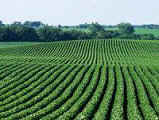 According to a new study made by the University of Minnesota and the
Nature Conservancy, the "farms" for biofuel crops, which
created by turning native ecosystems and which are supposed to reduce
the carbon emissions that worsen the global warming, are actually also
producing huge amounts of emissions.
According to a new study made by the University of Minnesota and the
Nature Conservancy, the "farms" for biofuel crops, which
created by turning native ecosystems and which are supposed to reduce
the carbon emissions that worsen the global warming, are actually also
producing huge amounts of emissions.
 This site is hosted and maintained by