A Wildlife Article used with permission from All-Creatures.org
Staci-lee Sherwood discusses four beautiful flowering plants that can help make your garden a haven for butterflies and other local insects. She also shares her own stunning photographs of butterflies enjoying these plants and provides resources for further reading so you can do your part to help these creatures thrive.
Fill your garden with gorgeous plants that feed the butterflies
From Staci-lee Sherwood, RealityChecksWithStacilee.com
June 2026
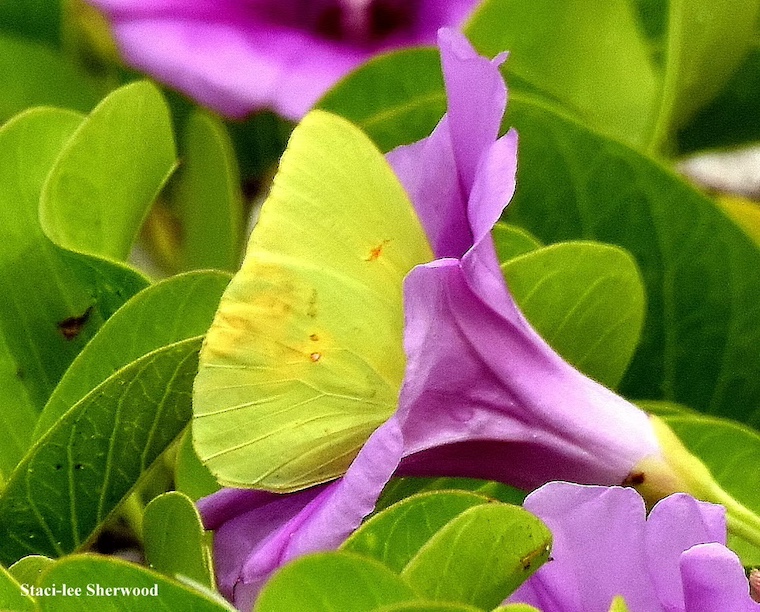
Photo Credit: Staci-lee Sherwood
Butterflies depend on nectar to survive. In the northern states they only have spring and summer to fill up on food before either migrating south or going into dispause (where they remain in their chrysalis motionless until warmer weather). For southern states feasting and breeding is a year round lifestyle. Some species of butterflies have specific nectar plants while others have a larger more diverse group. I’ve listed some of the best nectar plants for most species of butterflies and bonus they also attract moths, hummingbirds and other insects. Butterfly populations have drastically declined over the years due to habitat loss and degradation, lack of nectar and host plants, spraying of pesticides that kill the plants which are their food source.
Native wildflower populations are being mowed down, poisoned by pesticides and removed for non-native flowers sold in nurseries. Butterflies aren't the only ones that need wildflowers, the entire ecosystem does too. Here are some great ideas for plants to add to any garden, big or small, to help attract and feed butterflies. Some of these plants prefer moist areas while others like full sun and dry land. Included are their scientific names in bold to insure you get the correct native plant.
Firebush
This plant is an all time favorite for butterflies and hummingbirds. Firebush (Hamelia patens var. patens) is part of the Rubiaceae family, is a hardy heat loving southern plant found from Texas to Florida. It can grow up to 10’ and get very dense providing lots of flowering nectar. Easy to spot with their bright orange and red tubular flowers it’s also known as "Guardian of the Forest" in Belize. The non-native version (Hamelia patens var. glabra) is widely sold in local nurseries and used in landscaping and while butterflies will use it as food it’s best to buy the native species. The native firebush has bright red/orange flowers while the non-native has yellow flowers.
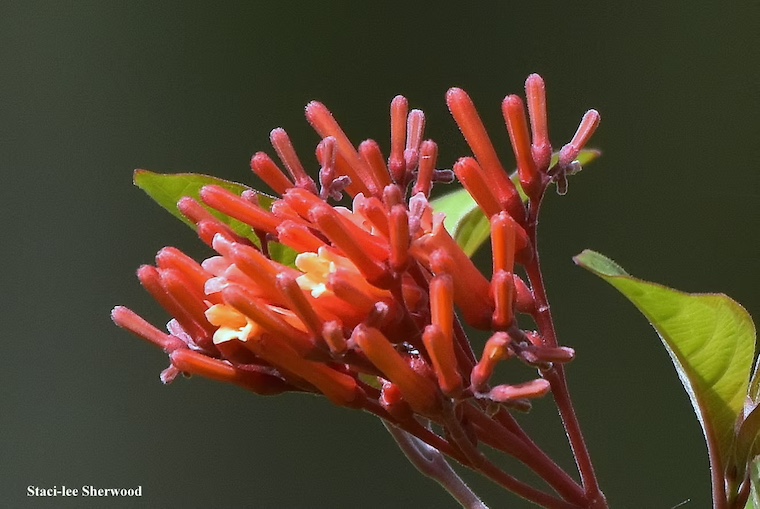
The native variety has bright red tubular flowers. Photo Credit: Staci-lee Sherwood
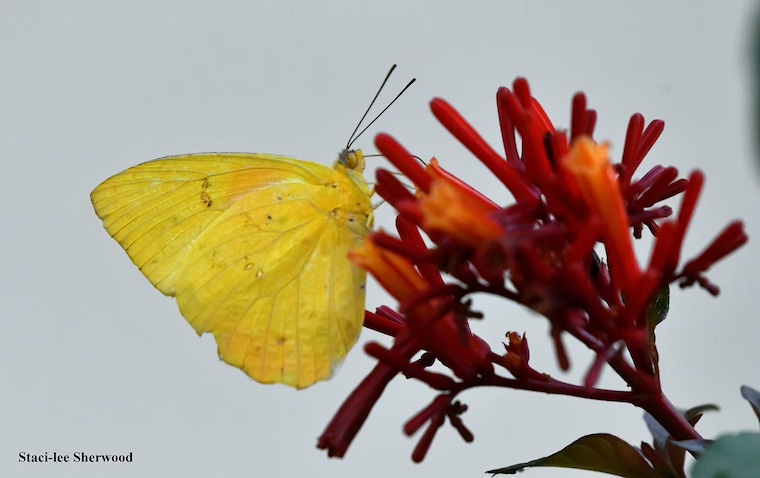
A male Orange-barred Sulphur. Photo Credit: Staci-lee Sherwood
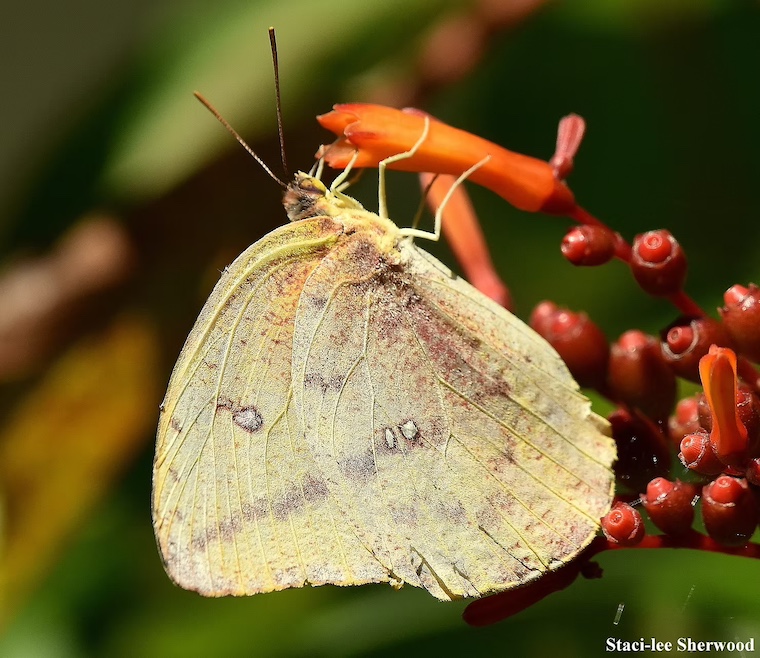
A female Large Orange Sulphur enjoys breakfast. Photo Credit: Staci-lee Sherwood
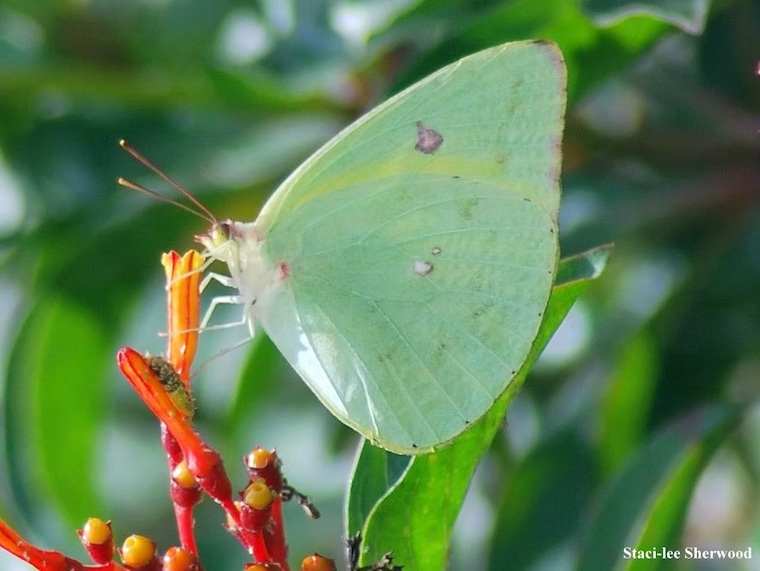
A rare sighting of a Pink-spot Sulphur. Photo Credit: Staci-lee Sherwood
Ironweed
This stunning purple plant (Vernonia Fasciculata) loves the wetlands and moist prairie. It’s hardy and can be grown in nearly half the U.S. states. This plant has a broad range from Massachusetts to Florida on the east, to Ohio and Missouri in the Midwest and down to Louisiana and Texas. There are 500 species of ironweed globally with approximately 20 of those species native to North America. It attracts a variety of butterflies and other insects and makes a colorful addition to any garden.
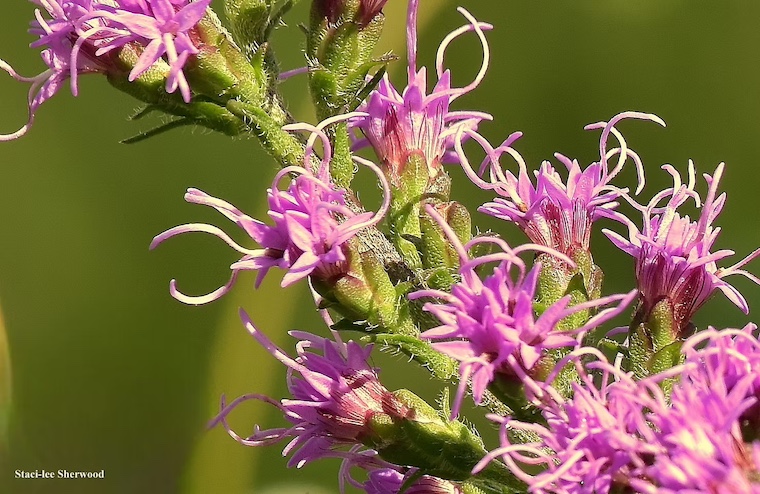
Ironweed growing in the wilds of Florida. Photo Credit: Staci-lee Sherwood
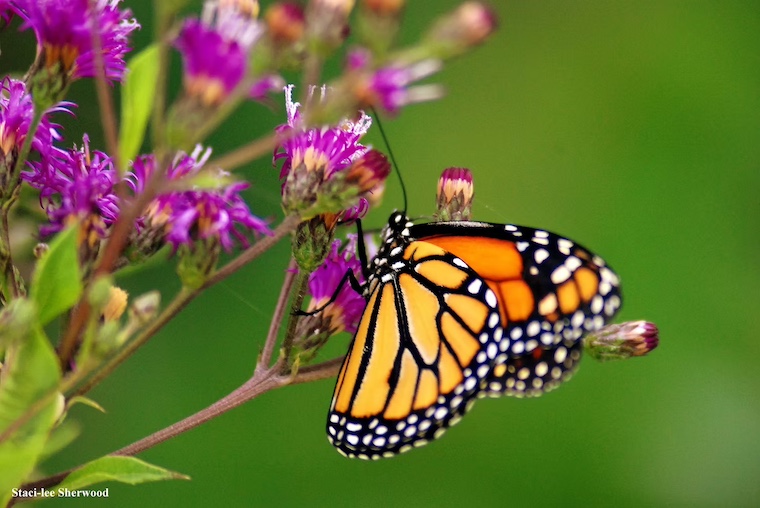
A Monarch butterfly sipping Ironweed nectar. Photo Credit: Staci-lee Sherwood
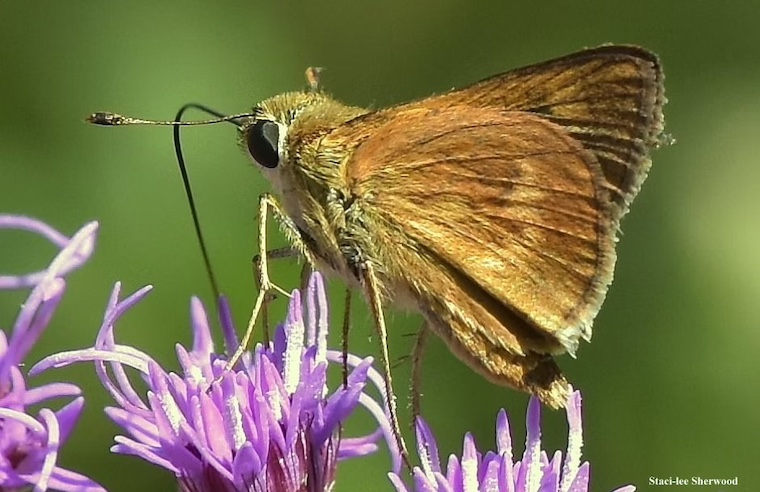
A Southern Broken Dash Skipper. Photo Credit: Staci-lee Sherwood
Railroad Vine
This coastal vine is part of the Convolvulaceae family (like the morning-glory) and loves salty sandy environments and is found along the coast from Georgia to Florida and west Texas. Railroad vine (Ipomoea pes-caprae) has stunning large purple flowers that attract many species of butterflies, moths and bees. If you live in a coastal environment this makes a great addition to your garden adding both color and food for wildlife. This vine grows on the ground and makes for great ground cover.
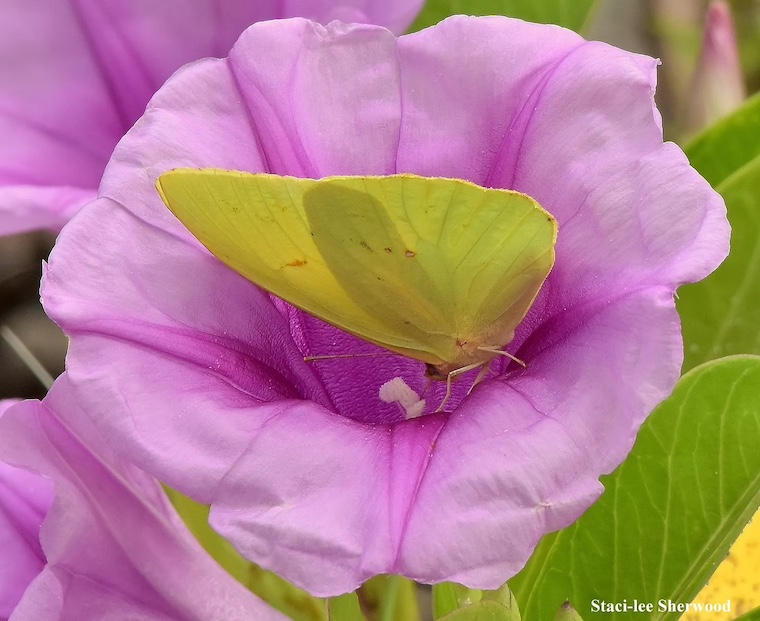
A male Clouded Sulphur digs in a Railroad vine. Photo Credit: Staci-lee Sherwood
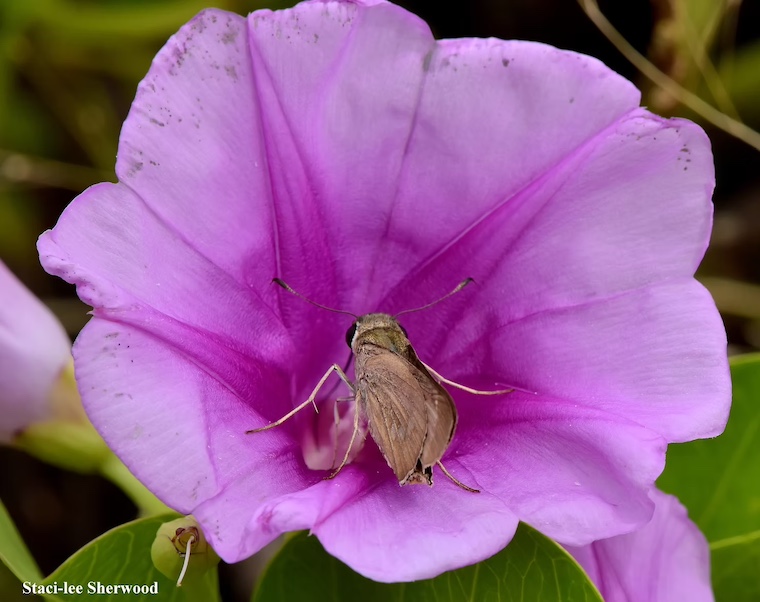
A Brazilian Skipper looks tiny inside the large Railroad vine. Photo Credit: Staci-lee Sherwood
Spanish Needle
This plant feeds a long list of insects from butterflies to bees and beetles. It’s part of the Bidens family (Bidens alba) and found primarily in Florida and in bordering gulf states. Spanish Needle is very hardy and loves full sun. This plant makes a great addition to any garden with their white and yellow flowers that resemble daisies. Despite recent controversy as to whether it’s truly native it’s widespread and feed many species at a time when wildflowers are vanishing and food for butterflies is becoming scarce.
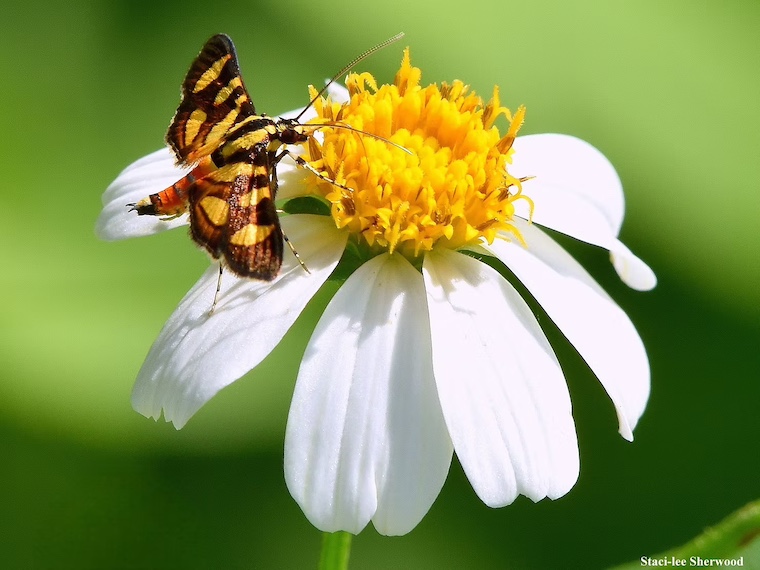
Spanish Needle (also called Beggarticks) with an Orange Spotted Flower Moth. Photo Credit: Staci-lee Sherwood
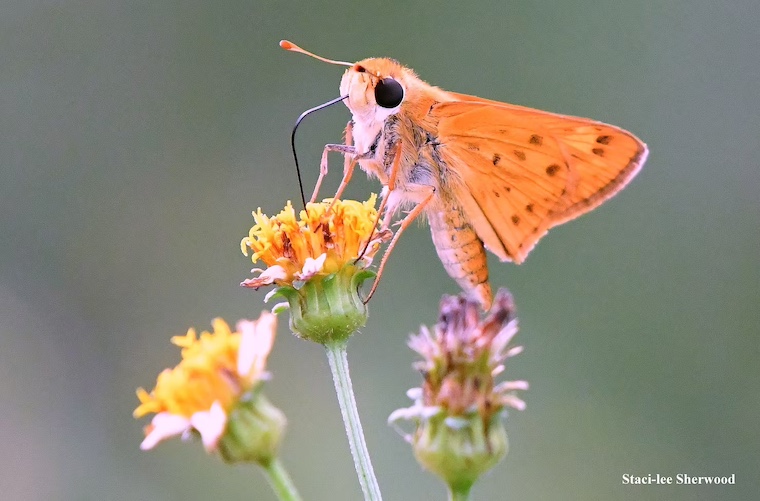
A male Fiery Skipper. Photo Credit: Staci-lee Sherwood
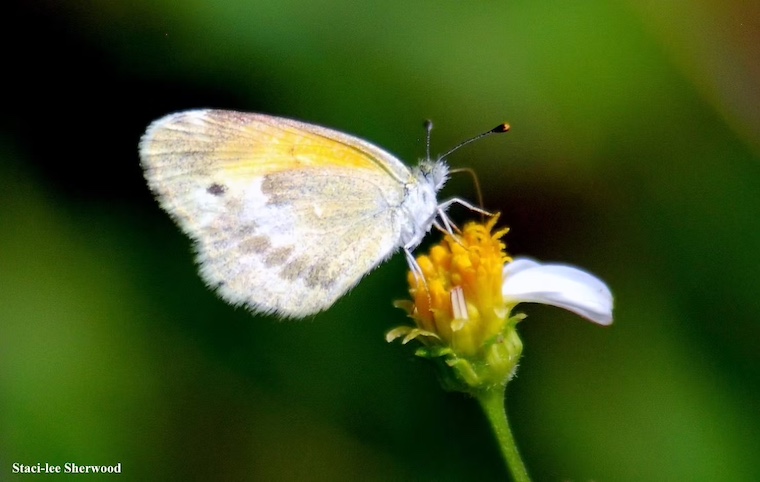
A Dainty Sulphur isn’t much bigger than the flower she sits on. Photo Credit: Staci-lee Sherwood
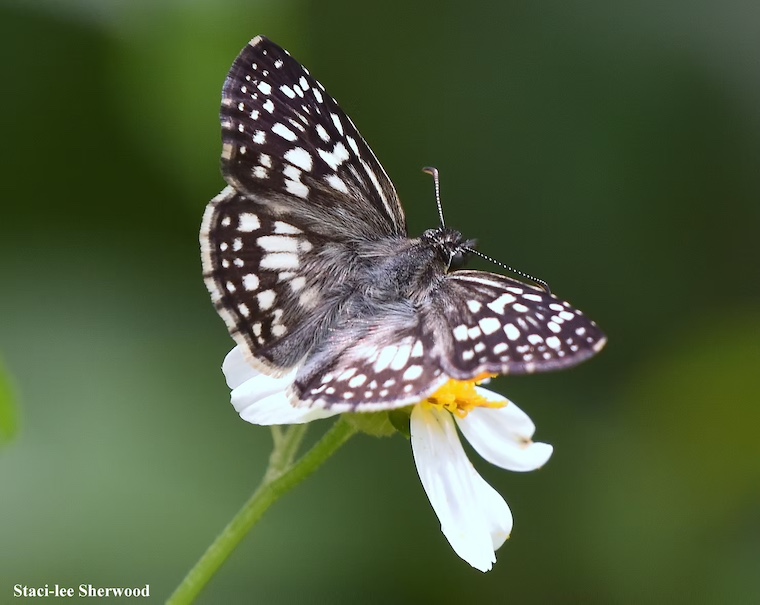
A Tropical Checkered Skipper having lunch. Photo Credit: Staci-lee Sherwood
How to help butterflies
Here are some things to do and look for when buying plants designed to feed butterflies.
- Providing nectar plants that are native to your region and non-GMO is a great start.
- Never use any pesticides
- When buying plants or seeds, buy from reputable nurseries that do not spray their plants or use GMO seeds.
- Buttonbush is a hardy shrub that provides food for many species of butterflies, bees, insects and hummingbirds. It’s grown across the U.S. from the north to the south. Click here to read more about this plant https://www.realitycheckswithstacilee.com/post/common-buttonbush-a-star-nectar-plant-for-butterflies
- Provide some host plants for butterflies as well
- Look up your local NABA (North American Butterfly Association) chapter for great advice on which are the best nectar and host plants for your area
Click here to find a local chapter near you
https://naba.org/chapters/ - Check out these sites for information on native species for your area - USDA PLANTS Database or consult your local University Extension Office. https://plants.sc.egov.usda.gov/
- North American Native Plant Society lists commercial growers of native plants by state
https://nanps.org/commercial-growers/ - Mossy Oak Native Nursery ships seeds to zones 6-10
https://www.nativnurseries.com/products/buttonbush-seedlings-for-sale-cephalanthus-occidentalis
Posted on All-Creatures.org: June 22, 2026
Return to Wildlife Articles
Follow us on:


- Home Page
- What's New
- Contact Us
- Action Alerts
- Animal Exploitation
- Animal Issues
- Animal Rights Activism
- Archives
- Art & Photography
- Articles Directory
- Bible
- Bible Commentary Blog
- Books
- Campaigns
- Church & Religion
- Discussions
- Events / Podcasts / Media
- Health
- Hosted Web Sites
- Humor
- Kids' Korner
- Letters
- Links
- Nature Studies
- Newsletter
- Poetry & Stories
- Prayers
- Quotations
- Recipes with Photos
- Recipes Without Photos
- Sermons
- Stop Cruelty in Churches
- Video Library
- The Mary T. and Frank L. Hoffman Family Foundation
- Email: [email protected]
A web site sponsored by The Mary T. and Frank L. Hoffman Family Foundation and all-creatures.org
Copyright © 1998-2026 The Mary T. and Frank L. Hoffman Family Foundation. All rights reserved. May be copied only for personal use or by not-for-profit organizations to promote compassionate and responsible living. All copied and reprinted material must contain proper credits and web site link www.all-creatures.org.
Fair Use Notice: This document, and others on our web site, may contain copyrighted material whose use has not been specifically authorized by the copyright owners. We believe that this not-for-profit, educational use on the Web constitutes a fair use of the copyrighted material (as provided for in section 107 of the US Copyright Law). If you wish to use this copyrighted material for purposes of your own that go beyond fair use, you must obtain permission from the copyright owner.
Thank you for visiting all-creatures.org.
