A Wildlife Article from All-Creatures.org
Rhino Poaching Increases In South Africa After Deadly Year
From Paul Healey,
SpeciesUnite.com
March 2024
Latest government figures show nearly 500 rhinos were poached across the country in 2023, despite efforts to protect the animals.
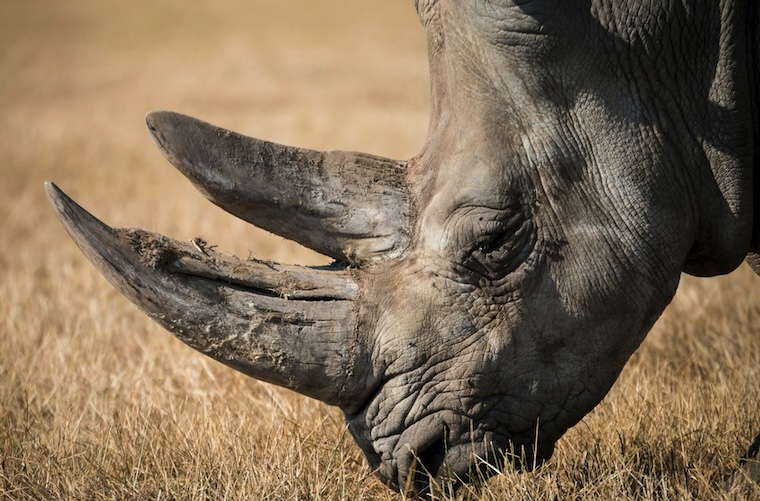
Rhino poaching increased in South Africa during 2023, despite
efforts to protect the animals.
Newly-released government figures show that in total 499 rhinos were
poached last year across the country.
The high number of cases is driven by a demand for rhino horn, which
is typically grounded down into a powder and used in traditional
medicine in parts of Asia.
In the highly lucrative rhino horn trade, poachers are said to use a
tranquiliser gun to sedate the rhino, before hacking off the
animal’s horn. When the rhino wakes up, they slowly bleed to death.
South Africa’s Minister of Forestry, Fisheries and the Environment,
Ms Barbara Creecy, said in a statement that many multi-disciplinary
teams have “worked tirelessly” to protect the animals amid
“relentless pressure” from poachers.
And such efforts have seen the number of poaching cases decrease in
certain areas.
This includes at the Kruger National Park (KNP), which recorded a 37
percent decrease from 2022. The progress has been attributed to a
variety of interventions, including increased law enforcement and
tougher penalties, as well as an extensive and ongoing dehorning
programme. Improved technology has also helped, with automated
number plate recognition and radar detection systems which remotely
track any entry into the KNP.
However, the KwaZulu-Natal (KZN) province meanwhile faced intense
pressure, and is said to have dealt with the brunt of poaching cases
in 2023. The province is home to the Hluhluwe-iMfolozi Park, which
accounted for 307 of the total poached rhinos.
Counter efforts in the KZN province ultimately led to 49 arrests and
the seizure of 13 firearms. The country’s environment minister
commended law enforcement in the area, with many prosecutions
leading to convictions.
In KZN for example, five people were accused of poaching after they
were found in a motor vehicle with hunting equipment. DNA found on
the equipment was linked to the crime scene of a dead rhino, and the
group were later sentenced to an effective imprisonment term of 10
years.
Other criminal prosecutions include those focussed on transporting
the illegal animal parts, including one person in Gauteng who was
sentenced to 5 years of prison time after being found in possession
of a bag containing two rhino horns.
Conservation and animal welfare groups are among those alarmed about
the newly released figures. The NGO Born Free noted that much time,
effort and resource has already been spent to protect rhinos, but
efforts must now be ramped up even further.
“Together with recent reports of increased poaching in Botswana and
Namibia, these figures clearly show that much more needs to be done
to tackle the organized criminal outfits that coordinate the illegal
horn trade, and to reduce demand for rhino horn in market
countries,” said Born Free’s Head of Policy Dr Mark Jones.
“It is also surely time to end the cruel trophy hunting of rhinos in
southern Africa – with ongoing declines in crucial rhino
populations, all individual animals must be considered precious and
of vital importance if we are to secure a viable future for these
majestic animals.”
Return to Wildlife Articles
Follow us on:


- Home Page
- What's New
- Contact Us
- Action Alerts
- Animal Exploitation
- Animal Issues
- Animal Rights Activism
- Archives
- Art & Photography
- Articles Directory
- Bible
- Bible Commentary Blog
- Books
- Campaigns
- Church & Religion
- Discussions
- Events / Podcasts / Media
- Health
- Hosted Web Sites
- Humor
- Kids' Korner
- Letters
- Links
- Nature Studies
- Newsletter
- Poetry & Stories
- Prayers
- Quotations
- Recipes with Photos
- Recipes Without Photos
- Sermons
- Stop Cruelty in Churches
- Video Library
- The Mary T. and Frank L. Hoffman Family Foundation
- Email: [email protected]
A web site sponsored by The Mary T. and Frank L. Hoffman Family Foundation and all-creatures.org
Copyright © 1998-2026 The Mary T. and Frank L. Hoffman Family Foundation. All rights reserved. May be copied only for personal use or by not-for-profit organizations to promote compassionate and responsible living. All copied and reprinted material must contain proper credits and web site link www.all-creatures.org.
Fair Use Notice: This document, and others on our web site, may contain copyrighted material whose use has not been specifically authorized by the copyright owners. We believe that this not-for-profit, educational use on the Web constitutes a fair use of the copyrighted material (as provided for in section 107 of the US Copyright Law). If you wish to use this copyrighted material for purposes of your own that go beyond fair use, you must obtain permission from the copyright owner.
Thank you for visiting all-creatures.org.
