Animals: Tradition - Philosophy - Religion Article used with permission from All-Creatures.org
This eye-opening article challenges traditional interpretations of scripture, revealing a Christ-centered vision that calls for mercy and justice for animals. It’s a vital read for Christians seeking to align their love for Jesus with the rejection of exploitation. Let this message strengthen your faith and your resolve to live ethically.
The New Covenant
From Christian Animal Rights Association, ChristianAnimalRights.com
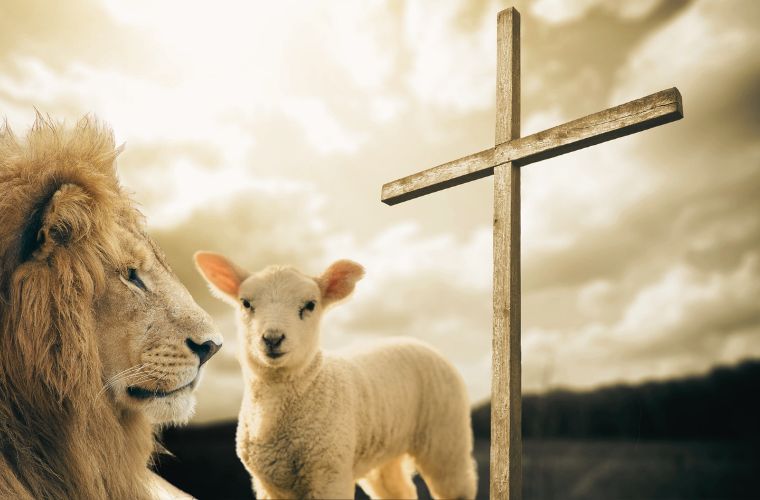
Images from Canva
The old covenant included Israel and its inhabitants, the Israelites, who were obligated to comply with the laws of God (Deut 27:1–26). They would be punished if they did not obey God (28:15–68) and blessed if they did (28:1–14). The guilt (Lev 6:1–7, 7:1–7) and sin (6:24–30) offerings required animals to be sacrificed to temporarily (Heb 10:4) atone for the sins of humans. Importantly, Jeremiah 31:31–34 prophesied the new covenant. Jesus is the mediator (Heb 9:14–15) and guarantor (7:22) of the new covenant, which supplanted the old (8:13). The new covenant involves Jews and Gentiles (Rom 11:11–24). Importantly, Christ fulfilled the law (Matt 5:17). Thus, one’s faith in Jesus (Rom 3:22) grants them salvation (Eph 2:8) and life everlasting (John 6:40). Additionally, the sacrificial death of Christ atoned for all sin (1 John 2:1–2), which forever ended animal sacrifice for guilt (Lev 6:1–7, 7:1–7) and sin (6:24–30) offerings (Heb 10:10–18).
Unknown to most, one facet of this new covenant includes bringing peace and harmony to animals (Hosea 2:18, Job 5:22–23, Ezekiel 34:25–31), implying a vegan lifestyle. Hosea 2:18 NIV states, “In that day I will make a covenant for them with the beasts of the field, the birds in the sky and the creatures that move along the ground. Bow and sword and battle I will abolish from the land, so that all may lie down in safety.” Hebrews 2:8 indicates that the kingdom of God is “here but not yet,” meaning the kingdom has been inaugurated with Christ (Matt 4:17) but will be completed in the future when he returns (24:30). Jesus implied in the Parable of the Leaven (13:33; Luke 13:20–21) and the Parable of the Mustard Seed (Matt 13:31–32; Mark 4:30–32; Luke 13:18–19) that the kingdom of God would plant, start small, and grow with time.
Similarly, the new covenant (22:20) began shortly after Pentecost (Acts 2:1), and with the help of Christians (Matt 6:10; 2 Pet 3:11–13), the Hosea 2:18 new covenant will grow in greater fulfillment until it reaches completion on the New Earth (Isa 66:22). On the eternal New Earth (65:17–18), humans and animals will live in peace and harmony without harm or death for all eternity (Isa 11:6–9, 65:25; Hos 2:18; Rom 8:18–25, Rev 21:1–4). Jesus will complete this everlasting paradise (2 Pet 3:13) after his second coming (Matt 16:27). The New Earth is a restoration of Eden (Isa 51:3). In Eden, humans and animals ate only plants (Gen 1:20–2:8), and there was no harm or death (Rom 8:18–25). Like Eden, Hosea 2:18 states that humans and animals will live peacefully and safely, implying a vegan lifestyle. Thus, a facet of the new covenant (Luke 22:20) beginning shortly after Pentecost (Acts 2:1) is encouraging vegan lifestyles (Hos 2:18) and, therefore, discouraging animal exploitation. For example, several restrictions on meat are commanded by the Bible. Additionally, much extra-biblical evidence demonstrates that early Christian figures recognized ‘the new covenant.’
Posted on All-Creatures.org: July 16, 2025
Return to Animals: Tradition—Philosophy—Religion Articles
Follow us on:


- Home Page
- What's New
- Contact Us
- Action Alerts
- Animal Exploitation
- Animal Issues
- Animal Rights Activism
- Archives
- Art & Photography
- Articles Directory
- Bible
- Bible Commentary Blog
- Books
- Campaigns
- Church & Religion
- Discussions
- Events / Podcasts / Media
- Health
- Hosted Web Sites
- Humor
- Kids' Korner
- Letters
- Links
- Nature Studies
- Newsletter
- Poetry & Stories
- Prayers
- Quotations
- Recipes with Photos
- Recipes Without Photos
- Sermons
- Stop Cruelty in Churches
- Video Library
- The Mary T. and Frank L. Hoffman Family Foundation
- Email: [email protected]
A web site sponsored by The Mary T. and Frank L. Hoffman Family Foundation and all-creatures.org
Copyright © 1998-2026 The Mary T. and Frank L. Hoffman Family Foundation. All rights reserved. May be copied only for personal use or by not-for-profit organizations to promote compassionate and responsible living. All copied and reprinted material must contain proper credits and web site link www.all-creatures.org.
Fair Use Notice: This document, and others on our web site, may contain copyrighted material whose use has not been specifically authorized by the copyright owners. We believe that this not-for-profit, educational use on the Web constitutes a fair use of the copyrighted material (as provided for in section 107 of the US Copyright Law). If you wish to use this copyrighted material for purposes of your own that go beyond fair use, you must obtain permission from the copyright owner.
Thank you for visiting all-creatures.org.
