A Companion Animal Care Article used with permission from All-Creatures.org
In this article, Marc Bekoff discusses the cruelty of puppy mills and why decency dictates that we shut these facilities down.
"I Sure Wouldn't Put My Dog in a Puppy Mill, Would You?"
From Marc Bekoff, Ph.D., PsychologyToday.com
September 2019
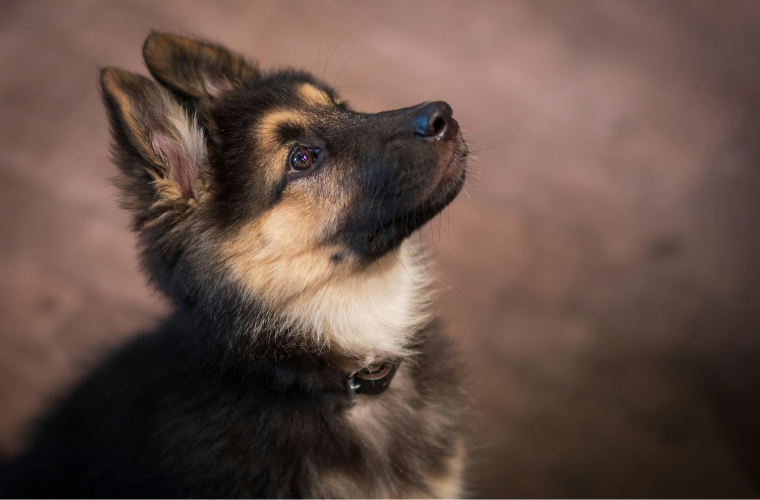
Photo from Canva/Pexels
An estimated 167,388 breeding dogs are currently living in United States Department of Agriculture (USDA)-licensed commercial facilities for breeding purposes this very moment.*
There are an estimated 10,000 puppy mills in the U.S. (this includes both licensed and unlicensed facilities).
Closing down puppy mills isn't a "radical animal rights" move"—it's all about decency
This morning, I woke up to a news release titled: "On Puppy Mill Awareness Day, Rep. Duran & First Gentleman Reis Draw Attention to the Need to Protect Our Canine Friends." They focused on the utterly reprehensible inhumane conditions at puppy mills in Colorado (my home state) and across the U.S. I'm pleased to be a member of the governor-appointed People for Animal Welfare (PAW) committee, members of which play an advisory role on issues related to animal welfare and animal protection in Colorado. However, I speak here as an individual, as all members of this committee are supposed to do unless otherwise instructed.
The timing for the release of Representative Monica Duran and First Gentleman Marlon Reis' intentions couldn't have been better, because the third Saturday in September is Puppy Mill Awareness Day. This is a perfect time, as is every day, for everyone to pay close attention to the horrific conditions at puppy mills and to pay homage to their innocent and non-consenting residents.
No dog in their right mind would choose to live in one of these inhumane hellholes, where they're housed in tiny, crowded cages 24/7, go without veterinary care, are poorly fed, and often live in their own and others' waste. I hope that no human would ever choose to relinquish their dog to a puppy mill. If you can bear it, you can read all about the conditions at puppy mills and where puppy mill dogs are sold here.
Making money is first and foremost, at the expense of the health and well-being of their residents who are forced to live there. Of course, kitten factories can be just as bad as puppy mills.
"I Sure Wouldn't Put My Dog in a Puppy Mill, Would You?"
I was thrilled when a 10-year old asked this question at a talk I gave. Not a single person in the audience answered, "Yes." And of the literally hundreds of people I've asked over the years, everyone has said, "No."
Dogs are sentient, feeling beings, and there is no doubt that they don't like being held captive in a puppy mill. It surely isn't anything close to a good life, and we're surely not doing all we can to give them the best lives possible. Someone once told me that puppy-mill breeders have said that they really loved their dogs. I'm glad they don't love me.
Some people say: "We really don't know what dogs feel." But I point them to a huge database on the emotional lives of these amazing nonhumans. There's more than enough science clearly showing that dogs and other animals are emotional beings. I also tell myself I'm glad I'm not their dog.
We need a Golden Rule for how we treat other animals based on decency
“We look forward to the day when cruel puppy mills have nowhere left to sell, and are thrilled to see Colorado lead the way and create more humane standards." —Aubyn Royall, Colorado State Director for the Humane Society of the United States
"Lawmakers need to do something about this. Otherwise, innocent families like my own are going to continue to deal with such problems." —Christopher Paup
What also baffles me: How can anyone who even marginally cares about animal well-being ignore or deny the pain and suffering that these dogs inarguably endure? Dogs who are treated as breeding machines are subjected to egregious abuse and violence. The Puppy Mill Project reports, "Mothers are bred every heat cycle and are usually killed when they can no longer produce." It's estimated that more than 2 million puppies are sold annually.
Caring for other species is caring for our own. By closing down puppy mills, humans might also benefit. For example, dogs from puppy mills can carry diseases that can be transmitted to humans. While more research is needed in this area, there's no reason to assume that we will not learn much more about how human health is tied to the health of their dogs.
Legislation is sorely needed to protect dogs and humans in all sorts of different situations. In Colorado, a pet store sold sick dogs who eventually died. One man, Christopher Paup, who bought a pug puppy for his 5-year-old niece, told Fox31 News that the pup was diagnosed with distemper shortly after he was bought. Paup is quoted as saying, "Lawmakers need to do something about this. Otherwise, innocent families like my own are going to continue to deal with such problems."
I couldn't agree more with Mr. Paup.
Thanks to Representative Duran and First Gentleman Reis for focusing their efforts on puppy mills. If someone supports puppy mills, they need to be openly clear why they do so.
Dogs really aren't humans' best friends.
But they matter because they're alive, have intrinsic value, and are deeply feeling beings. Their forever homes should be with humans who really care about them, not with people who treat them as money machines, and who don't give a hoot about their well-being. If someone chooses not to speak out against puppy mills (and kitten farms), they're complicit in the violence that occurs in these places. Silence isn't golden, it's deadly.
I hope that many other states will take note of Colorado’s example of helping humans and other animals alike. As Governor Jared Polis, First Gentleman Reis, and Lieutenant Governor Dianne Primavera have demonstrated, we need to move beyond focusing on the manifestations of violence and also focus on prevention, including how our relationships with other animals influence individual, community, and societal well-being. Humans also are an essential part of many programs that center on giving dogs and all nonhumans the best lives possible.
Closing down puppy mills isn't some sort of "radical animal rights" move as some claim it to be. In fact, it's all about decency. It's about showing respect and compassion and honoring who dogs really are—deeply feeling sentient beings.
Calling dogs "our best friends" is a fabrication and a myth that isn't based on reality.
Nonhumans, including dogs, need all the help they can get, and humans also will benefit from such efforts. It's a win-win for all.
References
Note:
*These statistics are sourced from the Humane Society of the United States (HSUS) 2014 Puppy Mill Facts and Figures report (available here [As of 2026, this link is no longer active.]) and the American Society for the Prevention of Cruelty to Animals (ASPCA) Pet Statistics (link here).
For more information on puppy mills click here, and for more information on kitten factories, click here.
The Puppy Mill Project. About puppy mills.
Combating Puppy and Kitten Mills with Legislation. Best Friends.
Puppy Mills: Puppy mills are a well-kept secret of the pet-trade industry.
Bekoff, Marc. Canine Confidential: Why Dogs Do What They Do. University of Chicago Press, Chicago, 2018.
_____. Rescue Dogs: Who They Are and the Joys of Rehoming Them.
_____. Calling All Dogs to a "Talkout" Summit to Speak Their Hearts.
_____. Why People Should Care About Animal and Human Suffering. [An interview with the University of Denver's Dr. Sarah Bexell on The One Health approach, a way of looking at the world that helps humans to see and acknowledge that humans, other species, and the natural environment (the three pillars of One Health) are completely and perfectly interlinked. If we harm one of these three pillars, all three are harmed.]
_____ and Jessica Pierce. Unleashing Your Dog: A Field Guide to Giving Your Canine Companion the Best Life Possible. New World Library, Novato, California, 2019.
Dale, Steve, Why Are Puppy Mills Allowed to Operate?
D'Souza, Lisa and Carissa Scott. State investigating Westminster pet store; owner admits disease outbreak. FOX31 News, Denver, Colorado.
Jones, Jeanine. PUPPY MILLS: THE HORRIFIC TRUTH.
Kangas, Cathy. Shut Down Puppy Mills. Huffington Post.
Paxton, Pete with Gene Stone. Rescue Dogs: Where They Come From, Why They Act the Way They Do, and How to Love Them Well. Tarcher/Perigee, New York, 2019. (Contains detailed discussion about puppy mills. For an interview with Pete Paxton see Rescue Dogs: Who They Are and the Joys of Rehoming Them.)
See "Colorado Proclaims Statewide Annual Animal Welfare Day" and "Colorado Takes the Lead on Helping Animals and People."
See "Calling All Dogs to a 'Talkout' Summit to Speak Their Hearts."
See "Stripping Animals of Emotions is 'Anti-Scientific & Dumb.'"
See "Are Dogs Really Our Best Friends or Family?" and "Why Dogs Matter."
About the Author
Marc Bekoff, Ph.D., is professor emeritus of ecology and evolutionary biology at the University of Colorado, Boulder.
Online: marcbekoff.com, X
Article originally published on PsychologyToday.com:
https://www.psychologytoday.com/us/blog/animal-emotions/201909/i-sure-wouldnt-put-my-dog-in-puppy-mill-would-you
Posted on All-Creatures.org: September 2019
Updated on All-Creatures.org: September 17, 2026
Return to Companion Animal Care
Follow us on:


- Home Page
- What's New
- Contact Us
- Action Alerts
- Animal Exploitation
- Animal Issues
- Animal Rights Activism
- Archives
- Art & Photography
- Articles Directory
- Bible
- Bible Commentary Blog
- Books
- Campaigns
- Church & Religion
- Discussions
- Events / Podcasts / Media
- Health
- Hosted Web Sites
- Humor
- Kids' Korner
- Letters
- Links
- Nature Studies
- Newsletter
- Poetry & Stories
- Prayers
- Quotations
- Recipes with Photos
- Recipes Without Photos
- Sermons
- Stop Cruelty in Churches
- Video Library
- The Mary T. and Frank L. Hoffman Family Foundation
- Email: [email protected]
A web site sponsored by The Mary T. and Frank L. Hoffman Family Foundation and all-creatures.org
Copyright © 1998-2026 The Mary T. and Frank L. Hoffman Family Foundation. All rights reserved. May be copied only for personal use or by not-for-profit organizations to promote compassionate and responsible living. All copied and reprinted material must contain proper credits and web site link www.all-creatures.org.
Fair Use Notice: This document, and others on our web site, may contain copyrighted material whose use has not been specifically authorized by the copyright owners. We believe that this not-for-profit, educational use on the Web constitutes a fair use of the copyrighted material (as provided for in section 107 of the US Copyright Law). If you wish to use this copyrighted material for purposes of your own that go beyond fair use, you must obtain permission from the copyright owner.

Thank you for visiting all-creatures.org.