Companion Animal Care Articles used with permission from All-Creatures.org
Lisa Levinson discusses In Defense of Animals’ recent trip to the Galápagos to learn from Animal Balance’s remarkably successful spay/neuter program and aid in spreading their technique globally.
From the Galápagos to Mongolia: Expanding Humane Spay/Neuter Solutions
From Lisa Levinson, IDA In Defense of Animals, idausa.org
September 2026
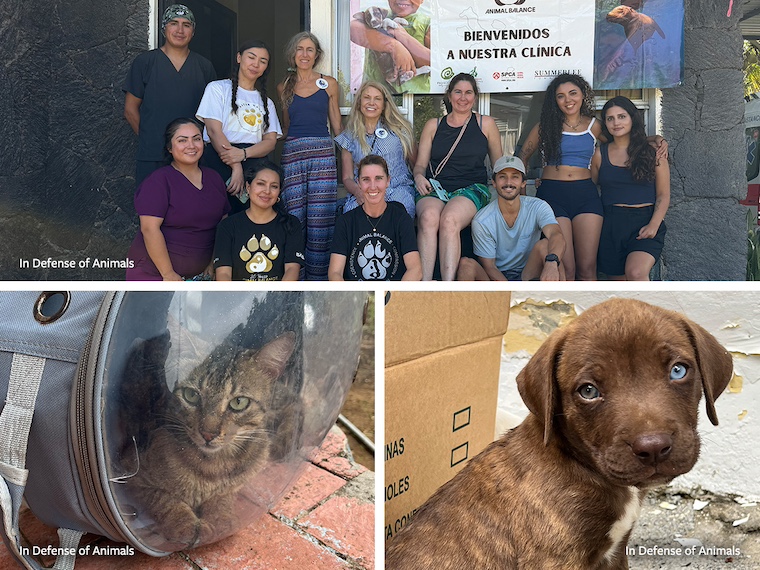
Photos from In Defense of Animals
The Galápagos Islands are renowned for their extraordinary animals and unique ecosystems. In Defense of Animals recently traveled there to help protect this remarkable place by advancing coexistence between wild and domestic animals through compassionate, community-based veterinary care.
We joined our partners at Animal Balance to observe one of their high-volume, high-quality spay/neuter clinics. The experience offered an inspiring look at what is possible when skilled veterinary teams, local communities, and government partners work together toward humane, sustainable solutions.
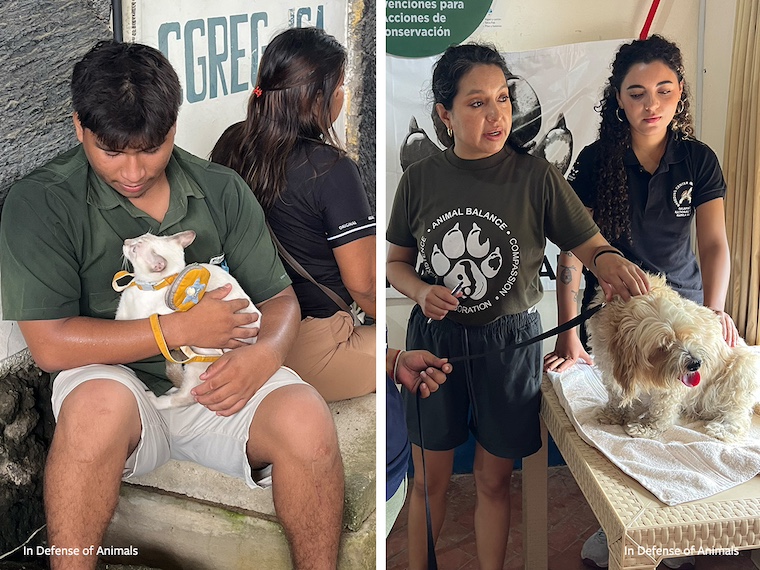
Animal Balance offered a high-volume, high-quality spay/neuter clinic for Galápagos resident animal companions. Photos from In Defense of Animals
The clinic operated with remarkable efficiency while keeping animal wellness at its heart. Dedicated veterinary professionals and support teams provided animals with expert care throughout the process, demonstrating how high-quality spay/neuter programs can reach many animals while maintaining compassionate standards.
Animal Balance’s work also demonstrates the importance of addressing animal population issues through prevention rather than suffering and killing. Government collaboration has helped create a robust program designed to prevent animal conflicts and support lasting solutions that benefit wild and domestic animals, people who care about them, and the environment.
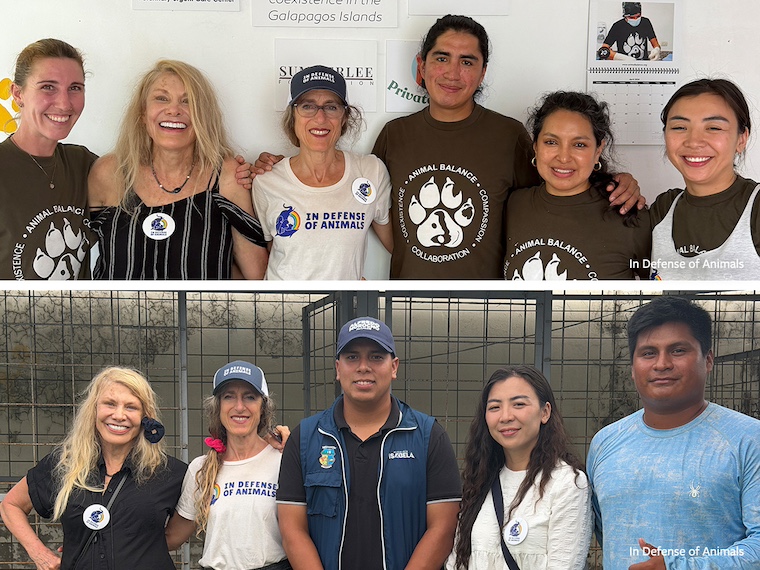
In Defense of Animals President Marilyn Kroplick, MD, Campaigns Director Lisa Levinson, and Bujin Erdenebat of Lucky Paws met with Animal Balance and Galápagos government officials to support coexistence programs. Photos from In Defense of Animals
This approach recognizes that caring for animal companions and protecting wild animals are not competing goals. When communities have access to humane veterinary services and effective spay/neuter programs, fewer animals are left without care, while ecosystems can be better protected from the challenges associated with increasing domestic animal populations.
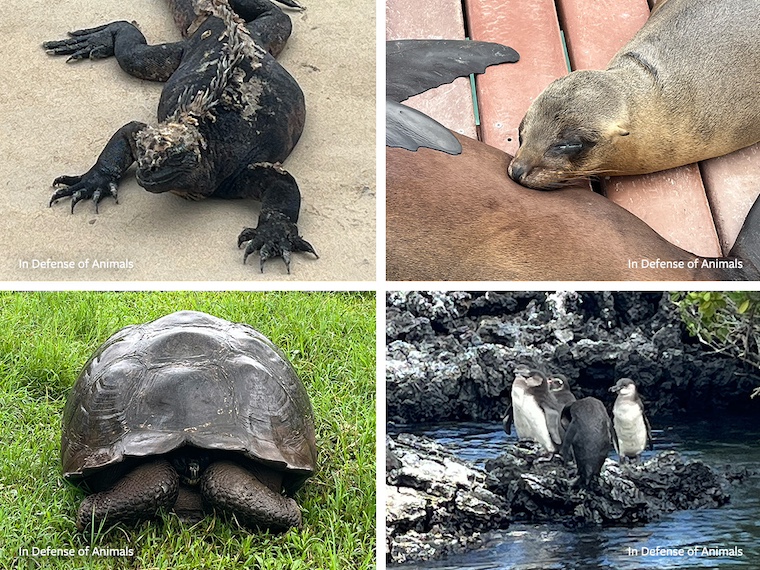
Endemic wild animals are protected in Galápagos Islands National Park including marine iguanas, Galápagos sea lions, giant tortoises, and Galápagos penguins. Photos from In Defense of Animals
We were especially excited to share this experience with our partners at Lucky Paws. In Defense of Animals sponsored Lucky Paws to join us in the Galápagos and learn directly from Animal Balance’s successful model.
The goal is bigger than one clinic or one island. The knowledge and experience gained in the Galápagos can help inspire humane solutions in other parts of the world. Before Animal Balance stepped in, domestic animals were sadly poisoned to protect wild animal residents. Now we’re part of transitioning from lethal to nonlethal solutions with a focus on coexistence on a global scale.
Lucky Paws is currently working to bring this proven spay/neuter model to Mongolia, creating an exciting opportunity to expand compassionate animal population management to another country facing its own challenges.
Our expedition reminded us that some of the most powerful solutions begin with collaboration — sharing knowledge, building local capacity, and putting compassion into action.
From the unique animals of the Galápagos to animal companions in Mongolia, humane solutions can create a better future for all animals, including people, and the ecosystems we all share.
To learn more about Animal Balance's spay/neuter program, see The Island That Ended Pet Overpopulation and check out their website at https://animalbalance.org/galapagos/.
Posted on All-Creatures.org: September 13, 2026
Return to Companion Animal Care
Follow us on:


- Home Page
- What's New
- Contact Us
- Action Alerts
- Animal Exploitation
- Animal Issues
- Animal Rights Activism
- Archives
- Art & Photography
- Articles Directory
- Bible
- Bible Commentary Blog
- Books
- Campaigns
- Church & Religion
- Discussions
- Events / Podcasts / Media
- Health
- Hosted Web Sites
- Humor
- Kids' Korner
- Letters
- Links
- Nature Studies
- Newsletter
- Poetry & Stories
- Prayers
- Quotations
- Recipes with Photos
- Recipes Without Photos
- Sermons
- Stop Cruelty in Churches
- Video Library
- The Mary T. and Frank L. Hoffman Family Foundation
- Email: [email protected]
A web site sponsored by The Mary T. and Frank L. Hoffman Family Foundation and all-creatures.org
Copyright © 1998-2026 The Mary T. and Frank L. Hoffman Family Foundation. All rights reserved. May be copied only for personal use or by not-for-profit organizations to promote compassionate and responsible living. All copied and reprinted material must contain proper credits and web site link www.all-creatures.org.
Fair Use Notice: This document, and others on our web site, may contain copyrighted material whose use has not been specifically authorized by the copyright owners. We believe that this not-for-profit, educational use on the Web constitutes a fair use of the copyrighted material (as provided for in section 107 of the US Copyright Law). If you wish to use this copyrighted material for purposes of your own that go beyond fair use, you must obtain permission from the copyright owner.

Thank you for visiting all-creatures.org.