Companion Animal Care Articles used with permission from All-Creatures.org
Marc Bekoff interviews Rob Gierka and Karen Duke about their new book, Just an Animal: Reflections on the Human-Animal Bond and Western Culture, which examines the difficulties we face when we grieve a companion animal in a society that frequently views other creatures as disposable objects.
Dogs, Cats, and Other Nonhumans Are Not 'Just Animals'
From Marc Bekoff, Ph.D., PsychologyToday.com
March 2026
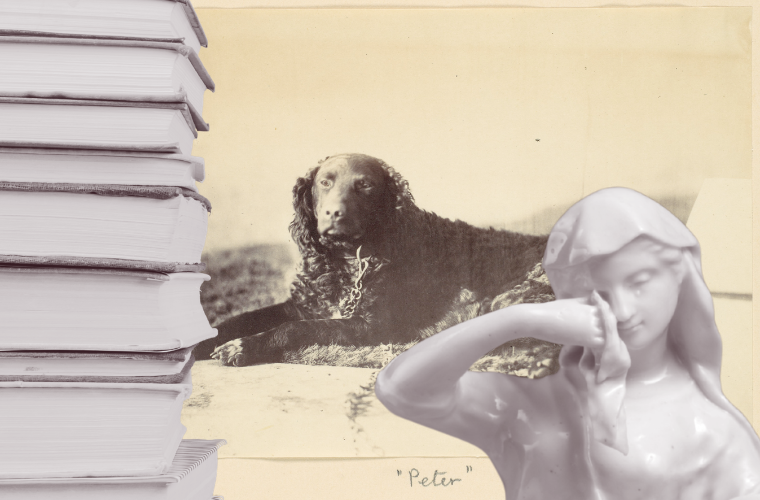
Images from Canva and The Met (Peter and figure)
Key points
- A new book explores how people in spiritual and religious circles are challenging speciesist narratives.
- The authors hope people will come to see animals differently and treat them with greater respect.
- Relationships with animals aren't merely sentimental "feel-good" experiences—they're powerful social bonds.
Humans around the world form deep and varied relationships with other animals, and these connections can shape daily life, emotional well-being, and resilience. Dismissing any nonhuman as "just an animal" isn't as uncommon as many people think, despite many people referring to their household companions and other animals as their "best friends."
I've heard far too many people write off other animals as "just animals," and for this and other reasons, I was thrilled to learn of Rob Gierka and Karen Duke's recent book, Just an Animal: Reflections on the Human-Animal Bond and Western Culture, in which they offer a critical discussion on this anthropocentric speciesist phenomenon. Just an Animal is the third book in the Pet Chaplain Learning Series, a four-volume set that explores pet keeping and loss in the modern West and offers instruction in interfaith spiritual care for pet loss.
In their timely and important work, they explore the ideological foundations of this false narrative about animals that distorts reality, fails to reflect the powerful bonds millions of people share with their animal companions and other nonhumans, and defies what science has shown us about who these nonhuman beings truly are, namely, intelligent, emotional, and sentient beings with individual personalities. They're not just "feel-good" experiences. Each and every life matters because they are alive, not because of what they can do for us. Here's what Rob and Karen had to say about their comprehensive overview of the cultural foundation of the West's anthropocentric mindset and the impact of this worldview on people who love animals and grieve their loss.
Marc Bekoff: Why did you write Just an Animal?
Rob Gierka and Karen Duke: As pet chaplains, we’ve been consoling pet keepers for more than 20 years. We’ve found their biggest need is social support. Some are surrounded by animal-loving friends and family, but most struggle to find others they can safely confide in. With Just an Animal, we show what disenfranchised grief for pet loss looks and feels like, but also why it occurs in the first place. The issue is much bigger than any individual’s experience of grief. It’s a cultural phenomenon involving animals and oppression, including those we keep as pets.1
MB: Who do you hope to reach?
RG/KD: Our audience includes anyone who has ever loved and lost an animal companion. The book includes many thought-provoking questions, so it is well-suited to book discussion groups. People who work with animals, including veterinary professionals and animal rescue workers, will also find Just an Animal an eye-opening read because it explains why some people treat animals as members of their families while others treat them as disposable objects. Professional caregivers—chaplains, therapists, social workers, religious leaders, and others—will gain valuable insight into the social and cultural context of pet keeping and loss.
MB: What are some of the topics you consider, and what are some of your major messages?
RG/KD: Just an Animal begins with the question of why pet loss is socially disenfranchised, then branches out into a broad exploration of how we think about animals in Western society. The dominant belief that animals are lesser creatures than human beings—less intelligent, less emotional, and less worthy of our love and compassion—impacts our lives and the lives of our animal friends in countless ways. In addition to social disenfranchisement, what we call “religious disenfranchisement” is distressingly common among pet keepers. Many people who grieve the loss of animals and who are active in a religious community are reluctant to seek support from their religious leaders. The bottom line is that, even though they are central to our physical, emotional, and spiritual well-being, animals and the people who love them are largely sidelined in the West’s religious institutions.
We’ve long depicted our fellow creatures as automatons lacking cognitive and emotional depth and unworthy of our moral or ethical concern. This false narrative is rooted in a worldview shaped for centuries by Western philosophy, religion, and science. This narrative is alive and well today, despite countless challenges. Just an Animal offers a rare synthesis of these ideas, helping readers understand where our dominant beliefs about animals originated and how these beliefs harm us, our animal friends, and the natural world.
Thankfully, we’re now experiencing a massive cultural shift in our knowledge and beliefs about animals. Just an Animal documents this shift, exploring how people in spiritual and religious circles are challenging traditional narratives emphasizing human dominion and encouraging responsible stewardship. It also documents how new scientific research is challenging long-held assumptions about animals.
This shift is also being driven by the rapid growth in pet keeping. Animals have a lot to teach us about maintaining positive, mutually beneficial relationships that are grounded in reciprocity rather than utility and servitude. They teach us about the beauty of nonjudgmental love, the benefits of embracing the simple pleasures of life with joy and gratitude, and the critical importance of animals to our physical and emotional well-being. As more people gain this new learning, it’s likely to encourage and speed this cultural shift.
MB: How does your work differ from that of others who are concerned with some of the same general topics?
RG/KD: Books about pet keeping and loss generally focus on the mental and physical experience of grief when people lose a pet but pay little attention to the social and cultural contexts. Yet our social experiences—both positive and negative—have a profound impact on our ability to navigate grief. When we lose a human loved one, we can generally count on people being sympathetic to our loss, and we can also count on familiar rituals of mourning. Such support can be hard to find when you lose a pet. Just an Animal explores this phenomenon, examining grief not only as an internal, psychological experience but as a cultural one.
MB: Are you hopeful that, as people learn more about the importance of human-animal bonds for everyone involved, they will work hard to improve these vital relationships?
RG/KD: We’re very hopeful that as pet keeping continues to grow in popularity, more people will begin to see all animals differently and treat them with greater respect and a nuanced understanding of their needs and unique gifts. Our animal companions are change agents. We’ve heard countless stories about people falling in love with an animal companion and discovering that their lives changed for the better. When we experience a positive, mutually beneficial relationship with an animal, it’s much more difficult to think of animals merely as objects we may use to meet our needs.
References
In conversation with Pet Chaplain's Rob Gierka and Karen Duke. Rob is an expert in the human-animal bond and pet loss, with extensive experience as a veterinary chaplain, community pet chaplain, and chaplaincy educator. Karen, a talented researcher and storyteller, collaborated with Rob to develop and lead the first online course in veterinary chaplaincy from 2018 to 2022.
1. MB: How does your book relate to your backgrounds and general areas of interest? RG/KD: The four-book series is the result of 30 years of study and practice. Rob trained as a hospital chaplain, served for nearly two years as the on-call chaplain in a large veterinary teaching hospital, and holds a doctoral degree in adult education with a research focus on the human-animal bond and bereavement. He has also facilitated a pet loss support group through the SPCA since 2006, and together, we developed and taught an online course in pet chaplaincy for five years. Our primary goal is to encourage people to explore their beliefs about animals and spirituality.
The Power of Human-Animal Relationships: 'Unleashing the Bond'; For Your Pet to Thrive, Listen to What They're Asking of You.
About the Author
Marc Bekoff, Ph.D., is professor emeritus of ecology and evolutionary biology at the University of Colorado, Boulder.
Online: marcbekoff.com, X
Article originally published on PsychologyToday.com:
https://www.psychologytoday.com/us/blog/animal-emotions/202603/dogs-cats-and-other-nonhumans-are-not-just-animals
Posted on All-Creatures.org: April 15, 2026
Return to Companion Animal Care
Read more at Book Recommendations
Follow us on:


- Home Page
- What's New
- Contact Us
- Action Alerts
- Animal Exploitation
- Animal Issues
- Animal Rights Activism
- Archives
- Art & Photography
- Articles Directory
- Bible
- Bible Commentary Blog
- Books
- Campaigns
- Church & Religion
- Discussions
- Events / Podcasts / Media
- Health
- Hosted Web Sites
- Humor
- Kids' Korner
- Letters
- Links
- Nature Studies
- Newsletter
- Poetry & Stories
- Prayers
- Quotations
- Recipes with Photos
- Recipes Without Photos
- Sermons
- Stop Cruelty in Churches
- Video Library
- The Mary T. and Frank L. Hoffman Family Foundation
- Email: [email protected]
A web site sponsored by The Mary T. and Frank L. Hoffman Family Foundation and all-creatures.org
Copyright © 1998-2026 The Mary T. and Frank L. Hoffman Family Foundation. All rights reserved. May be copied only for personal use or by not-for-profit organizations to promote compassionate and responsible living. All copied and reprinted material must contain proper credits and web site link www.all-creatures.org.
Fair Use Notice: This document, and others on our web site, may contain copyrighted material whose use has not been specifically authorized by the copyright owners. We believe that this not-for-profit, educational use on the Web constitutes a fair use of the copyrighted material (as provided for in section 107 of the US Copyright Law). If you wish to use this copyrighted material for purposes of your own that go beyond fair use, you must obtain permission from the copyright owner.

Thank you for visiting all-creatures.org.