An Environmental Article used with permission from All-Creatures.org
On a recent trip to Patagonia, Lorena Mucke witnessed first-hand the effects of climate change on the Patagonian landscape. Lorena encourages us to act now and empower those around us through education about the crucial connection between our food choices and the condition of our fragile planet.
What Happens in Patagonia Does Not Stay in Patagonia
From Lorena Mucke, Founder & Chief Executive Officer, Educated Choices Program, ECProgram.org
May 2026
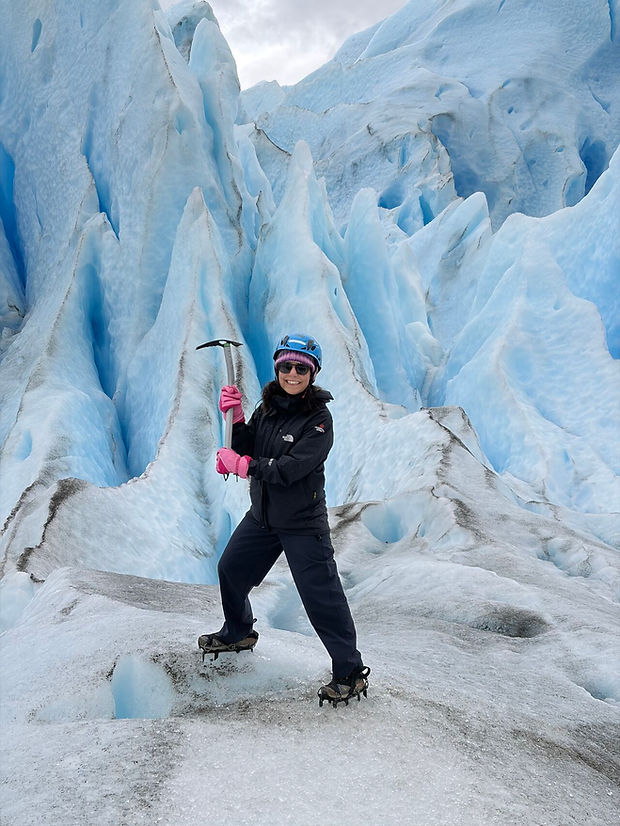
Standing on Perito Moreno Glacier in Patagonia, a powerful reminder of glacier melting and our changing climate. Photo from Lorena Mucke, ECProgram.org
Patagonia Climate, Glacier Melting, and What One Journey Reveals About Our Changing Planet
"There are places in the world that stay with you. Patagonia is one of them."
Returning to southern Argentina felt deeply personal. South America has always been part of my story. I was born in Bolivia and spent years living in both Bolivia and Argentina, first growing up, and later again during graduate school and field research. Those experiences shaped how I see the world, how I think about food systems, and how I understand our connection to the natural environment.
Being back in this region brought all of that into focus again, but this time it felt more immediate, real, and urgent.
Patagonia is often described as wild and untouched, and in many ways, it still is. But what stayed with me most during this trip was not just its beauty. It was its fragility and the visible effects of a changing Patagonia climate.
El Chaltén, Mount Fitz Roy, and a Changing Patagonia Climate
El Chaltén, often referred to as the trekking capital of Argentina, sits at the base of Mount Fitz Roy. What makes it even more special is the people you meet along the way. Hikers come from all over the world, and there’s this unspoken sense of connection. Everyone is open, friendly, and united by a shared awe of the landscape and a deep respect for preserving it.
We spent hours on the trail toward the Fitz Roy mirador, passing lakes so pristine they looked as if they had only just been discovered. As the peaks drew closer, so did that feeling of wonder, building with every step as each turn revealed breathtaking views.
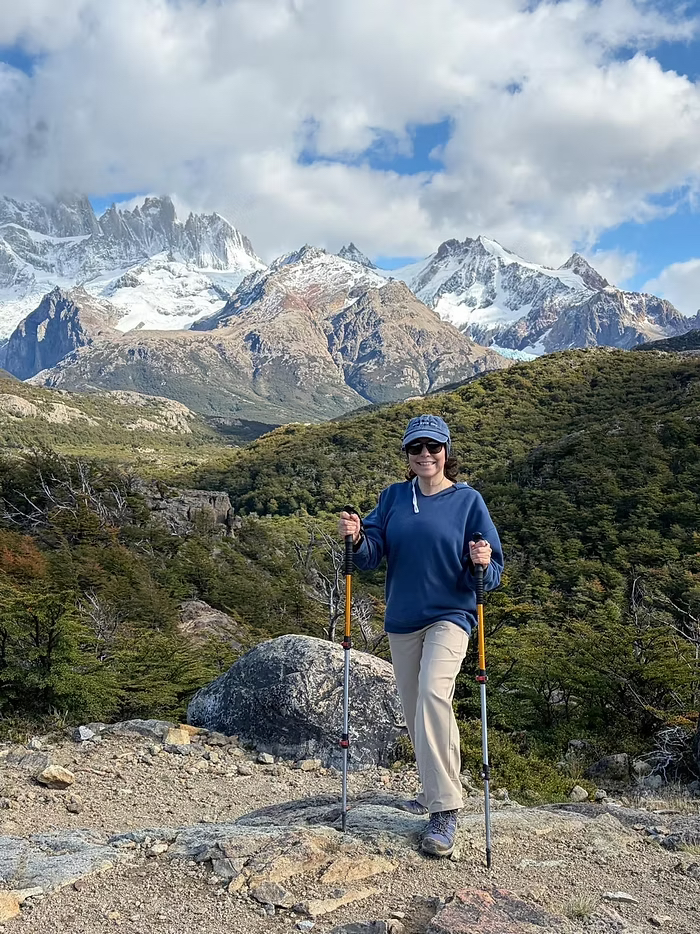
Photo from Lorena Mucke, ECProgram.org
There were moments where everything felt almost surreal. Being there has a way of grounding you. You feel small, but not insignificant. More like part of something vast, beautiful, and connected.
At the same time, there were subtle signs that things were changing. Glaciers that once extended farther into the valleys have retreated. Trails quietly reveal changes that have happened over time. Even the weather feels less predictable, shifting quickly in ways that locals say are becoming more common as the climate in Patagonia continues to shift.
Walking on Perito Moreno Glacier and Witnessing Glacier Melting
From El Chaltén, we made our way to El Calafate, the gateway to Los Glaciares National Park. The transition is striking. The landscape opens up, the scale expands, and the magnificent presence of ice fills you with deep, unadulterated reverence.
Lakes stretch across the horizon, fed by massive glaciers that have existed for thousands of years. It’s the kind of place that naturally slows you down, not because you’re told to, but because you feel like you should.
We stood there, taking in icebergs of incredible beauty, each one with a unique color, shape, size, and story.
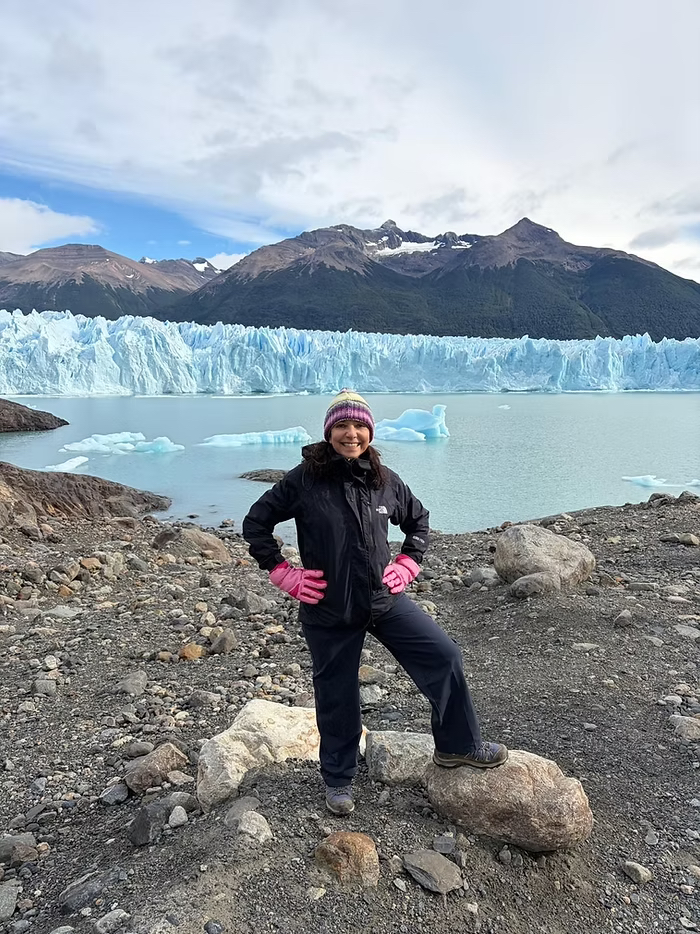
Photo from Lorena Mucke, ECProgram.org
Walking on Perito Moreno Glacier was one of the most powerful experiences of the trip. It’s hard to describe what it feels like to step onto something that looks so solid and permanent, only to realize how fragile it actually is.
Glaciers have always gone through natural cycles over long periods of time. But rising global temperatures are accelerating that process, which is why glaciers are melting at a faster rate across the world.
Perito Moreno is often described as one of the more stable glaciers in the region, and yet even here, the signs of glacier melting are visible. You don’t need to study the data to understand it. You can see it.
The forces driving glacier melt are not isolated. They are connected to global systems, including the way we produce food.
How Glacier Melting and Food Systems Are Connected
Across South America, forests continue to be cleared, often to make way for cattle grazing and feed production. The Amazon rainforest, one of the most important ecosystems on the planet, is under constant pressure. These changes don’t stay contained. They ripple outward, contributing to greenhouse gas emissions, accelerating biodiversity loss, and disrupting the natural systems that regulate our climate.
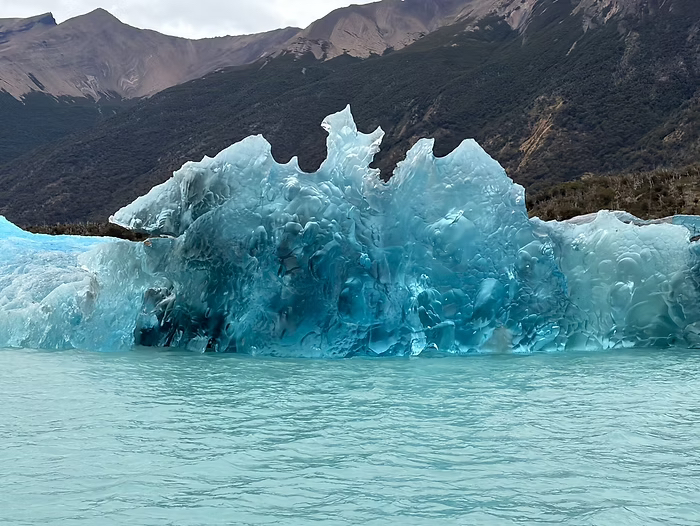
Photo from Lorena Mucke, ECProgram.org
Why This Matters
One of the challenges with climate change is that it can feel distant, abstract, and easy to ignore.
But standing on that glacier changes that. It makes it real.
This is one of the reasons I’ve dedicated so much of my work to education. When people begin to understand how these systems connect, especially early in life, something shifts. They start to see that their choices matter, not in an overwhelming way, but in an empowering one.
Food is one of the most tangible choices we can make. It’s something we engage with every day, and it’s also one of the most powerful ways we can reduce our impact.
And during those several days of exploration, we enjoyed some of the most delicious, healthful, and sustainable meals, ranging from pumpkin-stuffed pasta and a plant-based Argentinian parrillada to lentil stew with plant-based sausages.
A Renewed Sense of Purpose
This trip was more than a visit. It was a reminder that the natural world is both incredibly resilient and incredibly fragile. A reminder that change is already happening, whether we choose to see it or not. But most importantly, a reminder that we still have a role to play in what comes next.
At the Educated Choices Program, we believe that knowledge leads to empowerment. When people understand the connection between food, health, and the environment, they are better equipped to make choices that align with the future they want to see. Standing on ancient ice made one thing clear: the time to act is not someday. It is now.
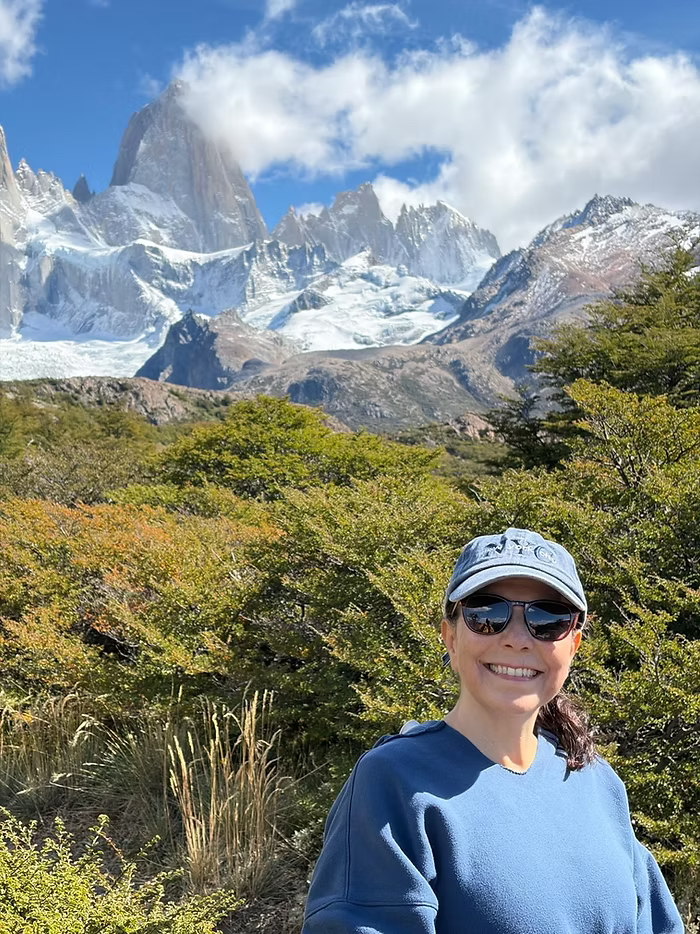
Photo from Lorena Mucke, ECProgram.org
For those interested in exploring these connections further, our digital library offers free, classroom-ready resources designed to help people make informed, impactful choices: educatedchoices.org.
Explore our science-based classroom videos and ready-to-use Earth Day lesson plans designed to help students investigate food systems, environmental science, and planetary health.
A free account is required to access the video and full lesson package. It takes about 30 seconds to create, and anyone can sign up!
About Educated Choices Program:
At the Educated Choices Program, we believe every student deserves access to accurate and engaging education that empowers them to build a better future. If you agree, support our organization by using our resources in your classroom and connecting with us for future updates:
Bookmark our digital resource library.
Subscribe to our newsletter for content delivered straight to your inbox.
Posted on All-Creatures.org: May 20, 2026
Return to Environment Articles
Follow us on:


- Home Page
- What's New
- Contact Us
- Action Alerts
- Animal Exploitation
- Animal Issues
- Animal Rights Activism
- Archives
- Art & Photography
- Articles Directory
- Bible
- Bible Commentary Blog
- Books
- Campaigns
- Church & Religion
- Discussions
- Events / Podcasts / Media
- Health
- Hosted Web Sites
- Humor
- Kids' Korner
- Letters
- Links
- Nature Studies
- Newsletter
- Poetry & Stories
- Prayers
- Quotations
- Recipes with Photos
- Recipes Without Photos
- Sermons
- Stop Cruelty in Churches
- Video Library
- The Mary T. and Frank L. Hoffman Family Foundation
- Email: [email protected]
A web site sponsored by The Mary T. and Frank L. Hoffman Family Foundation and all-creatures.org
Copyright © 1998-2026 The Mary T. and Frank L. Hoffman Family Foundation. All rights reserved. May be copied only for personal use or by not-for-profit organizations to promote compassionate and responsible living. All copied and reprinted material must contain proper credits and web site link www.all-creatures.org.
Fair Use Notice: This document, and others on our web site, may contain copyrighted material whose use has not been specifically authorized by the copyright owners. We believe that this not-for-profit, educational use on the Web constitutes a fair use of the copyrighted material (as provided for in section 107 of the US Copyright Law). If you wish to use this copyrighted material for purposes of your own that go beyond fair use, you must obtain permission from the copyright owner.
Thank you for visiting all-creatures.org.
