A Wildlife Article used with permission from All-Creatures.org
Staci-lee Sherwood explains the difference between butterfly host plants and nectar plants and shares the benefits of growing Buttonbush and other native nectar plants for the environment and local insect populations.
Common Buttonbush – a star nectar plant for butterflies
From Staci-lee Sherwood, RealityChecksWithStacilee.com
April 2026
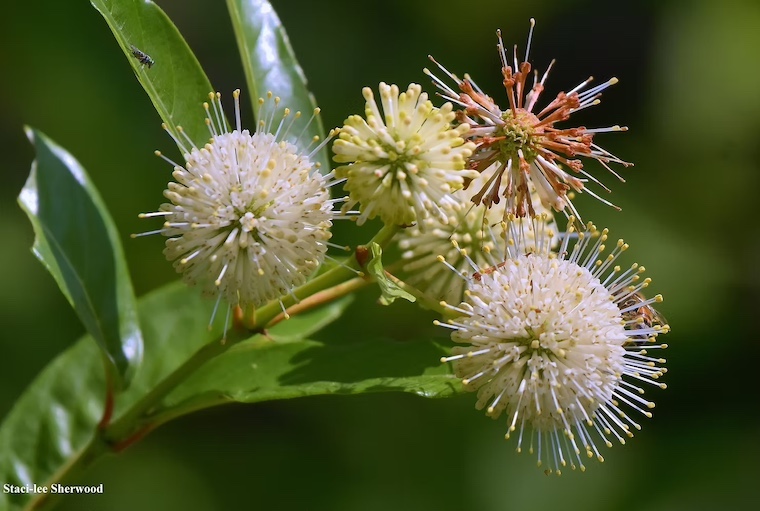
Photo Credit: Staci-lee Sherwood
Who doesn’t love butterflies? They’re not just beautiful to look at, they’re a marvel of nature’s engineering. Their lifecycle from egg to caterpillar to chrysalis to butterfly is a feat we humans probably couldn’t do ourselves. Yet butterflies have been doing this for nearly 60 million years. Over the years we have seen a decline in butterfly population, correlating with increased loss of habitat and use of pesticides. Our butterflies need our help now more than ever to survive and keep reproducing for generations to come. Two types of plants are crucial to their survival, the host plant where they lay their eggs and feed their caterpillars and nectar plants for the adults.
Nectar plants for butterflies
When reading about what plants attract butterflies most information focuses on their host plants. Nectar plants are equally important and unlike host plants, feed a variety of butterflies and other insects from bees, ants and beetles to birds. Buttonbush (Cephalanthus occidentalis) is a member of the Coffee family, Rubiaceae. Found in the wilderness near wetlands, sloughs and swamps they prefer moist soil with full to partial sun. They’re a hardy plant that also serves as a host plant for several moth species. Buttonbush is one of the best nectar plants as it attracts many species of butterflies. It typically grows in USDA zones 4 through 9 with zone 4 being the northern area and 9 being the south. This flowering plant can be found from Nova Scotia down to southern Florida and out west from eastern Minnesota to eastern Texas. This means people in most states can grow it in their garden.
Buttonbush has a long rich history of use by people. For centuries Native Americans used it for medicinal purposes like fever and toothaches. Its foliage can be toxic so its use as a medicine declined once the plant was better understood. It can help stop erosion by stabilizing stream banks and is often used to help purify water. Even the U.S. Department of Agriculture's Natural Resources Conservation Service (NRCS) has promoted its use in wetland restoration. Buttonbush plays a multipurpose role in the ecosystem and has been valued by both butterfly gardeners and wetland restorers for years.
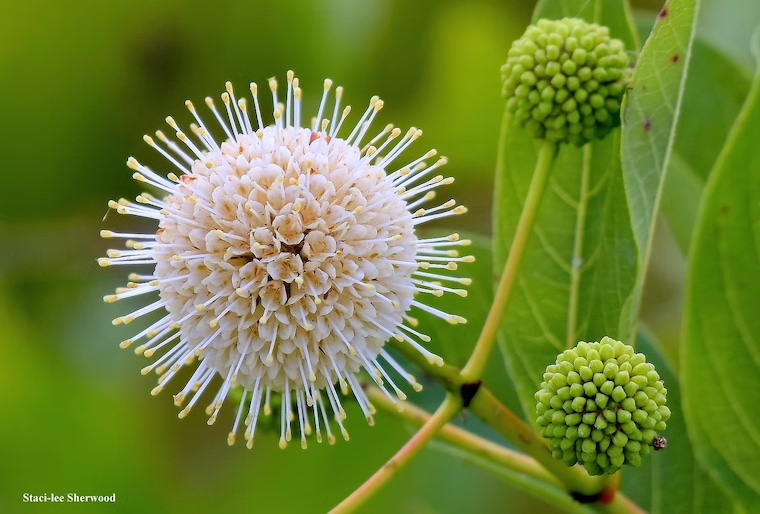
Buttonbush in full bloom with its creamy white flowers and yellow tipped spikes, alongside two new buds in green. Photo Credit: Staci-lee Sherwood
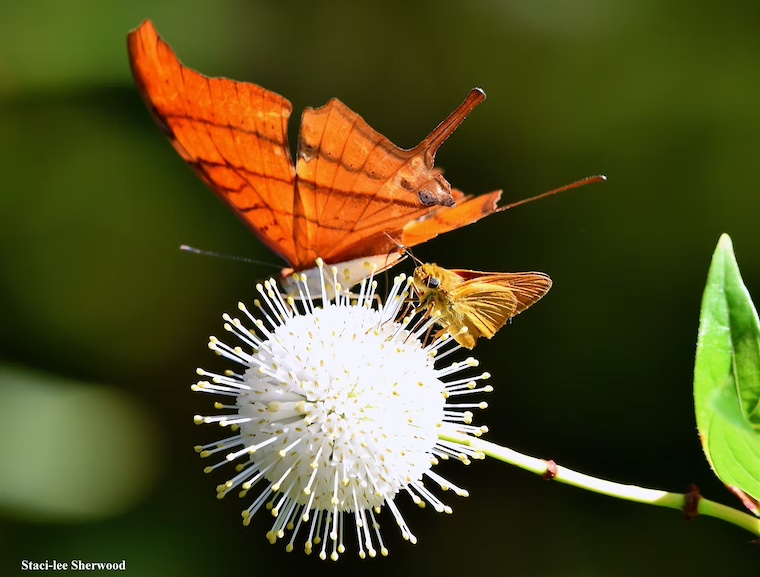
A Ruddy Daggerwing and Delaware Skipper butterflies share nectar. Photo Credit: Staci-lee Sherwood
For those with a garden this would be a great addition. Not just a food source it’s a beautiful and exotic looking plant. Its unique flowers are a creamy white ball with spikes. They almost look too dangerous for delicate butterflies to land and feast but that is part of the magic of nature. The bristles are pretty soft to the touch. Gardeners can plant the seeds and expect the plant to bloom in about 1-2 years depending on weather. Blooming season runs from June through August but in southern areas it’s hot all year so blooming season lasts longer. This plant can grow up to 12 feet high and can get quite dense, so it also provides shade for any surrounding shrubs and flowers. It does not survive in dry climates so if that’s the case daily watering might be needed. Another option might be to look into creating your own rain garden to keep the soil moist. In colder northern areas winter time would mean dormancy.
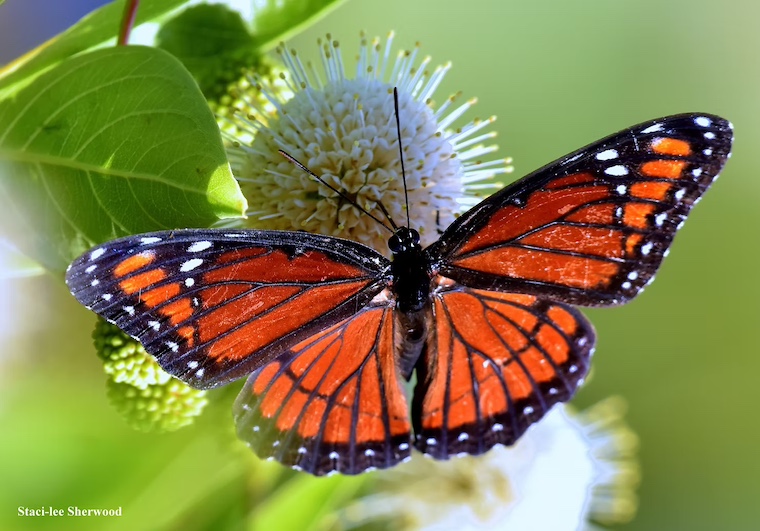
A Viceroy enjoys some Buttonbush breakfast. Photo Credit: Staci-lee Sherwood
While it’s a great source of food for butterflies it can be toxic to dogs and cats, as are many host plants for pollinators. If you have a pet, to keep them safe from harm resulting from ingesting a toxic plant, either keep them inside or away from butterfly plants when outside. I always kept my dog on a lead away from the garden making it safe for everyone.
For those who want to help our pollinators but don’t have room for a garden this plant would be beneficial to plant where a wetlands area needs restoring or along the banks of ponds, streams or rivers in a park. Native wild plants and flowers are disappearing so any time we can help bring them back we should. They feed wildlife but also play a vital role in a healthy diverse ecosystem which benefits all life.
Where to buy them
First check to see what native nectar plants grow in your area. This is based on weather and soil conditions. If you have a garden you can choose to buy either the seeds or plant. If you’re new to gardening for butterflies you might want to buy the plant first to ensure it can survive and attracts butterflies before buying and planting the seeds.
Once you have decided what plants you want, the following resources can help point you toward where to buy plants and seeds and can help with specific gardening tips and questions.
- Look up your state or local native plant society
- North American Native Plant Society lists commercial growers of native plants by state
https://nanps.org/commercial-growers/ - Mossy Oak Native Nursery ships seeds to zones 6-10
https://www.nativnurseries.com/products/buttonbush-seedlings-for-sale-cephalanthus-occidentalis. - North American Butterfly Association (NABA) has state chapters who can also help answers questions about plants and where to buy them
https://naba.org/
Written for NABA North American Butterfly Association and published in their Spring 2026 Butterfly Gardener magazine
Posted on All-Creatures.org: April 22, 2026
Return to Wildlife Articles
Read more at Environment Articles
Follow us on:


- Home Page
- What's New
- Contact Us
- Action Alerts
- Animal Exploitation
- Animal Issues
- Animal Rights Activism
- Archives
- Art & Photography
- Articles Directory
- Bible
- Bible Commentary Blog
- Books
- Campaigns
- Church & Religion
- Discussions
- Events / Podcasts / Media
- Health
- Hosted Web Sites
- Humor
- Kids' Korner
- Letters
- Links
- Nature Studies
- Newsletter
- Poetry & Stories
- Prayers
- Quotations
- Recipes with Photos
- Recipes Without Photos
- Sermons
- Stop Cruelty in Churches
- Video Library
- The Mary T. and Frank L. Hoffman Family Foundation
- Email: [email protected]
A web site sponsored by The Mary T. and Frank L. Hoffman Family Foundation and all-creatures.org
Copyright © 1998-2026 The Mary T. and Frank L. Hoffman Family Foundation. All rights reserved. May be copied only for personal use or by not-for-profit organizations to promote compassionate and responsible living. All copied and reprinted material must contain proper credits and web site link www.all-creatures.org.
Fair Use Notice: This document, and others on our web site, may contain copyrighted material whose use has not been specifically authorized by the copyright owners. We believe that this not-for-profit, educational use on the Web constitutes a fair use of the copyrighted material (as provided for in section 107 of the US Copyright Law). If you wish to use this copyrighted material for purposes of your own that go beyond fair use, you must obtain permission from the copyright owner.
Thank you for visiting all-creatures.org.
