 Seasonings,
Condiments, Mushrooms, Pasta, Etc - Ingredients Descriptions and Photos
Seasonings,
Condiments, Mushrooms, Pasta, Etc - Ingredients Descriptions and Photos
From All-Creatures.org Vegan - Vegetarian Recipe Book: How Mary and Frank and Friends Eat
"We are dedicated to cruelty-free living through a vegetarian - vegan lifestyle. Let no animal suffer or die that we may live!"
Ingredients Descriptions and Photos
Seasonings, Condiments, Mushrooms, Pasta, Etc
Table of Contents

(Allspice, ground)
Ground allspice seasoning (also called Pimento) is made by
grinding the dried unripe berries of the Pimenta dioica tree, which is also know
as Jamaican pepper, and can grow to heights of 30 feet. We use ground allspice
to season a variety of dishes from cookies to pasta sauces to soups. Allspice
has the flavor and taste similar to a combination of equal parts of cinnamon,
cloves, nutmeg, and black pepper (which could also be use as a substitute).
See the nutritional chart and enlarged photo by clicking on the photo or link.
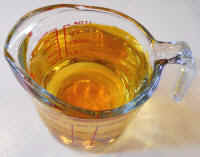
(Apple Juice) Apple juice is sold in almost every super
market. It usually comes in three varieties: frozen concentrate, filtered
pasteurized, and unfiltered pasteurized, the filtered pasteurized apple juice is the one pictured
in the photo. Since these forms of apple juice are processed, we don't
recommend them as a beverage, excepted when making some special beverage such as
hot spiced apple juice. Mostly we use apple juice as an ingredient in
our recipes, or on cereal. To enlarge the photo and see the nutritional
information for apple juice with vitamin C, and without vitamin C, click on the
photo or link.

(Apple Juice, Unfiltered)
Apple juice is sold in almost every super market.
It usually comes in three varieties: frozen concentrate, filtered pasteurized,
and unfiltered pasteurized, the latter of which is the one pictured in the
photo. Since these forms of apple juice are processed, we don't recommend
them as a beverage, excepted when making some special beverage such as
hot spiced apple juice. Mostly we use apple juice as an ingredient in
our recipes, or on cereal.

(Baking Powder)
Baking powder is used in baking non-yeast breads, cakes, and
muffins, and causes the dough to rise by producing tiny bubbles of carbon
dioxide that get trapped in the dough, just as yeast does. It is a
leavening agent composed of different chemical formulations of an acid salt
(various), and an alkaline salt, usually baking soda (sodium bicarbonate).
There are two types of baking powder: single acting, which contain such
chemicals as calcium hydrogen tartrate (cream of tarter), calcium phosphate, or
calcium citrate, which begins to work at room temperature as soon as the wet
ingredients are added to the dry ingredients; and double acting, which also
reacts at higher temperatures during the baking process, and usually contain an
aluminum salt, such as calcium aluminum phosphate, which may be harmful to
health because of its aluminum content. To keep baking powder fresh and to
prevent the moisture in the air from starting the chemical reaction, it is best
to store baking powder in a tightly sealed container in the refrigerator or
freezer. If you wish to avoid the aluminum, and use only the single acting
baking powder, a less expensive substitute can be used: for every teaspoon of
baking powder called for in the the recipe, add 1/2 teaspoon of baking soda to
the dry ingredients, and 1-1/2 teaspoons of lemon juice or vinegar to the wet
ingredients. Happy baking!

(Baking Soda)
Baking soda is used in non-yeast baking recipes to help the
dough rise during the baking process. Chemically, baking soda is known as
sodium bicarbonate. When it is heated, it decomposes and carbon dioxide
gas is given off. The tiny gas bubbles are trapped in the dough which
rises in the process.

(Basil, Sweet, Dry)
Basil is an aromatic seasoning of the Mint family, but it
does not have any minty flavor. It is commonly used as a seasoning with
tomatoes and in salad dressings. We like it in our chili and other
similarly flavored dishes. See the nutritional chart below which is for
ground dry basil leaves.

(Bay Leaves)
Bay leaves are the officially accepted seasoning name for
laurel leaves, which are the dried leaves of the Laurus nobilis, an evergreen
leaf tree that can grow to heights of 25 feet. The elliptically shaped leaves
are light green in color and brittle when dried. Even when cooked in a
recipe, these leaves can still be quite hard with shark edges where broken, and
caution should be taken to remove them so that they will not be eaten.
They have a distinctively strong, aromatic, spicy flavor. We use bay leaves
mostly in soups. A bit of history: the wreaths worn by Olympic champions
were made of laurel leaves. See the nutritional chart below.

(Bragg Liquid Aminos)
Bragg Liquid Aminos is a proprietary product produced
by Live Food Products that we use as a substitute for soy sauce and tamari.
It is not fermented and contains no gluten, and the only listed ingredients are
vegetable protein from soy beans and purified water, and that it contains 16
amino acids; however, like soy sauce, it is very high in sodium. We have
found it for sale is health food stores, specialty supermarkets, and form food
cooperatives. No nutritional information is available.

(Cafix Instant Beverage, Crystals) Cafix is a
naturally caffeine free instant beverage coffee substitute. It is made in
Poland from roasted barley, rye, chicory, and sugar beets. Cafix is
available in most specialty supermarkets, health food stores, and coops. We
could not find any comprehensive nutritional information.

(Cardamom Seed)
This is a photo of cardamom seed pods. Cardamom is an
expensive seasoning, second only to saffron, thus it is often adulterated.
This is why it's important to buy only pure Elettaria cardamomum. We have
found that because the flavor of pure cardamom is so strong that a little goes a
long way, and in the end is less expensive than adulterated varieties.
Each seed pod contains three double rows of seeds (the bulge of the seeds can be
seen on the pods in this photo). We use whole or split cardamom seed pods
in beverages and in some curry recipes. For more information on cardamom
and to see the nutritional chart, see our description of
ground cardamom.

(Cardamom, ground)
Cardamom can also be spelled Cardamon. Cardamom is the
fruit or seed of Elettaria cardamomum, a herbaceous perennial plant of the
ginger family (Zingiberaceae), which can grow to heights of 12 feet. The seeds
have a warm, slightly pungent, and highly aromatic odor and flavor. Originally
cultivated in India, Cardamom was probably imported into Europe around A.D.
1214. Today, cardamom is cultivated in India, Nepal, Sri Lanka, Guatemala,
Mexico, Thailand and Central America. Cardamom is used in a variety of
cuisines today, primarily in and around the Indian subcontinent (curries) and in
Scandinavia (Danish pastry). Enlarge the photo and see the nutritional chart by
clicking on the photo or link.

(Chili Powder)
Chili powder is made from grinding dried chili peppers.
It is a major seasoning in chili, which gets it name from these peppers, and in
other Mexican style recipes. The chili powders we have used are generally
on the low "heat" side, and require additional hot pepper (cayenne) to increase
the spiciness and "heat". Chili powder is very high in vitamin A.
See the nutritional chart by clinking on the photo or link.

(Chives)
Chives, scientific name Allium schoenoprasum, is a species of
flowering plant in the family Amaryllidaceae that produces edible leaves and
flowers. Their close relatives include the common onions, garlic, shallot,
leek, scallion, and Chinese onion. Chives have a similar taste to green
onions (aka scallions) but they are much milder, and their bulbs are not
edible. We have found that their mild or subtle flavor gets lost in salads
and cooked recipes, but they great in dips where other seasonings aren't
present to overpower them.
See the nutritional chart by clinking on the photo or link.

(Cilantro, Dried Leaves)
Cilantro is the leaf of the young coriander plant,
Coriandrum sativum, an herb in the parsley family. The leaves are picked
and dried and chopped to make the seasoning we have before us. The seeds
of the mature plant are called coriander. We primarily use the dried
cilantro because we rarely will use a whole bunch of fresh cilantro before it
spoils. Cilantro in commonly used Mexican and Middle Eastern dishes, and
in soups and bean dips. To enlarge the photo and see the nutritional chart
click on the photo or link.

(Cinnamon, ground) Cinnamon is prepared by peeling
and drying the inner bark of the lower branches of Cinnamomum zeylanicum, trees
and shrubs of the laurel (Lauraceae) family, which grow in the East Indies, Sri
Lanka, and other tropical regions. The cinnamon laurel tree, which grows as high
as twenty to thirty feet, has large, oval leaves and tiny pale yellow flowers
that grow close together in large numbers. Its fruit is shaped like an acorn.
Cinnamon trees, which are grown for their bark, are kept small by cutting them
close to the lower buds. In Sri Lanka the bark is usually peeled in April and
November. As the bark is dried it curls up and turns light brown. Cassia bark
from the cassia plant, Cinnamomum cassia, is also sometimes used in place of
cinnamon bark. This aromatic spice is available as the familiar ground cinnamon
(see photo) and cinnamon sticks. Ground cinnamon is a light yellowish brown
color and has a pleasant, sweetish taste. Cinnamon is used in a wide variety of
recipes from breads and pastries to exotic curries.

(Cloves, ground) The name “clove” is used to refer
either to the dried, unopened flower bud of Caryophyllus aromaticus, a tropical
evergreen tree of the family Myrtaceae, or to the tree itself. The shape of the
dried flower bud resembles a nail, hence the name “clove,” derived from the
Latin word for “nail”: clavus. When fresh, the unopened flower buds are
pink. They turn rust-brown when dried. Cloves, 1/2 to 5/8 inch long, resemble
small nails with a tapered stem. The large end of the clove is the four-pointed
flower bud. This sweetly pungent, strongly aromatic spice ranks 5
(piquant) on a hotness scale of 1 to 10, and a little goes a long way. Cloves
are used in a number of spice mixtures including curry powders, mulling spices,
and pickling spices. Native to Indonesia, the clove tree is cultivated in
Brazil, India, Sri Lanka, and the West Indies. This conical tree, with gray bark
and shiny dark green, oval, fragrant leaves, grows to a height of up to 45 feet
and requires at least 60 inches of rain per year with a dry season for
harvesting and curing. Its small purplish-red flowers grow in triple
clusters at the end of branches. The fruit is a purple drupe (like the peach,
cherry, almond, etc. containing a nut enclosing the seed) about one inch long.
To enlarge the photo and see the nutritional chart, click on the photo or link.

(Coconut, Unsweetened Flaked)
Flaked unsweetened coconut is made from dehydrated
coconut meat, which has been separated from the shell. We have not seen
flaked unsweetened coconut sold in supermarkets, but it is commonly sold in
health food stores and by coops. It is prone to becoming rancid, so we
only buy it in sealed containers and store it in our freezer. We use
unsweetened coconut mostly for flavoring of Asian recipes, desserts, and
smoothies. Unsweetened flaked coconut is very high in calories, with 80%
coming from fat. To enlarge the photo and see the nutritional chart, click
on the photo or link.

(Coriander, ground)
Ground coriander seed has a mild, sweet, slightly pungent,
citrus-like flavor with a hint of sage. Coriander complements, curries, Middle
Eastern dishes, vegetables, stewed fruit, chutney, pickles, cakes, biscuits,
breads and lentils. Coriander is the common name of the seed of Coriandrum
sativum, a feathery annual herb of the family Apiaceae (Umbelliferae). Native to
the Mediterranean and Middle East regions, the herb is cultivated in Europe,
Morocco, and the United States for its seeds. The tender young leaves of
the coriander plant, known as cilantro, are also used for seasoning, but their
flavor is entirely different. To enlarge the photo of the ground coriander
seed, and to see the nutritional chart, click on the photo or link.

(Coriander Seed) These are the dried fruit
of the coriander plant, which have become knows as coriander seed. Ground
coriander seed has a mild, sweet, slightly pungent, citrus-like flavor with
a hint of sage. Coriander complements, curries, Middle Eastern dishes,
vegetables, stewed fruit, chutney, pickles, cakes, biscuits, breads and
lentils. Coriander is the common name of the seed of Coriandrum
sativum, a feathery annual herb of the family Apiaceae (Umbelliferae). Native to
the Mediterranean and Middle East regions, the herb is cultivated in Europe,
Morocco, and the United States for its seeds. The tender young leaves of
the coriander plant, known as cilantro, are also used for seasoning, but
their flavor is entirely different. Whole coriander seeds are used in
pickling vegetables, and in Meditation and Asian recipes. It is even used in
brewing some beers. To enlarge the photo of the ground coriander
seed, and to see the nutritional chart, click on the photo or link.

(Corn Starch)
Corn starch is an inexpensive ingredient to thicken sauces and
gravies or any other cooked recipe. To use corn starch as a thickening
agent, first disperse it in a little cold water or other "watery" ingredients
such as soy sauce, and slowly add it (with constant stirring) to the other
ingredients while they are cooking. About one tablespoon of corn starch
will gel about one cup of liquid. If you have not used corn starch as a
thickening agent before, it is best to experiment with it by beginning with
lesser amounts, and adding as necessary until the desired consistency is
reached. For thickening non-heated recipes such as
salad dressings or
frozen desserts, we suggest using guar gum or xanthene gum. See the
nutritional information by clicking on the photo or link.

(Corn Tortilla) This is a
6-inch diameter corn tortilla that is made from whole corn, water, and lime,
which contains no additives. We purchase these tortillas in a 2-pound package in
our supermarket. We primarily use them for making toasted and roll-up
sandwiches, mini-pizzas, and snacks. There is almost always a package of them in
our refrigerator. We also have found that they are best cooked in a microwave
oven, since baking them in a conventional oven causes them to dry out and flake
on the surface before the inner ingredients are cooked. To enlarge the photo and
see the nutritional chart, click on the photo or link.

(Cumin, ground)
A member of the carrot family, cumin has been cultivated since
ancient times for the aromatic flavor of it's seed. Cumin is widely used
in curries and Mexican style dishes. The photo of the ground cumin is
about a twenty times enlargement. See nutritional chart below.

(Curry Powder)
Curry powder is a blended seasoning, which is popular in Asia,
Africa, and in other parts of the world. This particular blend was
purchased from Frontier, and contains the following ingredients: turmeric,
paprika, fenugreek, coriander, black pepper, cumin, ginger, celery seed,
caraway, and red pepper. Because curry is a blend of various seasoning, we
have not included any nutritional information for this blend.

(Curry Powder, Dal)
This dal curry powder, like all other curry powders, is a blending of
several seasonings. We call this one dal because we first used it in yellow
split pea soup. Since then, we decided to make this blend to use in other
recipes, such as some of our green smoothies. To make this dal curry powder,
thoroughly mix together the following ingredients and store in a tightly
closed bottle with your other seasonings until ready to use:
2 tbsp. Coriander Seed, ground
2 tbsp. Cumin, ground
2 tsp. Cardamom, ground
2 tsp. Ginger, ground
2 tsp. Turmeric, ground
2 tsp. Yellow Mustard Seed, ground
Cayenne Pepper, ground (optional, to taste)
2 tbsp. Coriander Seed, ground
2 tbsp. Cumin, ground
2 tsp. Cardamom, ground
2 tsp. Ginger, ground
2 tsp. Turmeric, ground
2 tsp. Yellow Mustard Seed, ground
Cayenne Pepper, ground (optional, to taste)

(Dill Weed, Dried Leaves) Both dill weed (dried
leaves) and dill seed come from the same plant. Although we prefer using the
dried leaves (see photo) in our recipes, fresh, dried or frozen dill seeds and
flowers, as well as leaves, are also used. The flavor of dill weed has been
described as bright, tangy, clean, and pungent. In use since ancient times, dill
is indigenous to Europe. A member of the carrot family, or Umbelliferae, dill
weed (Anethum graveolens) is a self-seeding annual with delicate lacy aromatic
foliage, reaching a height of 3 feet. To enlarge the photo and see the
nutritional chart click on the photo or link.

(Dulse, Granules) This is a greatly
enlarged photo of the dulse granules from Maine Coast, but they look more
like flakes. We use these granules or flakes in salads and to impart a
seafood flavor to our vegan recipes. Dulse is a deep red or purple algae sea
vegetable. The blades or branches of dulse are flattened and broad with
numerous side branches. Lobed segments of dulse make the plant appear hand
or palm shaped, which led to its scientific name, Palmaria palmata, meaning
“of the palm”. Dulse grows near or below the low tide level in somewhat
protected bays with strong tidal currents. Dulse is a perennial sea
vegetable that contains numerous vitamins, minerals and trace elements. To enlarge the photo and see the
nutritional chart click on the photo or link.

(Echinacea Tea) This is a photo of the dried, above ground parts of the Echinacea purpurea,
or purple (or light purple) coneflower plant, which in addition to be a very attractive garden plant, is also know for its health
benefits in boosting the body's immune system because of concentration of polysaccharides. The tea is brewed from this dried echinacea
(1 tablespoon per cup), which is allowed to steep for 5 to 10 minutes. It seems to be most commonly used to help prevent colds.

(Garam Masala) Garam Masala is a spicy
Indian blended spice that is a common ingredient in many Indian recipes. It
is made from corrander, cumin, ginger, red chili peppers, cloves, cinnamon, bay
leaves, and sometimes some other spices. We purchased ours online.

(Garlic Powder) We mostly use garlic for its
convience or in cooked recipes where special garlic flavors are not
important. From Wikipedia: "Garlic powder is a seasoning that is derived
from dehydrated garlic and used in cooking for flavor enhancement. The
process of making garlic powder comprises drying and dehydrating the
vegetable, prior to powdering it through machinery or home-based
appliances contingent on the scale of production. Garlic powder is a
common component of spice mix." Click on the photo or link to see
nutritional information.

(Ginger) Ginger is a tuber
that is consumed whole as a delicacy, medicine, or spice. It is the rhizome of
the plant Zingiber officinale. Fresh ginger can be substituted for ground
ginger at a ratio of 6 to 1 (1/4 cup ginger root = 2 tsp ground ginger),
although the flavors of fresh and dried ginger are somewhat different. Ginger is
native to Southern Asia and has long been a staple addition to Asian cuisines,
but its use has spread around the world. The characteristic odor and flavor of
ginger is caused by a mixture of zingerone, shogaols and gingerols, volatile
oils that compose one to three percent of the weight of fresh ginger, mature
ginger having the higher percentage. See the nutritional chart below.

(Ginger, dried ground)
Ground ginger comes from drying and grinding the
thickened, pungent, aromatic rhizome (root) of the tropically grown ginger
plant, Zingiber officinale. Ginger is widely used in Chinese food and is
one of the seasonings in pumpkin pie. See the nutritional information by
clicking on the photo or link.

(Guar Gum) Guar gum, also called guaran, is extracted from the seed of the
leguminous shrub Cyamopsis tetragonoloba, where it acts as a food and water
store. It's similar to locust bean gum. Guar gum is a polysaccharide (a long
chain of sugars) made of the sugars galactose and mannose. This long chain acts
as a thickening agent in dressings and other recipes, particularly where heating
is not desired. Guar gum is not usually sold in markets, but some health food
stores and drug stores carry it, as do some coops.

(Horseradish Root)
The root of the horseradish is usually washed, peeled, and
ground and sold in its processed form in jars; but it is also found as a whole
root in the produce section of most larger supermarkets. The raw
horseradish root is much spicier than the processed form. It can be stored
in the vegetable bin of your refrigerator for several weeks. The inside of
the horseradish root should be white. Select only firm roots. Fresh
raw horseradish root is excellent for making spicy salad dressings, dips and
sandwich spreads. See the nutritional chart by clicking on the photo or link.

(Inka Instant Grain Beverage) Inka instant grain beverage is a product of
Poland, which is made from roasted barley and rye with no additives or
preservatives. We first found it in a health food store. It is the least
expensive of the instant grain beverages. We could not find any comprehensive
nutritional information.

(Italian Seasoning Blend) We
purchased this preblended Italian seasoning online. It contains organic
oregano, organic marjoram, organic thyme, organic rosemary, organic basil,
and organic sage. We use it in a variety of recipes, including sprinkling it
on our salads, which is probably where we use most of it.

(Kelp or Kombu, Granulated)
Kelp or kombu (Japanese) is a sea vegetable. We mostly use granulated kelp
on our salads for both flavor, and to add some iodine (an essential mineral)
to our diet, which is needed to give us good thyroid function and health. It
can also be added to soups and stir-fry recipes. Kelp or kombu is an
important part of Japanese cuisine. To make the granulated kelp, the freshly
harvested kelp is dried and coarsely ground. According to Wikipedia,
kelps are large seaweeds (algae) belonging to the brown algae (Phaeophyceae)
in the order Laminariales. There are about 30 different genera. See
Nutritional information by clicking on the photo or link.

(Lecithin, Soya) We primarily us soya lecithin as an emulsifier in our bread
recipes. It is also used as an ingredient of dough enhancers: for every
cup of flour, we use 1 tsp. of soya lecithin, 1/8 tsp. vitamin C (ascorbic
acid), and 1/8 tsp. of ground ginger. Lecithin is a mixture of fats:
glycolipids, triglycerides, and phospholipids. It also produced naturally
in our livers, when the person is eating a healthful diet. Every cell in the
body requires lecithin for building the cell walls, for without it, the walls
would become hardened. Soya lecithin is extracted from soy beans using
hexane and then refined. To enlarge the photo and see the nutritional
chart, click on the photo or link.

(Lemon Balm, Dried) The scientific name for
lemon balm is Melissa officinalis, and is a member of the mint family; it is
also known as balm, bee balm, melissa, melissa balm. The Latin name "melissa"
translates to "bee", because the yellow flowers of the lemon balm attract
bees. We use these dried lemon balm leaves for making tea, which has been
used for hundreds of years for its soothing and calming effect. Lemon balm
is native to southern Europe, but the plant is now grown all over the world,
and has naturalized in North America. Commercially packaged lemon balm tea
bags often are combined with other calming and soothing herbs, such as
valerian, chamomile, and hops. We could not find any comprehensive nutritional information.

(Lemon Juice, Reconstituted) Reconstituted lemon juice is, as the name
implies, made by adding water back into concentrated lemon juice. Because
it's a processed food project, it also requires the flavor to be adjusted in
order to main a uniform flavor. This is accomplished by adding lemon oil
that has been extracted from the peel. And because it is a processed
project, all bottled brands that we have encountered, have also added
preservatives to maintain color and freshness, which usually include sodium
bisulfate and sodium benzoate. We recommend buy brands that have the least
number and quantities of additives. We mostly use bottled lemon juice in
recipes that require a large quantity of lemon juice (a cup or more), for
convenience, or when fresh lemons are not available. Reconstituted lemon
juice is not a substitute for the flavor of fresh lemons. To enlarge the
photo and see the nutritional chart, click on the photo or link.

(Mace, Ground) Mace is a highly flavored spice, usually ground, which is made
from the dried outer covering of nutmeg. The fragrance and flavor of mace is
similar to that of nutmeg. Nutmeg is the seed or kernel inside the nut-like pit
of a tropical fruit growing on evergreen trees (Myristica fragrans, of the
family Myristicaceae, the nutmeg family) in the East Indies, India, Sri Lanka,
West Indies, and Brazil. The flowers of these 60-foot tall trees are pale yellow
and droop in clusters. When the fruit is ripe, it looks like a golden-yellow
pear hanging among shiny, gray-green leaves that are long and pointed. As the
fruit continues to ripen, the fleshy part becomes hard until it finally splits
open at the top, revealing the yellow to red aril, the dried external fibrous
membrane covering the pit. This covering is called mace. To enlarge the photo
and see nutritional chart, click on the photo or link.

(Molasses, Unsulphured) The highest grade, pure molasses is made from 100% pure, natural
sugarcane juices, clarified, reduced, and blended to get just the right color
and consistency. But there's difference in grades of molasses. The purest
molasses is pure cane juice. If a manufacturer wants sugar, the cane juice will
be processed. For most of our recipes that call for molasses, we use unsulphured
molasses, because it sweetens with a rich pleasant flavor. To enlarge the
photo and see the nutritional chart, click on the photo or link.

(Mullein Tea)
Mullein tea is made from the dried leaves of the mullein plant (wild
flower). It sometimes is infused with dried flowers which gives the tea a
sweeter taste. Brew the tea by putting two teaspoons of the dry leaves per
cup of water, let it steep for 10 minutes and then filter it to prevent the
fine hairs from staying in the tea which could cause some irritation.
According to what we found on the internet, scientific experiments and
medical studies have shown that mullein has expectorant and anti-bacterial
properties, both of which are needed in treating respiratory disorders.
Mullein tea a great home remedy if you have flu or a cold with lots of
congestion, and we have found that it helped us.

(Mushrooms)
When most people think of edible mushrooms, they picture these common white
ones. Choose mushrooms that are white and have few brown spots, such as
the ones in this photo. Mushrooms are a good source of many vitamins and
minerals. See the nutritional charts by clicking on the photo or link.

(Mushrooms, Oyster) Oyster mushrooms (pleurotus ostreatus) are a common variety
of edible mushroom; however, even though they are common, we rarely see them in
supermarkets. Their name came from the fact that they look very similar to
oyster shells. In the wild, oyster mushrooms grow on dead trees. They are
cultivated commercially and are easy to grow. Oyster mushrooms can be used
in many different recipes. We mostly use oyster mushrooms in our Asian
style recipes. To enlarge the photo and see the nutritional information,
click on the photo or link.

(Mushrooms, Oyster, Dry)
Oyster mushrooms are one of the milder tasting mushrooms,
but they have a distinctive flavor. We purchase dry oyster mushrooms in
one pound packages (D'Allasandro) from the co-op, because of their convenience
and storability. They are great in soups and stir-fries, and reconstitute
quickly when soaked in water.

(Mushrooms, Blue Oyster) Blue oyster
mushroom clusters start out with deep blue coloring and eventually turn grey
as they age, which explains the color in this photo. Oyster mushrooms have a
subtle seafood flavor with hints of anise and a faint, earthy taste. Cooked
oyster mushrooms bring a soft, meaty texture to soups, stir-frys, and salad
recipes. They're a good source of protein, and they're also high in fiber
and vitamin B. The literature also says that Blue Oyster mushrooms are a
good source of vitamin D to balance phosphate and calcium levels in the body
to strengthen bones and teeth, vitamin A to maintain optimal organ
functioning, and other amounts of iron, copper, and riboflavin. In addition
to vitamins and minerals, Blue Oyster mushrooms contain chitin, a polymer
that promotes healthy digestive bacteria and antioxidant properties to
reduce oxidative stress.

(Mushrooms, Porcini B (Cepes), dried) We only could find references to these
mushrooms being wild and not domestically farmed. Also the porcini B cepes are
much less expensive that the porcini, and their flavor is still very good. We
usually buy them in one pound packages from our coop, but have seen them in
health food stores and some supermarkets. Porcini mushrooms (Boletus Edulis) are
a very popular mushroom throughout Europe and the United States. During late
spring and early summer the porcini grows in abundance. Porcini mushrooms have a
distinct flavor. The flavor can be almost addicting. Dried porcinis are a very
economical mushroom as the flavor is very concentrated. Porcini mushrooms are
delicious in soups, sauces, stuffing and stews. Dried Porcini can be substituted
for any Mushroom in any recipe; typically a smaller amount of Dried Porcini can
be used in recipes than other mushrooms because of the intense flavor.

(Mushrooms, Portabella)
Portabella mushrooms are the largest variety of mushrooms
that we have seen being sold in markets. The portabella mushrooms in this
full-sized photo are approximately the actual size or slightly smaller than
actual. They are excellent for making mushroom
steaks and for
sandwiches. See the nutritional chart
by clicking on the photo or link.

(Mushrooms, Shiitake, Dry)
When reconstituted in water, shiitake mushrooms
are medium to strong tasting with a distinctive taste and a chewy texture.
We purchase these dry shiitake mushrooms from the co-op in one pound packages
(D'Allasandro) because of their convenience and storability. Since they
reconstitute very quickly, we enjoy them in quickie soups, stir-fries, and
steamed vegetable dishes. See nutritional charts for dry and cooked
shiitake mushrooms by clicking on the photo or link.

(Mushrooms, Stir-Fry Mix, Dry)
As the name implies, these dry mushrooms are
blended together to add a special treat to stir-fries. They are also great
in soups. We purchase this mushroom mix from the co-op (D'Allasandro) in
one pound packages because of their convenience and storability. This
blend has a wide range of tastes and textures, which adds interest to the soups
and stir-fries.

(Mushrooms, Wood Ear, Dried)
The literature says that wood Ear mushrooms are small to medium in size,
averaging 3-8 centimeters in diameter, but some of the ones we purchased
were even larger, and they are curved and wavy with an ear-like or cup-like
shape. The literature also says that the larger ones are less tender.
However, when wood ear mushrooms are cooked in soups and stir-fries, which
is the preferred way of preparing them, the mushrooms are firm, and chewy
with a mild, musty flavor. Wood ear mushrooms are botanically classified as
Auricularia polytricha, which are a wild, edible ear jelly fungus that is a
member of the Auriculariaceae family. They are also known as the Cloud Ear,
Tree Ear, Black fungus, and Jelly Ear, wood ear mushrooms are often mistaken
for Auricularia auricula-judae, with the main difference between the two
species being their size. Wood Ear mushrooms are found in temperate forests
and grow in groups predominately on elder trees, but they have also been
found on dead and living trees such as ash, spindle, and beech. These
mushrooms are also cultivated around the world in bags of sawdust and are
dried and exported for commercial use, and for people like us who like to
cook with different ingredients.

(Mustard Seed, Ground)
Ground mustard seed is an excellent way of adding a
spicy mustard taste to recipes such as stir fries, soups, and salad dressings,
without the other flavors associated with prepared mustards. See the
nutritional chart by clicking on the photo or link.

(Nutmeg, ground)
Nutmeg is the seed or kernel of a tropical fruit growing on
evergreen trees (Myristica fragrans, of the family Myristicaceae, the nutmeg
family) in the East Indies, India, Sri Lanka, West Indies, and Brazil. The
flowers of these 60-foot tall trees are pale yellow and droop in clusters. When
the fruit is ripe, it looks like a golden-yellow pear hanging among shiny,
gray-green leaves that are long and pointed. As the fruit continues to ripen,
the fleshy part becomes hard until it finally splits open at the top, revealing
the yellow to red aril, the dried external fibrous covering or membrane of the
seed. This covering is called mace. Under the aril is a dark, shiny nut-like
pit. The nutmeg is the oval shaped seed inside this pit. Nutmeg is aromatic with
a flavor that is warm, nutty, and slightly sweet. We use ground nutmeg (see
photo) as an ingredient in some of our recipes.

(Olive Oil, Extra Virgin)
Extra virgin olive oil is, by far, the best tasting
of all types of olive oil. It is made from the first cold pressing or
"select" ripe olives. Also, in order to be classified as extra virgin, the
olive oil much contain less than one percent acid. Extra virgin olive oil
also has the best aroma and flavor. Since we only use olive oil for
flavoring, and never cook with oil, it is the only type of olive oil that we
purchase. Unfortunately, the only nutritional information we could find is
for ungraded olive oil.

(Olives, Ripe Pitted)
We usually buy ripe olives in 6-ounce cans. We use
them mostly for adding flavor to various cooked dishes, and for garnish and
flavor on salads. Since ripe olives are processed with salt, and thus high
in sodium, we don't recommend "chowing down" on them, but they do enhance the
flavor of many recipes. Slicing the ripe olives helps to distribute the
flavor throughout the recipe. We have also found a variety of flavors and
textures between brands of ripe olives, and recommend that people find the brand
that they like best. To enlarge the photo and see the nutritional chart,
click on the photo or link.

(Olives, Ripe, Sliced)
We usually buy ripe olives in 6-ounce cans, and slice
them as shown in the photo. We use them mostly for adding flavor to
various cooked dishes, and for garnish and flavor on salads. Since ripe
olives are processed with salt, and thus high in sodium, we don't recommend
"chowing down" on them, but they do enhance the flavor of many recipes.
Slicing the ripe olives helps to distribute the flavor throughout the recipe.
We have also found a variety of flavors and textures between brands of ripe
olives, and recommend that people find the brand that they like best. To
enlarge the photo and see the nutritional chart, click on the photo or link.

(Oregano, dried)
Oregano is a member of the Mint family, though the flavor is
quite different. The dried aromatic leaves of the bushy plant can be
stored for some time in a tightly sealed jar, for use whenever desired. We
have found some variation in the flavor of oregano leaves, and prefer the
Mediterranean variety. Oregano is used in Italian and Chinese cooking.
See the nutritional information for "ground" oregano (it was the only oregano
nutritional information we could find) by clicking on the photo or link.

(Paprika)
Paprika (Capsicum annuum) is a New World seasoning, It is commonly found
in powdered form, which is made by grinding dried, aromatic, sweet red peppers,
usually the Tomato or Bell pepper. Most commercial brands come from California,
Hungary, Spain, and South America. It is very popular ingredient in Hungarian
recipes, and we also prefer to use the Hungarian Paprika, as the flavor seems to
be the best. To enlarge the photo and see the nutritional chart, click on
the photo or link.

(Parsley, Dried)
Dried parsley is also referred to as parsley flakes. We keep dried parsley
leaves on hand for adding a mild parsley flavor to cooked foods, and when we
don't have fresh parsley on hand. A simple rule to use for substituting dried
for fresh is to use 1/3 of the amount of dried parsley for the amount of fresh parsley called for in the
recipe (i.e. 1/3 cup of dried = 1 cup fresh, or 1 teaspoon dried = 1 tablespoon
fresh). Commercially made dried parsley or parsley flakes are made by freeze
drying. It can also be made at home in a dehydrator. To enlarge the photo and see the nutritional
information click on the photo or link.

(Pasta, Angel Hair or Spaghettini, Whole Wheat) Angel hair or spaghettini is a
thin form of spaghetti. Since this form of pasta has more surface area it
holds more sauce, which in our opinion makes each mouthful more flavorful.
We always purchase 100% whole wheat or other whole grain pasta. Most major
supermarkets, and all health food stores sell 100% whole wheat pasta in various
shapes and sizes to suit any desired recipe. It is always best to read the
labels to make sure that what you are buying is 100% whole grain. The one
in this photo contains only 100% certified organic whole durum wheat and water,
with no other ingredients. To enlarge the photo and see the nutritional
chart, click on the photo or link.

(Pasta, Chick Pea Elbows) We are
beginning to see a lot more vegan products on the supermarket shelves; these
chick pea elbows are one of them. The chick pea elbows are also gluten free,
being made with chick peas, tapioca, pea protein, and xanthan gum. They are
very good tasting and hold their shape very well in the cooking process,
with cooking time being similar to other pastas. These Banza chick pea
elbows are promoted prominently on the box as being gluten-free, low
glycemic index, non-gmo, and vegan. We could not find any detailed
nutritional information for these chick pea elbows.

(Pasta, Chick Pea Rotini) Over the
years, we have been seeing more and more vegan and gluten free pasta;
however, they cost about twice as much as the regular wheat pasta. These
chick pea rotini are one of these vegan and gluten free pastas. They are
very good and the spiral shape is great for holding the sauce. We could not
find any specific nutritional information for these chick pea rotini, but
suspect it is very similar to that of chick peas.

(Pasta, Chick Pea Shells) We are
beginning to see a lot more vegan products on the supermarket shelves; these
chick pea shells are one of them. The chick pea shells are also gluten free,
being made with chick peas, tapioca, pea protein, and xanthan gum. They are
very good tasting and hold their shape very well in the cooking process,
with cooking time being similar to other pastas. These Banza chick pea
shells are promoted prominently on the box as being gluten-free, low
glycemic index, non-gmo, and vegan. We could not find any detailed
nutritional information for these chick pea shells.

(Pasta, Chiocciole, Whole Wheat) Chiocciole is a less well known shape of
pasta, which looks like a large elbow with one end pinched nearly shut. We
always purchase 100% whole wheat or other whole grain pasta. Most major
supermarkets and all health food stores sell 100% whole wheat pasta in various
shapes and sizes to suit any desired recipe. It is always best to read the
labels to make sure that what you are buying is 100% whole grain. The one
in this photo contains only 100% certified organic whole durum wheat and water,
with no other ingredients. To enlarge the photo and see the nutritional
chart, click on the photo or link.

(Pasta, Couscous, Whole Wheat) Couscous
is a pasta, even though many people think of it as being a grain, like rice,
but it is not. It is just another shaped pasta. It may look like quinoa,
which is gluten free, even though this whole wheat couscous is whole grain,
it still contains just as much gluten as any whole wheat pasta. See
nutritional information and an enlarged photo, click on the photo or link.

(Pasta, Elbows, Whole Grain Brown Rice) This is an excellent pasta for people
who want gluten-free grain products. The ingredients are: stone-ground brown
rice, rice bran, and water. The cooking instructions were somewhat
different than we've seen for whole wheat pasta: place in 4 quarts of boiling
water, with 1 tbsp. salt (it cooks just as well without the salt), and cook for
about 15 minutes; or let it boil for 2 minutes; cover, turn off the heat, and
let stand for 20 minutes. The whole grain brown rice elbows cooked to a very
nice al dente texture, and can be used with any sauce, in stir-fries, or in
soups. We could not find a complete nutrition list, but believe that the
cooked whole grain brown rice spaghetti should be similar to cooked brown rice.

(Pasta, Elbows, Whole Wheat) Elbows are a small curved type of pasta or
macaroni that looks something like a bent elbow. They can be used in any recipe
calling for a small size pasta, such as in casseroles, soups and salads. We
always purchase 100% whole wheat or other whole grain pasta. Most major
supermarkets, and all health food stores sell 100% whole wheat pasta in various
shapes and sizes to suit any desired recipe. It is always best to read the label
to make sure that what you are buying is 100% whole grain. The one in this photo
contains only 100% certified organic whole durum wheat and water, with no other
ingredients. To enlarge the photo and see the nutritional chart, click on the
photo or link.

(Pasta, Fettuccine, Whole Wheat) Fettuccine is a flat, ¼ inch wide, type of
spaghetti. They can be used as either spaghetti type pasta or as a noodle. We
always purchase 100% whole wheat or other whole grain pasta. Most major
supermarkets, and all health food stores sell 100% whole wheat pasta in various
shapes and sizes to suit any desired recipe. It is always best to read the label
to make sure that what you are buying is 100% whole grain. The one in this photo
contains only 100% certified organic whole durum wheat and water, with no other
ingredients. To enlarge the photo and see the nutritional chart, click on the
photo or link.

(Pasta, Fusilli, Whole Wheat) We always purchase 100% whole wheat or other
whole grain pasta. Most major supermarkets, and all health food stores
sell 100% whole wheat pasta in various shapes and sizes to suit any desired
recipe. It is always best to read the labels to make sure that what you
are buying is 100% whole grain. The one in this photo contains only 100%
certified organic whole durum wheat and water, with no other ingredients.
To enlarge the photo and see the nutritional chart, click on the photo or link.

(Pasta, Gobbetti, Whole Wheat) We always purchase 100% whole wheat or other
whole grain pasta. Most major supermarkets, and all health food stores
sell 100% whole wheat pasta in various shapes and sizes to suit any desired
recipe. It is always best to read the labels to make sure that what you
are buying is 100% whole grain. The one in this photo contains only 100%
certified organic whole durum wheat and water, with no other ingredients.
To enlarge the photo and see the nutritional chart, click on the photo or link.

(Pasta, Penne Rigate, Whole Wheat) We always purchase 100% whole wheat or
other whole grain penne rigate. Most major supermarkets, and all health
food stores sell 100% whole wheat pasta in various shapes and sizes to suit any
desired recipe. It is always best to read the labels to make sure that
what you are buying is 100% whole grain. The one in this photo contains
only 100% certified organic whole durum wheat and water, with no other
ingredients. To enlarge the photo and see the nutritional chart, click on
the photo or link.

(Pasta, Rigatoni, Whole Wheat) Rigatoni are tubular shaped with square cut
ends. They are great in any pasta dish where short, bite sized pasta is
desired. We always purchase 100% whole wheat or other whole grain pasta.
Most major supermarkets, and all health food stores sell 100% whole wheat pasta
in various shapes and sizes to suit any desired recipe. It is always best
to read the labels to make sure that what you are buying is 100% whole grain.
The one in this photo contains only 100% certified organic whole durum wheat and
water, with no other ingredients. To enlarge the photo and see the
nutritional chart, click on the photo or link.

(Pasta, Green lentil Cauliflower Parsnip)
We first became acquainted with this pasta when it was sent to us as part of
a birthday gift package of specialty foods. The only ingredients in this
pasta are green lentils, cauliflower, and parsnips, so it is naturally
gluten free and vegan. We generally follow the cooking instructions on the
package, but we have also found out that once the cooking water has returned
to a boil after adding the pasta, if the heat is turned off and the cover in
placed on the pot, the texture of the cooked pasta is more easily
controlled. We also don't rinse the cooked pasta, but mix it immediately
into the sauce, because the sauce sticks better to the pasta. Enjoy!.

(Pasta, Red Lentil Rotini)
This red lentil rotini pasta, made by Barilla, is another one of the vegan
and gluten free pastas that are now on the market. This one contains only
red lentils. It cooks nicely and its spiral shape holds the sauce very well.
We could not find any comprehensive nutritional information, but we suspect
if is very much the same as red lentils.

(Pasta, Rotini, Whole Wheat)
Rotini is a type of helix- or corkscrew-shaped pasta. The
name derives from the Italian for twists. It is related to fusilli, but has a
tighter helix, i.e. with a smaller pitch. It should not be confused with rotelle
("wagon wheel" pasta). Rotini originated from Northern Italy and the tight
twists help them retain a wide variety of sauces better. They are often used in
pasta salads with pesto or tomato-based sauces. We always purchase 100%
whole wheat or other whole grain pasta. Most major supermarkets, and all health
food stores sell 100% whole wheat pasta in various shapes and sizes to suit any
desired recipe. The one in this photo contains only 100% whole durum
wheat and water, with no other ingredients. See the nutritional chart by
clicking on the photo or link.

(Pasta Shells, Whole Wheat)
These whole wheat pasta shells are also organic, which adds to their purity, but
we believe that any whole grain pasta is more healthful than processed grain
products. We always purchase 100% whole wheat or other whole grain pasta. Most
major supermarkets, and all health food stores sell 100% whole wheat pasta in
various shapes and sizes to suit any desired recipe. The one in this photo
contains only 100% whole durum wheat and water, with no other ingredients.

(Spaghetti, Whole Grain Brown Rice)
This is an excellent pasta for people who want gluten-free grain
products. The ingredients are: stone-ground brown rice, rice bran, and water.
The cooking instructions were somewhat different than we've seen for whole wheat
pasta: place in 4 quarts of boiling water, with 1 tbsp. salt (it cooks just as
well without the salt), and cook for about 15 minutes; or let it boil for 2
minutes; cover, turn off the heat, and let stand for 20 minutes. The whole grain
brown rice spaghetti cooked to a very nice al dente texture, and can be used
with any sauce, in stir-fries, or in soups. We could not find a complete
nutrition list, but believe that the cooked whole grain brown rice spaghetti
should be similar to cooked brown rice.

(Pasta, Spaghetti, Whole Wheat) We always purchase 100% whole wheat or other
whole grain pasta. Most major supermarkets, and all health food stores
sell 100% whole wheat pasta in various shapes and sizes to suit any desired
recipe. It is always best to read the labels to make sure that what you
are buying is 100% whole grain. The one in this photo contains only 100%
certified organic whole durum wheat and water, with no other ingredients.
To enlarge the photo and see the nutritional chart, click on the photo or link.

(Spirals, Whole Grain Brown Rice)
This is an excellent pasta for people who want gluten-free grain
products. The ingredients are: stone-ground brown rice, rice bran, and water.
The cooking instructions were somewhat different than we've seen for whole wheat
pasta: place in 4 quarts of boiling water, with 1 tbsp. salt (it cooks just as
well without the salt), and cook for about 15 minutes; or let it boil for 2
minutes; cover, turn off the heat, and let stand for 20 minutes. The whole grain
brown rice spirals cooked to a very nice al dente texture, and can be used
with any sauce, in stir-fries, or in soups. We could not find a complete
nutrition list, but believe that the cooked whole grain brown rice spirals
should be similar to cooked brown rice.

(Peppercorns, black)
Pink, white, and green peppercorns all come from the same plant:
Piper nigrum of the family Piperaceae, a trailing or climbing shrub grown in hot
climates. The color is determined by the stage of ripeness at harvest time.
Black peppercorns are really green when harvested, but turn black when dried.
From the photo, we can see that not all of the peppercorns are fully black..
Since the 1930’s Brazil’s pepper plantations supply most of the peppercorns used
in the United States. The different colors of this pungent spice have slightly
different aromas and tastes. Green peppercorns are slightly sweeter, white are
hot and spicy, red are not very hot but very aromatic, and black peppercorns are
pungent and spicy. We believe that freshly ground peppercorns have a superior
flavor to that of factory ground. To enlarge the photo and see the
Nutritional Chart, click on the photo or link.

(Pepper, ground black) This is a photo of freshly ground black pepper. We
began with the pepper grinder making finely ground pepper and than then loosened
up the grinder to produce coarsely ground black pepper. We prefer the
flavor of freshly ground black pepper to that of the factory pre-ground. A
pepper grinder is a nice touch to have on the table, so that anyone who wants to
add some spiciness to their meal can do so, individually, as one would do with a
pepper shaker. See Peppercorns, black
to learn more about black pepper. To enlarge the photo and see the
nutritional chart click on the photo or link.

(Pepper, hot red, crushed)
Crushed hot red pepper or red pepper flakes is a condiment or spice
consisting of dried and crushed red chili peppers with seeds. This condiment
is most often produced from cayenne-type peppers, although commercial
producers may use a variety of different cultivars, usually within the
30,000-50,000 Scoville unit range. We usually use them to spice up some of
our recipes like chilis, soups, and stir-fries. We could not find any
comprehensive nutritional information, and suggest using our nutritional
information for cayenne or other peppers.

(Pepper, hot red, ground) The ground hot red pepper we purchase is often
referred to as cayenne pepper. We use it in a wide variety of dishes to
add a spicy flavor. A little goes a long way! The use of hot red
pepper is a matter of taste, and we suggest that you try a little at a time
until you reach the spiciness you desire. See nutritional information by
clicking on the photo or link.

(Peppermint Leaves, Dried)
Dried peppermint leaves are a wonderful addition
to many ethnic recipes such as Armenian and Greek. The thing we like most about
dried peppermint leaves is that they retain a strong peppermint aroma, which
makes it great for making mint tea. It is most commonly thought of as a
flavoring for tea, candy, ice cream (hopefully vegan), and other products such as
toothpaste. Peppermint is a cross between spearmint and watermint, which grow
in the wild, but is mostly cultivated today. It was first catalogued in England in 1753.

(Peppers, Ancho Chili)
Ancho chili peppers are widely used in Mexican food and have a fruity, smoky
taste that adds a wonderful flavor to many dishes. Ancho chili peppers have only
1,000 to 2,000 Scoville heat units, compared to 5,000 to 8,000 for the jalapeno
pepper. Ancho chilies are actually dried poblano chili peppers and the drying
process imparts a nice smokiness to the chilies. The chilies are a two to three
inches wide and 4 to 5 inches long with a dark reddish-green, wrinkled skin. We
use the pepper shin and seeds (only removing the stem and hard inner section
upon which the seeds grow). Ancho chilies are commonly ground into a powder and
used in spice mixes. They are available in most supermarkets.

(Pepper Sauce - Hot Red)
There are many brands of hot pepper sauce with
differing degrees of "heat". We usually keep two kinds on hand: a high
heat type, and a milder lower heat variety to produce the desired taste.
We suggest that you buy those that taste the best to you. If you do not
like very spicy food, we suggest that you only buy the lower heat varieties.
We have found that, in many cases, a combination of lemon juice and hot sauce,
can satisfy the taste for salt in many recipes.

(Peppers, Chipotle)
Chipotle peppers are dried and smoked jalapeno peppers.
The spicy smoke taste and flavor of chipotle peppers make an excellent addition
to Mexican and Chinese style dishes. They can be purchased in one ounce
bags in most larger supermarkets; but we have found that the best pricing is
from our food co-op, where we buy them in one pound bags. The chipotle
peppers should be cut into tiny pieces, chopped, or pureed in a blender (for
liquid application such as in soups or sauces), before adding to the recipe.

(Peppers, Guajillo Chili) Guajillo are one of the most
popular chilies in Mexico. Most of the guajillo chilies are grown in the drier
climate of north central Mexico. Guajillo are usually dried, and are used in hot
sauces, and for pigment. It is a larger chili with a thicker skin, medium heat,
and reddish brown in color, guajillo chilies do come in a number of other forms
besides whole dried chilies. You can find them whole, dried whole, ground,
powdered, granulated, julienne, diced, de-stemmed, or rendered into a paste.
Guajillo, Ancho, and Pasilla together are referred to as the Holy Trinity of
Chiles. Guajillo are rated at 2,500-5,000 Scoville units.

(Peppers, Pasilla Chili)
Pasilla chili peppers are also referred to as pasilla negro chili peppers. A
true pasilla (pronounced pah-SEE-yah; literally "little raisin") is the dried
form of the long and narrow chilaca pepper (pictured above). Pasilla chili
peppers are mostly used in sauces, and are sold in the dried form pictured here
or powdered. The pasilla has a heat index of from 250 - 3,999 Scoville units. It
typically grows from 8 to 10 inches long, but we have seen smaller ones in the
bags of pasilla chili peppers we have purchased. See the nutritional information
by clicking on the photo or link.

(Pero, Instant Beverage, Coffee Alternative)
Pero is an instant natural beverage. It is naturally caffeine free, which
makes it an ideal coffee substitute or coffee alternative. Pero is made from
barley, malted barley, chicory, and rye. Barley is a source of gluten. On
the internet, it states that Pero is GMO free. Pero is made in Germany.

(Radish, Black)
The taste and texture of the black radish are very similar to
that of horseradish. It is not an eating radish like the common small red
one, but it is great for use in making salad dressings, dips, and condiments.
Select black radishes that are firm. We could not find the nutritional
chart information for the black radish, as we have with other ingredient items
in this series.

(Roma Instant Beverage)
Pictured here is a close-up view of Roma air dried crystals.
According to the label, Roma is instant roasted grain beverage, which is made
from roasted barley, roasted malt barley, roasted chicory, and roasted rye. It
is produced in Germany and distributed by Kellogg Sales Co. Roma is
available in most specialty supermarkets, health food stores, and coops. We
could not find any comprehensive nutritional information.

(Rosemary)
Rosemary grows on a small evergreen shrub belonging to the Labiatae family that
is related to mint. Its leaves look like flat pine-tree needles, deep green in
color on top while silver-white on their underside. Its memorable pine-like
fragrant flavor and unique health benefits makes it an indispensable herb for
every kitchen. Rosemary is native to the Mediterranean, but is now grown
in many temperate regions of the world, including the United States. To enlarge
the photo and see the nutrition chart and other information, click on the photo or link.

(Rosemary, Fresh) Rosemary is a small
evergreen plant of the mint family. It is native to the Mediterranean
region, rosemary has naturalized throughout much of Europe and is widely
grown in gardens in warm climates. The leaves have a pungent, slightly
bitter taste and, dried or fresh, are generally used to season foods. If a
recipe calls for 1 tablespoon fresh rosemary needles or 1 sprig rosemary,
substitute with 1 teaspoon dried needles. If it calls for 1 tablespoon chopped
rosemary (from about 3 stems), substitute with 1 teaspoon cracked needles or 1/2
teaspoon ground, powdered rosemary. To enlarge
the photo and see the nutrition chart and other information, click on the photo or link.

(Sauerkraut)
Sauerkraut is shredded, salted, and fermented white cabbage. We have not
found a lot of difference between the quality and taste of sauerkraut sold in
cans, jars, or plastic bags, though we have had one brand of canned sauerkraut
with an off flavor; thus, we stay with the brands we like. We use
sauerkraut in several of our recipes. The only drawback is the high salt
content, but other than that the flavor is great! To enlarge the photo and
see the nutritional chart, click on the photo or link.

(Smoke Flavor, Liquid) Liquid
smoke flavoring is made from either mesquite or hickory wood, which has been
externally heated in a retort (oven) to the point where it begins to char and
decompose. The smoke or vapor (mostly water) which is given off is then
condensed into a liquid, which is aged in oak barrels before being filtered and
bottled for sale. Since the liquid smoke flavor is sold in this
concentrated form, only a few drops are usually required to give the recipe a
smoked taste. Since liquid smoke is not a food, we do not have any
nutritional information available.

(Soy Sauce) Soy sauce is a traditional ingredient in many Chinese recipes.
However, soy sauce does have a high salt content, which people on reduced salt
diets should be aware of. We have found that a little soy sauce is also an
excellent addition to sauces and marinades. There are several flavors of
soy sauce, and most larger super markets carry several brands. Select the
one that is most pleasing to you. See the nutritional chart by clicking on
the photo or link.

(Spearmint Leaves, Dried) Spearmint (Mentha spicata),
which is sometimes called or written, spear mint,
is a species of mint native to much of Europe and Asia, and naturalized in parts of northern and western Africa,
North and South America, as well as various oceanic islands. We use these dried spearmint leaves in making tea,
and for flavoring Greek and other recipes. WebMD says, "The leaves and oil are used to make medicine.
Spearmint is used for digestive disorders including gas, indigestion, nausea, diarrhea, upper gastrointestinal tract spasms,
irritable bowel syndrome (IBS), bile duct and gallbladder swelling (inflammation), and gallstones."

(Stevia Extract Powder)
The form of Stevia we use most often is the white powdered
extract. This is the sweetest form, which is approximately 200 to 300 times
sweeter than sugar, by weight. By comparison, this means that the 1/8 teaspoon
of stevia extract in the photo is sweeter than 1/2 cup of cane sugar.
Because it is so sweet, it should be used by the pinch. Start with a very small
amount, less than you intended to use, and add more only if necessary, after
tasting. Other forms of Stevia are liquid concentrates, and fresh Stevia leaves,
dried leaves, and ground powdered leaves, which are greenish in color and have a
distinctive flavor, somewhat similar to licorice. We don’t like the green stevia
because it leaves an aftertaste, which can alter the flavor of the recipe.
Stevia Extract is available from health food stores and food co-ops.

(Turmeric, ground)
Turmeric is the rhizome or root of a ginger-like plant,
Curcuma domestica. It is usually available ground, as a bright yellow to orange
colored, fine powder. Turmeric is an ancient spice, a native of South East Asia,
used from antiquity as dye and a condiment. It is cultivated primarily in
Bengal, China, Taiwan, Sri Lanka, Java. Peru. Australia and the West Indies.
Turmeric is primarily used in curries, pickles, dressings, and to impart a
yellow color to other foods such as rice. To enlarge the photo and to see
the nutritional chart, click on the photo or link.

(Vanilla Extract) What is considered to be pure vanilla extract also contains
water and alcohol necessary for the extraction process. Vanilla Beans are
the long, greenish-yellow seed pods of the tropical orchid plant, Vanilla
planifolia. Before the plant flowers, the pods are picked, unripe, and cured
until they're dark brown. The process takes up to six months. To obtain Pure
Vanilla Extract, cured Vanilla Beans are steeped in alcohol. According to law,
Pure Vanilla Extract must be 35 percent alcohol by volume.

(Vinegar, Apple Cider) Apple cider
vinegar, otherwise known as cider vinegar is a type of vinegar made from
apple cider or juice. It has a pale to medium amber color, and to us, it has
a milder taste than distilled white vinegar, even though it has the same
acid content. Apple cider vinegar is used in salad dressings, marinades,
vinaigrettes, food preservatives, and chutneys, among other things. It is
made by crushing apples and squeezing out the liquid. Bacteria and yeast are
added to the liquid to start the alcoholic fermentation process, which turns
the sugars into alcohol. In a second stage of the fermentation process, the
alcohol is converted into vinegar by acetic acid-forming bacteria (acetobacter).
Acetic acid and malic acid give vinegar its sour taste. Apple cider vinegar
in available in most supermarkets.

(Vinegar, Balsamic)
In our opinion, balsamic vinegar is the finest of all grape
wine vinegars. It is also the most expensive, having been aged in wooden
barrels for many years. The lesser expensive brands have been aged for
about least five years. The more expensive brands of balsamic vinegar have
been aged in several different flavored wood barrels for longer periods of time.
The aging process also concentrates the flavors. Balsamic is not technically
vinegar, and the manufacturing process has more in common with sherry than with
other vinegars. It is made from cooked grape juice - white grapes, surprisingly,
given balsamic's intense color. Straight from the bottle or slightly
sweetened with a little stevia extract it is great on salads, and adds a
wonderful full bodied flavor to dressings and other recipes. We could not
find any nutritional information for balsamic vinegar.

(Vinegar, Distilled White)
The term, "white", in the name distilled white
vinegar is a misnomer, because the vinegar is actually clear. Distilled
white vinegar is the "lowest grade" of vinegar and is distilled from the dregs
of other vinegars. Most distilled white vinegar also has the acidity
adjusted with industrially manufactured, food grade, acetic acid, and we often
suspect that it is mostly acetic acid. However, because if its clear
color, it is excellent for pickling and for salad dressings where no added color
is desired. To enlarge the photo and see the nutritional chart, click on
the photo or link.

(Vinegar, Red Wine)
Red wine vinegar is made from fermenting grape juice, and we
suspect that it is usually made from poor wine grade grapes. The more
expensive brands have been aged in wooden barrels, and are darker in color.
The lower priced brands are lighter in color and more transparent. Red
wine vinegar is excellent for making salad dressings. The higher quality
are best to use with unseasoned oil and vinegar dressings. If other
seasonings are added, we have found that less expensive brands are perfectly
acceptable. We could not find any nutritional information for red wine vinegar.

(Xanthan Gum)
Xanthan gum is a long chain polysaccharide composed of the sugars
glucose, mannose, and glucuronic acid. It is made by the aerobic fermentation
process of the bacterium Xanthomonas campestris, which causes black rot on
cruciferous vegetables such as cauliflower and broccoli. It is an excellent
thickening agent for salad dressings and other recipes, particularly where
heating is not necessary. Xanthan gum is not usually sold in markets, but some
health food stores and drug stores carry it, as do some coops.

(Nutritional Yeast, Mini-Flake) The nutritional yeast we purchase is
commonly known as Red Star Mini Flake T6635+ Vegetarian Support Formula™. This
yeast is easy to use and blends well with liquids. It can be used in
almost any recipe and in small amounts will enhance the flavor. We use
nutritional to give a "cheese-like" flavor and taste to many of our recipes.
It's also great on popcorn. Nutritional yeast is produced specifically for
its nutritional value, and is naturally low in fat and salt. It is high in
B-complex vitamins, including vitamin B-12. Ingredients: Inactive dry
yeast, Niacin (B3), Thiamin hydrochloride (B1), Riboflavin (B2), Pyridoxine
hydrochloride (B6), and Vitamin B12. We purchase our nutritional yeast at
either a health food store or from a co-op.

(Nutritional Yeast, Powder) The nutritional yeast we purchase is commonly known
as Red Star Vegetarian Support Formula™. This yeast is easy to
use and blends well with liquids. It can be used in almost any recipe and in
small amounts will enhance the flavor. We use nutritional to give a
"cheese-like" flavor and taste to many of our recipes. It's also great on
popcorn. Nutritional yeast is produced specifically for its nutritional
value, and is naturally low in fat and salt. It is high in B-complex
vitamins, including vitamin B-12. Ingredients: Inactive dry yeast, Niacin
(B3), Thiamin hydrochloride (B1), Riboflavin (B2), Pyridoxine hydrochloride
(B6), and Vitamin B12. We purchase our nutritional yeast at either a
health food store or from a co-op.
Return to: Ingredients Description and Photos
 The
above recipe is in keeping with God's creation intent (Genesis 1:29-31):
'Then God said, "I give you every seed-bearing plant on the face of the whole earth and every
tree that has fruit with seed in it. They will be yours for food. And to all the beasts of the
earth and all the birds of the air and all the creatures that move on the ground-- everything that
has the breath of life in it-- I give every green plant for food." And it was so. God saw all
that he had made, and it was very good.' (NIV) Let no animal suffer or die that we may live!
The
above recipe is in keeping with God's creation intent (Genesis 1:29-31):
'Then God said, "I give you every seed-bearing plant on the face of the whole earth and every
tree that has fruit with seed in it. They will be yours for food. And to all the beasts of the
earth and all the birds of the air and all the creatures that move on the ground-- everything that
has the breath of life in it-- I give every green plant for food." And it was so. God saw all
that he had made, and it was very good.' (NIV) Let no animal suffer or die that we may live!
Recipe Section
Main Web Site
- Home Page
- What's New
- Contact Us
- Action Alerts
- Animal Exploitation
- Animal Issues
- Animal Rights Activism
- Archives
- Art & Photography
- Articles Directory
- Bible
- Bible Commentary Blog
- Books
- Campaigns
- Church & Religion
- Discussions
- Donate
- Events / Podcasts / Media
- Health
- Hosted Sites
- Humor
- Kids' Korner
- Letters
- Links
- Nature Studies
- Newsletter
- Poetry & Stories
- Prayers
- Quotations
- Recipes with Photos
- Recipes Without Photos
- Sermons
- Stop Cruelty in Churches
- Video Library
- The Mary T. and Frank L. Hoffman Family Foundation
Follow us on:


A web site sponsored by The Mary T. and Frank L. Hoffman Family Foundation and all-creatures.org
Copyright © 1998-2026 The Mary T. and Frank L. Hoffman Family Foundation. All rights reserved. May be copied only for personal use or by not-for-profit organizations to promote compassionate and responsible living. All copied and reprinted material must contain proper credits and web site link www.all-creatures.org.
Fair Use Notice: This document, and others on our web site, may contain copyrighted material whose use has not been specifically authorized by the copyright owners. We believe that this not-for-profit, educational use on the Web constitutes a fair use of the copyrighted material (as provided for in section 107 of the US Copyright Law). If you wish to use this copyrighted material for purposes of your own that go beyond fair use, you must obtain permission from the copyright owner.
Thank you for visiting all-creatures.org.
Since 